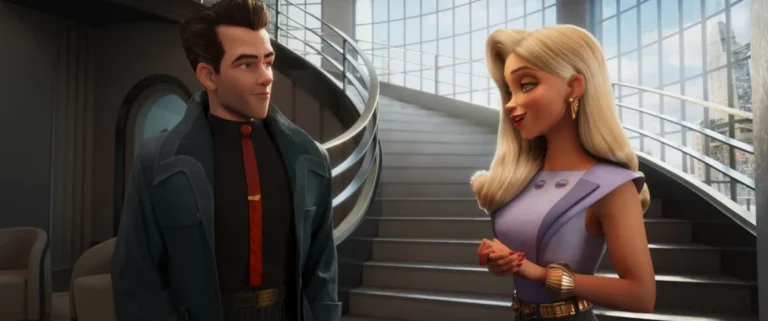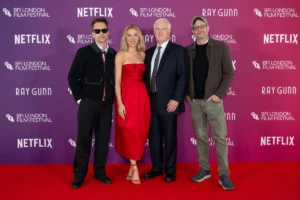
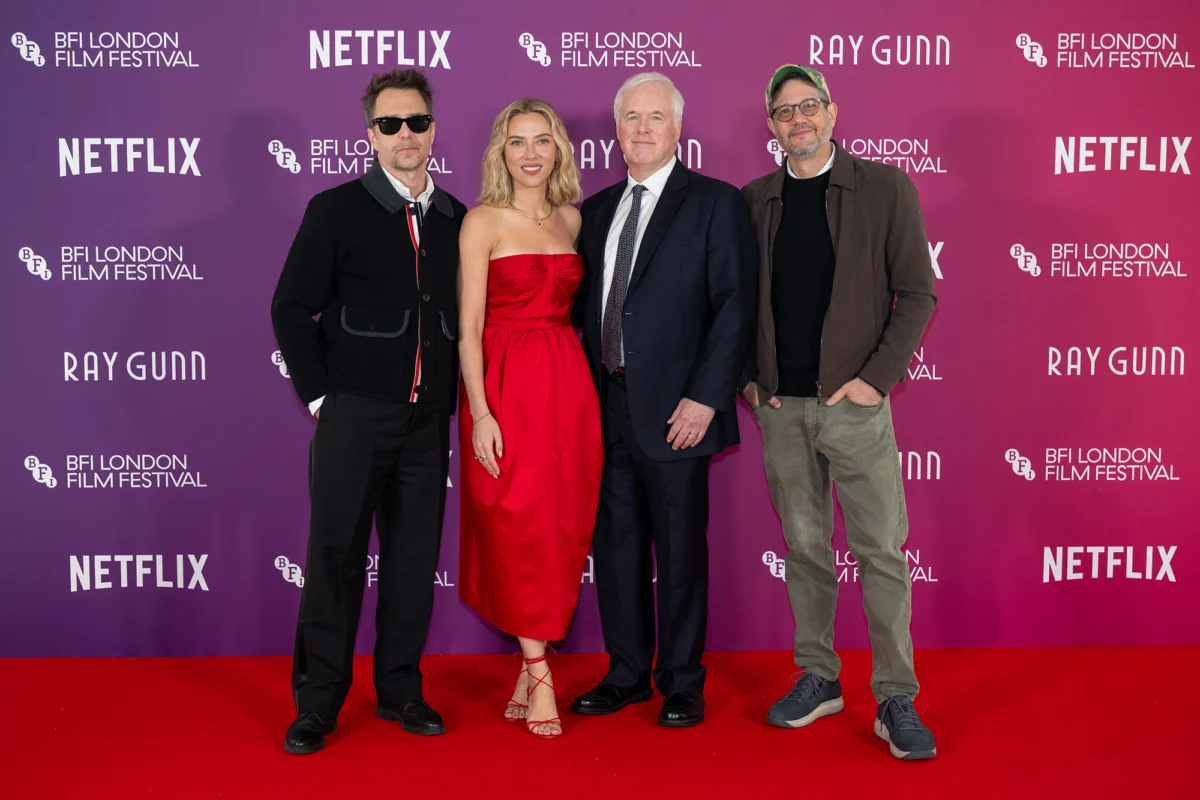
The gala event was attended by the film’s core creative team, including director Brad Bird, composer Michael Giacchino, and lead voice actors Sam Rockwell and Scarlett Johansson. Netflix’s head of film, Dan Lin, was also in attendance, underscoring the streaming giant’s significant investment in what is poised to be one of their most ambitious animated features to date.
A Chronology of a Visionary Project
The genesis of Ray Gunn dates back to the early 1990s, emerging from a curious moment of auditory inspiration. Brad Bird has frequently recounted the story of how a misheard lyric from The B-52s’ "Planet Claire" sparked the initial concept. Hearing a sound that he briefly mistook for a modern iteration of the "Peter Gunn" theme, Bird’s imagination latched onto the moniker "Ray Gunn."
Throughout the 1990s and early 2000s, the project existed primarily as a passion project while Bird achieved massive critical and commercial success with films such as The Iron Giant, The Incredibles, and Ratatouille. Despite his prolific output, Ray Gunn remained in development purgatory, hindered by the technological limitations of the era and the shifting priorities of major studios. It was not until the convergence of advanced digital animation techniques and the creative autonomy offered by Netflix that the project finally secured the green light. The formal announcement of the film’s production earlier this year served as the culmination of decades of conceptual refining, storyboarding, and character development.
The London Premiere and Artistic Reception
The atmosphere at the BFI London Film Festival was electric, with Artistic Director Kristy Matheson framing the premiere as a celebratory event for the animation industry. Matheson highlighted the rarity of seeing a long-gestating project reach fruition, describing the film as a "sunny, incredible blast" that honors the legacy of noir and science fiction.
The film’s critical reception has been largely positive, with an initial 91% approval rating on Rotten Tomatoes. Industry veterans have praised the film for its technical prowess and thematic density. Peter Bradshaw of The Guardian awarded the film a perfect score, commending its wit and humanistic core, while other outlets have lauded the collaboration between Bird and composer Michael Giacchino. The synergy between the two, which has been honed over several previous projects, was evident in the film’s score, which acts as a rhythmic anchor for the high-octane visual sequences.
However, the discourse has not been without dissenting voices. Critics such as those at The Hollywood Reporter and Screen International have pointed to a perceived gap between the film’s visual splendor and its narrative execution, with some characterizing the plot as relying too heavily on established genre tropes. Despite these critiques, the consensus among the festival audience was one of appreciation for the film’s sheer craftsmanship and its commitment to a distinct, stylized vision.
Collaborative Dynamics: Bird, Johansson, and Rockwell
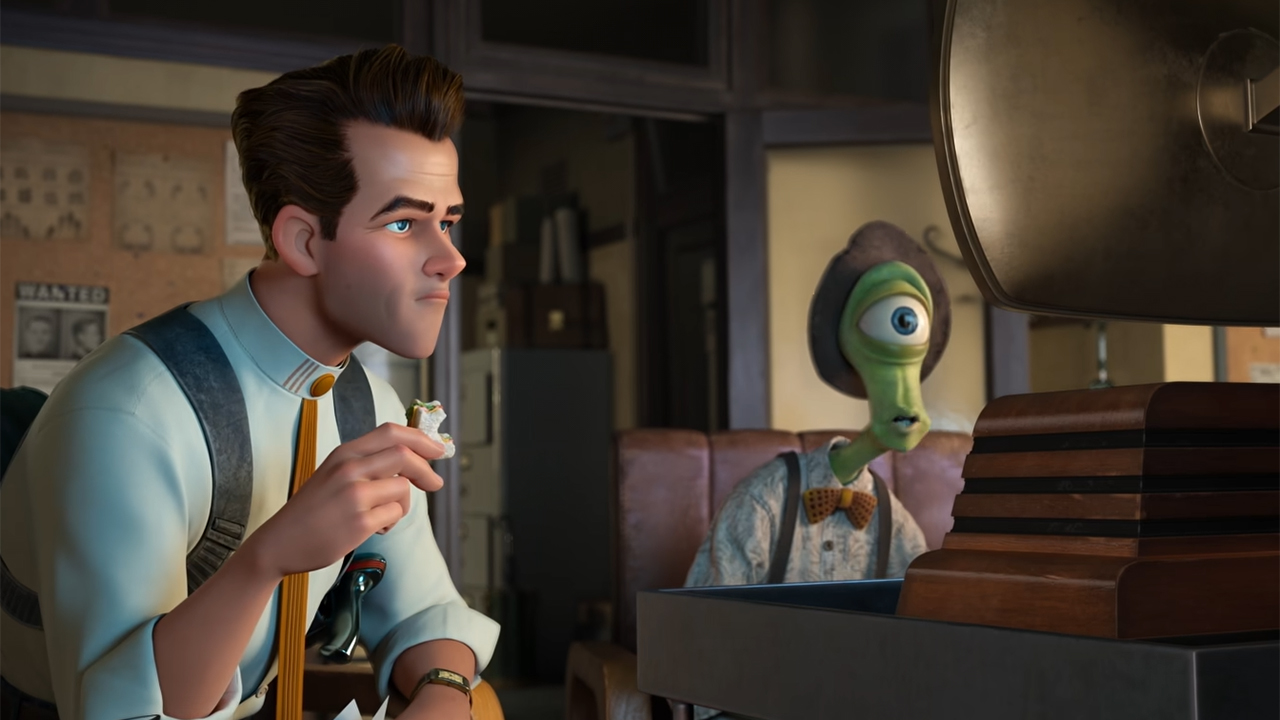
A significant portion of the film’s unique character is attributed to the recording process. Unlike standard animated features where voice actors often record in isolation, Bird insisted on a more communal, experimental approach. Scarlett Johansson, who portrays the multimedia star Venus Nova, noted that working with Bird was a distinct departure from her previous experiences in animation.
The process involved significant improvisation and physical presence in the booth, with Bird often acting out scenes alongside his stars. Sam Rockwell, who voices the titular detective Raymond "Ray" Gunn, shared anecdotes about the casual and often unorthodox nature of the recording sessions—including moments where the actors performed while lying on the studio floor to capture a specific, intimate energy. This unconventional methodology appears to have resulted in a more naturalistic and "messy" dynamic between the lead characters, which critics have highlighted as one of the film’s strongest assets.
Technical and Thematic Implications for Netflix
The release of Ray Gunn carries broader implications for Netflix’s strategy in the animation sector. By greenlighting a high-budget, director-driven project that spent thirty years in development, Netflix is positioning itself as a haven for auteur-led animation. This move contrasts with the industry-wide trend of focusing exclusively on established intellectual property and franchise-building.
The decision to pair a digital release with a limited 70mm theatrical run is also a strategic maneuver. It reflects a growing recognition that prestige animated projects benefit from the sensory experience of a cinema environment. By catering to cinephiles and proponents of the big-screen experience, Netflix is attempting to bridge the gap between streaming convenience and theatrical prestige.
Financially, the success of Ray Gunn will be measured not just by streaming metrics, but by the project’s ability to draw high-caliber talent to the platform and its impact on the awards circuit. With a voice cast that includes Tom Waits, Matt Berry, Alan Tudyk, and Bobby Cannavale, the film boasts an ensemble that underscores its prestige aspirations.
Looking Ahead: The Global Rollout
Following its successful festival debut, the film is scheduled for a global release on Netflix on December 18, 2026. The preceding 70mm theatrical run is designed to generate cultural capital, allowing the film to establish its reputation as a "must-see" event before it reaches the broader streaming audience.
The upcoming release will test the appetite of the general public for a project that, while born from a 1990s sensibility, is being delivered to a 2026 audience. If the positive reception in London is any indication, Ray Gunn stands to be remembered as one of the most significant animation events of the decade. The film’s journey from a misinterpreted song title to a fully realized cinematic vision serves as a testament to the persistence of creative vision in an industry often driven by short-term trends. As the December release date approaches, all eyes will be on whether the broader public matches the fervor of the London festival crowd, potentially securing Ray Gunn a permanent place in the canon of noir-inspired science fiction.