
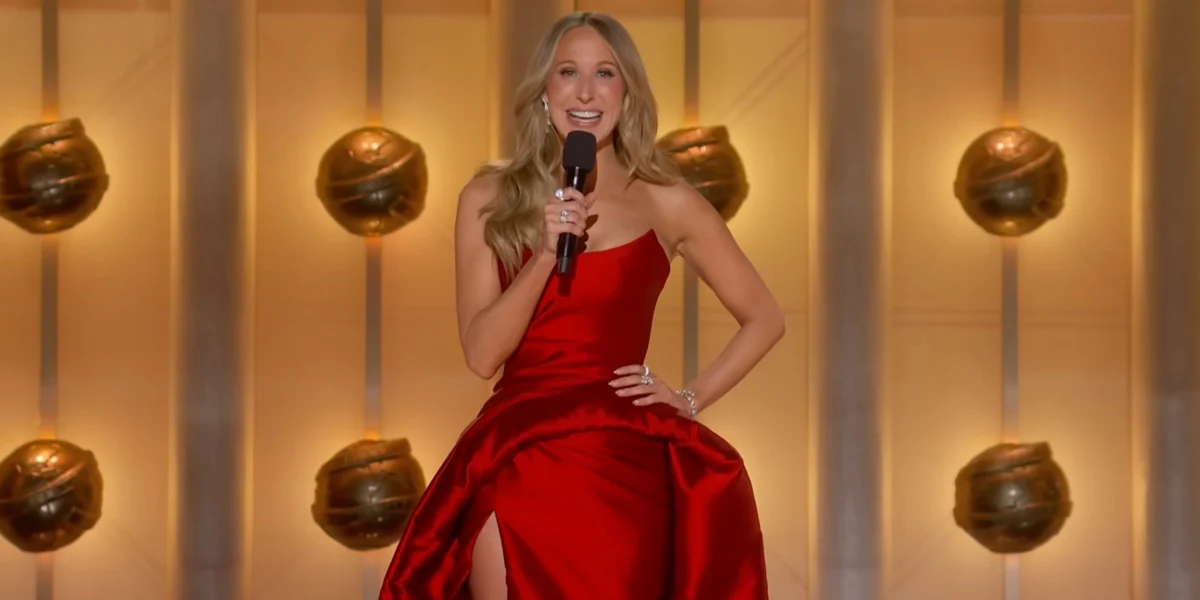
The landscape of awards season is beginning to crystallize with the announcement of the 84th Annual Golden Globe Awards, scheduled to illuminate Hollywood on Sunday, January 10th, 2027. The prestigious ceremony will be broadcast live on CBS and made available for streaming on Paramount+, ensuring broad accessibility for a global audience. Esteemed comedian Nikki Glaser is set to grace the stage as host for an unprecedented third consecutive year, a testament to her captivating presence and comedic prowess that has resonated with viewers and industry insiders alike.
Glaser expressed her enthusiastic anticipation for her return, stating, "I’m thrilled to host the Golden Globes for a third time, not only because it’s the greatest gig I’ve ever had, but because my sister has three kids and now we will be equal in the eyes of my parents and the Lord." This lighthearted sentiment underscores Glaser’s unique ability to blend humor with genuine enthusiasm, a quality that has become a hallmark of the Golden Globe telecasts under her stewardship. Her continued tenure as host signals a desire for continuity and a proven formula for engaging viewers during this pivotal moment in the entertainment calendar.
Navigating the AI Frontier: Evolving Eligibility Rules
In a significant development that mirrors the industry’s broader grappling with technological advancements, the Golden Globes have unveiled updated guidelines concerning the integration of artificial intelligence (AI) in filmmaking and television production. This move follows closely on the heels of the Academy of Motion Picture Arts and Sciences implementing its own stringent AI regulations for the 99th Oscars. The Golden Globes’ approach, while acknowledging the burgeoning role of AI, aims to strike a delicate balance between embracing innovation and safeguarding human artistry.
The newly established rules stipulate that the use of AI "does not automatically disqualify a work from consideration, provided that human creative direction, artistic judgment, and authorship remain primary throughout the production process." This nuanced stance emphasizes that AI should serve as a tool to augment human creativity, rather than supplant it. The intention is to encourage experimentation while maintaining a firm commitment to the core principles of artistic endeavor that the Golden Globes have long celebrated.
Specifically, the guidelines address the sensitive area of acting categories. Performances that are "substantially generated or created by artificial intelligence" will be deemed ineligible. Furthermore, the unauthorized utilization of a performer’s digital likeness or voice replication is explicitly prohibited, reinforcing protections for actors and their intellectual property. This provision is particularly crucial in an era where deepfake technology and AI-generated performances are becoming increasingly sophisticated, posing potential challenges to authenticity and individual rights.
A cornerstone of these updated regulations is a mandatory disclosure requirement. All submissions for Golden Globe consideration must now include a clear statement indicating whether any generative AI was employed at any stage of the production of the completed work. This transparency measure is designed to equip the Golden Globes’ eligibility committee with the necessary information to fairly assess each submission. The committee retains the authority to request supplementary materials and reserves the right to rule a submission ineligible if such information is not provided promptly. This proactive approach signals the Golden Globes’ commitment to adapting its processes to the evolving realities of content creation in the digital age.
Expanding Horizons: Podcast Recognition and Global Inclusivity
Beyond the AI regulations, the Golden Globes are also refining their approach to recognizing excellence in other burgeoning media formats. The podcast category, which made its debut at the most recent ceremony with "Good Hang With Amy Poehler" claiming the inaugural award, will see a slight expansion. Eligible podcasts will now be drawn from a curated top 30 list, an increase from last year’s top 25, as determined by Luminate, a respected music and entertainment data analytics firm. This adjustment acknowledges the growing influence and quality of podcasting as a significant storytelling medium. The expanded pool of eligible podcasts suggests a commitment to broadening the reach and impact of this relatively new award category.
In a move aimed at fostering greater global inclusivity and recognizing a wider spectrum of cinematic achievement, the Golden Globes have introduced a notable tweak for non-English-language and independent films. These films may now be submitted for individual acting categories without the prerequisite of being entered in the Best Motion Picture category. This change is particularly significant for international cinema and independent productions that may not fit neatly into the traditional studio system’s release patterns or marketing strategies. By decoupling acting nominations from the Best Picture race, the Golden Globes are providing a more direct pathway for diverse talent and unique cinematic voices to be recognized and celebrated on a global stage. This policy shift is expected to encourage submissions from a broader range of filmmakers and potentially highlight performances that might otherwise be overlooked.
A Detailed Timeline for the 2027 Awards Cycle
The comprehensive timeline for the 84th Annual Golden Globe Awards has been meticulously laid out, providing clarity and structure for filmmakers, studios, and the voting body. The submission period will commence on June 1st, offering ample time for eligible works to be formally entered into consideration. The window for submissions will close on October 30th, marking the definitive cutoff for entries.

Following the conclusion of the submission period, the anticipation will build towards the announcement of the nominations. This pivotal moment is scheduled for December 7th, when the industry and the public will learn which films and television programs have earned a coveted spot in the running.
The process will then move towards the final voting stages. Final ballots will be distributed to eligible voters on December 18th, allowing them a dedicated period to cast their votes. These ballots are due back by January 2nd, 2027, a critical deadline that ensures all votes are counted well in advance of the televised ceremony. This tight schedule, with final ballots due just over a week before the event, underscores the efficiency and precision required to manage a major awards show.
The full timeline can be visualized as follows:
- June 1, 2026: Submissions Open
- October 30, 2026: Submissions Close
- December 7, 2026: Nominations Announced
- December 18, 2026: Final Ballots Distributed
- January 2, 2027: Final Ballots Due
- January 10, 2027: 84th Annual Golden Globe Awards Ceremony
This structured timeline reflects the Golden Globes’ commitment to a fair and efficient awards process, from initial submission to the ultimate crowning of winners.
Background and Broader Impact of the Golden Globes
The Golden Globe Awards, presented annually by the Hollywood Foreign Press Association (HFPA) until its acquisition by Eldridge Industries, have long been a significant fixture in the entertainment awards circuit. Established in 1943, the awards recognize excellence in both film and television, spanning various genres and categories. Historically, the Golden Globes have been known for their more relaxed atmosphere compared to other major awards shows, often featuring a live audience that includes a mix of Hollywood stars and industry professionals. This convivial setting has often led to memorable and spontaneous moments, contributing to the show’s unique appeal.
The telecast has consistently served as a crucial bellwether for the Oscars, with many films and performances honored at the Golden Globes going on to achieve critical acclaim and Oscar nominations. The ceremony’s placement early in the awards calendar, typically in January, provides an influential platform for contenders to gain momentum and generate buzz.
The recent acquisition of the HFPA by Eldridge Industries and the subsequent restructuring of the organization signal a new era for the Golden Globes. The organization has been actively working to address past criticisms and implement reforms aimed at enhancing transparency, diversity, and ethical practices. The updated AI guidelines and the expanded inclusivity for international and independent films are indicative of these ongoing efforts to modernize and adapt the awards to the contemporary media landscape and evolving societal expectations.
The decision to continue broadcasting on CBS and streaming on Paramount+ ensures a robust distribution strategy, allowing the Golden Globes to reach a vast audience. As the industry continues to navigate the complexities of artificial intelligence, the evolving nature of content creation, and the demand for greater representation, the Golden Globe Awards are positioning themselves to remain a relevant and influential voice in celebrating cinematic and television achievements. The commitment to transparency and adaptability demonstrated by these new regulations suggests a forward-thinking approach that will likely shape the future of awards eligibility and recognition in the entertainment industry.
The return of Nikki Glaser as host, coupled with these significant policy updates, indicates a deliberate strategy by the Golden Globes to blend established traditions with a progressive outlook, aiming to maintain their status as a premier event in the awards season. The coming year will undoubtedly see continued discussion and analysis of these changes as the industry collectively navigates the exciting and challenging terrain of technological advancement and global storytelling.