
The landscape of American television is undergoing a profound structural and political realignment, culminating in what promises to be the most contentious and politically charged Primetime Emmy Awards race in decades. As the Television Academy prepares for its main ceremony on September 14, the convergence of shifting eligibility rules, high-stakes corporate restructuring, and unprecedented clashes between network late-night hosts and the federal government has transformed the variety series category into a high-stakes cultural battleground.
At the center of this impending showdown are some of the most influential figures in modern broadcasting: Stephen Colbert, Jimmy Kimmel, John Oliver, and the enduring powerhouse of sketch comedy, Saturday Night Live. With the Academy merging previously separated talk and script variety categories, these titans of late-night television will compete directly for the industry’s highest honor against a backdrop of corporate cancellations, federal regulatory pressures, and a polarized political climate.
The Evolution and Merging of the Variety Series Category
To understand the weight of this year’s Emmy competition, one must examine the turbulent history of the variety series category itself. Established in 1951, the category has repeatedly struggled to accommodate vastly different formats under a single umbrella. In the early 1970s, the Television Academy briefly split the category to prevent traditional talk shows like The Tonight Show Starring Johnny Carson from competing directly with elaborate musical and sketch revues such as The Carol Burnett Show.
However, for nearly four decades beginning in the mid-1970s, the category remained a single entity, frequently resulting in paradoxical match-ups where traditional talk programs competed against sketch comedies and musical specials. By the mid-2000s, late-night talk formats hosted by figures such as Conan O’Brien, Jon Stewart, Bill Maher, and David Letterman heavily dominated the space. Jon Stewart’s The Daily Show eventually set a historic benchmark by securing ten consecutive victories.
In 2015, the Academy attempted to streamline the competition by dividing the field into two distinct honors: Outstanding Variety Talk Series and Outstanding Variety Sketch Series. Over the subsequent years, sketch powerhouses like Inside Amy Schumer and Key & Peele claimed early victories before Saturday Night Live embarked on an uninterrupted six-year winning streak. Meanwhile, HBO’s Last Week Tonight with John Oliver dominated the talk category, securing seven consecutive Emmys before the Academy mandated its transfer to the scripted variety category in 2023, where it accumulated three additional trophies.
For the upcoming awards cycle, the Television Academy has reversed course, merging the talk and script variety categories once more. This administrative decision forces Last Week Tonight back into direct competition with network late-night staples and Saturday Night Live, immediately upending traditional prognostications and creating an unpredictable race.
Regulatory Adjustments and Disqualifications Across the Board
Beyond the flagship variety category, broader adjustments to Television Academy rules have introduced unexpected friction across multiple tiers of the competition. A prominent regulatory shift enacted this year explicitly prohibits performers from securing a guest actor nomination for a role in which they were previously recognized in lead or supporting categories.
This strict enforcement was vividly illustrated when veteran actor Jon Hamm was formally disqualified from the guest actor race for his acclaimed performance in Apple TV+’s The Morning Show. Because Hamm had already received a supporting actor nomination for the exact same character in 2024, the streamer’s submission violated the updated compliance framework. While Hamm remains eligible in two separate categories this year, the incident underscored the Academy’s tightening oversight regarding award classifications, prompting networks to audit their submissions with heightened scrutiny.
The Political and Corporate Turmoil of Late-Night Television
The compression of the variety category occurs during a uniquely turbulent period for late-night broadcasting, marked by intense scrutiny from political figures and sweeping corporate consolidation. The intersection of media economics and political pressure has fundamentally altered the medium’s topography.
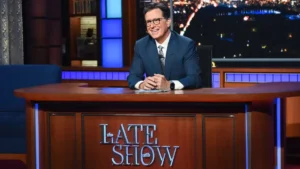
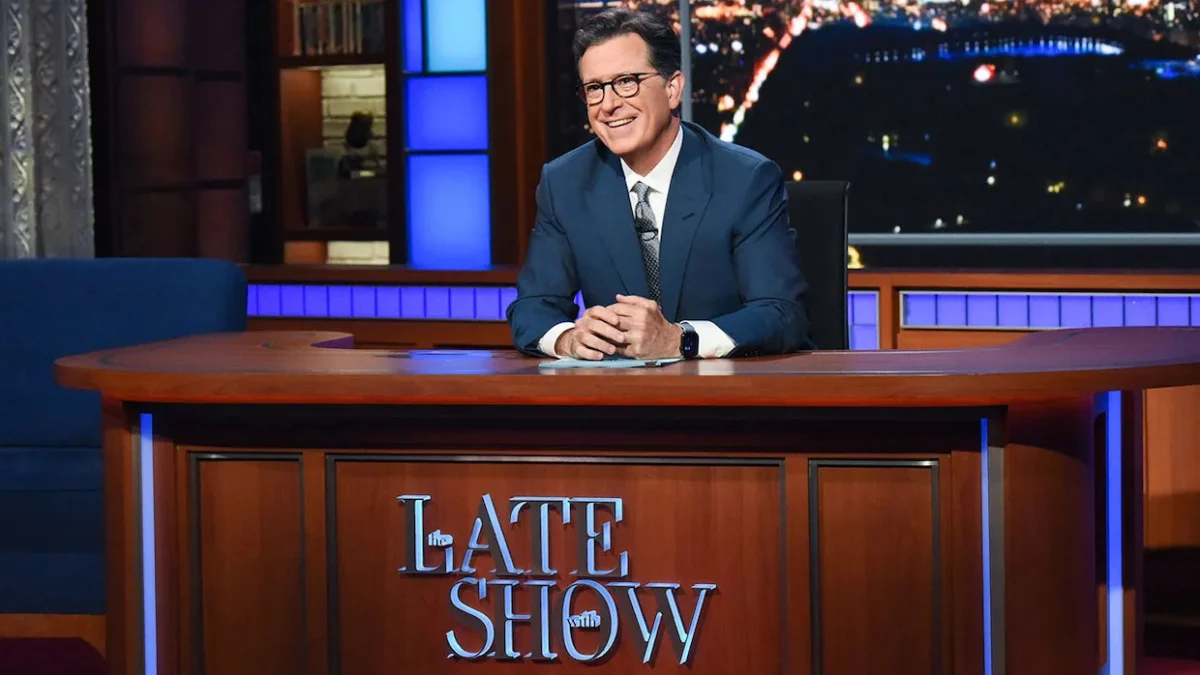
Stephen Colbert’s tenure at CBS concluded under dramatic circumstances. Following the acquisition of parent company Paramount Global by David Ellison’s Skydance Media, network executives announced the termination of The Late Show, bringing an end to an 11-season run and a 33-year network franchise history. While official corporate statements attributed the cancellation to financial realities—specifically citing operational losses of approximately $40 million annually—media analysts and industry critics questioned the timing. The decision arrived on the heels of sustained political friction between the administration and Colbert, whose monologues frequently targeted federal leadership. Despite the abrupt termination, Colbert’s final broadcast season achieved significant cultural resonance, culminating in the program’s historic first talk series victory at the previous Emmy ceremony and establishing a formidable narrative momentum for the upcoming awards.
Simultaneously, ABC’s Jimmy Kimmel Live! became the epicenter of a major First Amendment and regulatory controversy. The program was temporarily pulled from the airwaves following intense pressure from the Federal Communications Commission, led by Chairman Brendan Carr, and prominent political commentators regarding remarks made by Kimmel during an opening monologue. Threats of preemptions from major broadcast groups, including Nexstar Media Group and Sinclair Broadcast Group, created immediate uncertainty regarding the show’s future.
The punitive measures, however, triggered a massive public mobilization and audience backlash. Within a week, ABC reinstated the program. Kimmel’s return episode on September 23 shattered records, drawing 6.26 million linear viewers—the highest in the series’ history—while the corresponding monologue accumulated over 26 million views across digital platforms. Having secured 12 consecutive nominations in the variety category without a prior win, Kimmel enters the current race bolstered by unprecedented public visibility.
Contender Profiles and Industry Implications
As voting members of the Television Academy evaluate the consolidated category, several distinct contenders emerge, each representing a different facet of contemporary television:
- The Late Show with Stephen Colbert: Positioned as both a celebration of a celebrated television legacy and a symbolic referendum against corporate and political pressures, Colbert’s final season enjoys strong emotional and critical momentum among progressive-leaning Academy voters.
- Jimmy Kimmel Live!: Armed with record-breaking ratings following its temporary suspension, the program offers a high-profile platform that has consistently engaged with national political discourse.
- Last Week Tonight with John Oliver: Having demonstrated enduring dominance across multiple category iterations, Oliver’s analytical and satirical news program remains the technical favorite, provided voting blocs do not favor the network late-night narratives.
- Saturday Night Live: Operating in its 51st season following a widely celebrated 50th-anniversary milestone, the NBC institution continues to lean into absurdist comedy while maintaining strong institutional support, insulated somewhat from the daily political crossfire experienced by late-night hosts.
- The Daily Show: Utilizing a hybrid format featuring Jon Stewart anchoring Monday broadcasts alongside a rotating ensemble of correspondents for the remainder of the week, the Comedy Central staple retains a strong historical precedent in the category.
Conclusion and Broader Impact
The convergence of regulatory revisions, high-profile cancellations, and executive pressures underscores a volatile period for television production and political commentary. For the Television Academy, the upcoming Emmy ceremony offers more than a routine distribution of trophies; it provides a platform for industry professionals to signal their values amid an evolving media landscape. Regardless of which program ultimately secures the statue on September 14, the race reflects the deep intersection of entertainment, corporate stewardship, and free expression in contemporary American culture.