

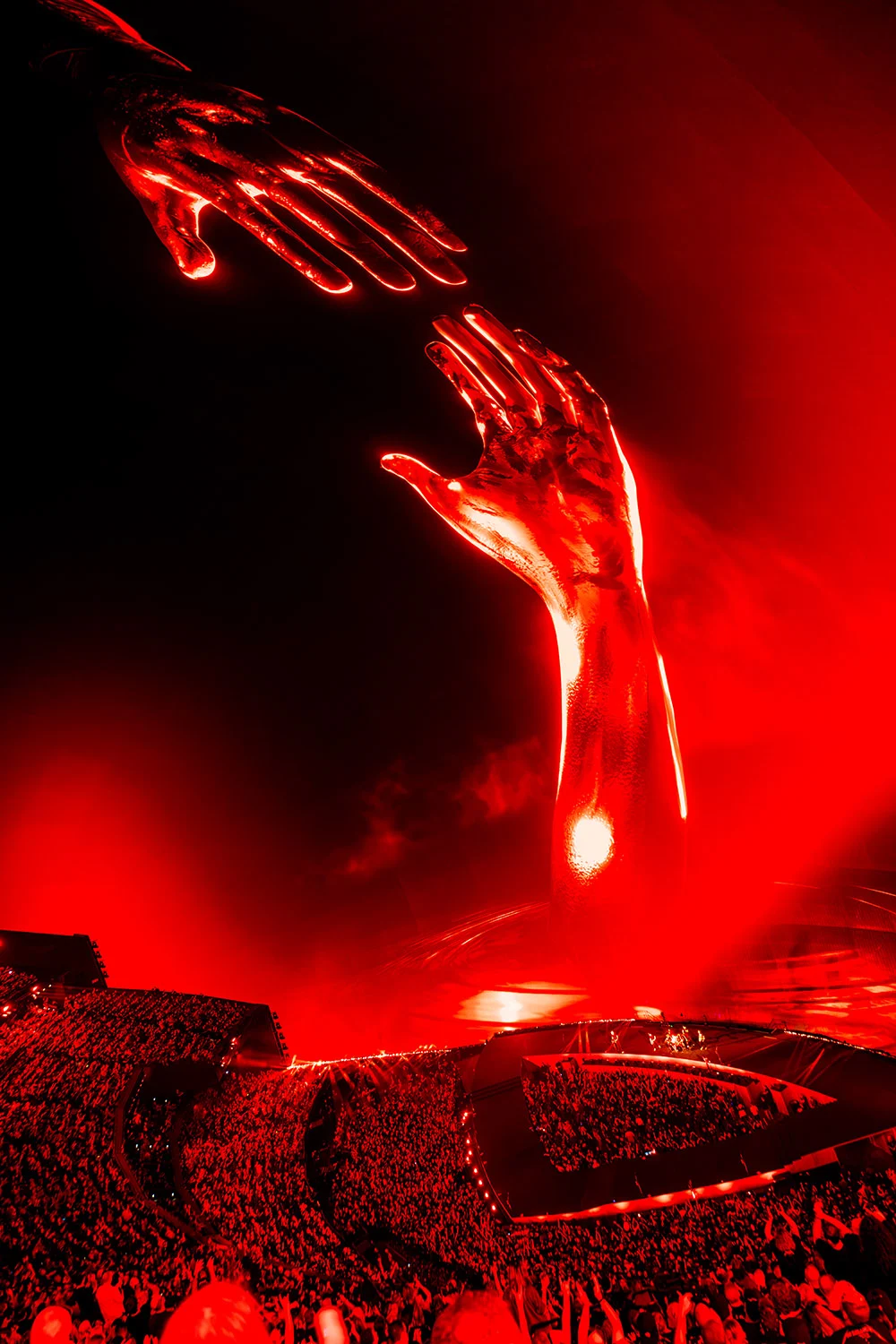
The sea of black T-shirts that flooded the Las Vegas Strip on Saturday night served as a testament to the enduring dominance of Metallica, as the thrash metal icons completed the second night of their Life Burns Faster residency at Sphere. Having already set a high bar during Thursday’s opening performance, the band’s return to the state-of-the-art venue demonstrated that their transition from stadium stages to the high-tech, 160,000-square-foot wraparound display of Sphere is not merely a stylistic shift, but a technological milestone in live music history. With a crowd of predominantly middle-aged enthusiasts packing the venue’s steep seating bowl and the high-energy "Snake Pit" floor area, the atmosphere was charged with a palpable sense of anticipation.
This residency, which is slated to span across multiple weekends through March 2027, marks a significant departure from traditional touring models. By committing to a "No Repeat Weekend" format—a concept introduced during the 2023 M72 World Tour—Metallica is attempting to redefine the value proposition for concertgoers. In an era of inflated ticket prices and fragmented fan experiences, the band is gambling on the loyalty of their base, betting that the promise of unique set lists and bespoke, immersive visuals will justify the substantial financial investment required to attend.

Economic Implications and the Premium Fan Experience
The financial commitment required for the Life Burns Faster residency is among the highest in the current concert market. With resale platforms showing "get-in" prices for single-night dates fluctuating between $600 and $1,000, and two-night packages for upcoming weekends beginning above $1,100, the economic stakes for fans are undeniable. During the Saturday performance, frontman James Hetfield explicitly acknowledged this reality. Addressing the capacity crowd, Hetfield expressed gratitude for the "time, energy, and cash" invested by the audience, a sentiment that resonated as a nod to the high barrier to entry for this residency.
From an industry perspective, this pricing strategy underscores the "premiumization" of the live music sector. As venue technology becomes more advanced, production costs for residencies like this one scale significantly. The logistical challenge of maintaining 22 additional shows over the next several months requires not just a performance, but an operational machine that ensures the technical fidelity of the Sphere’s 16K resolution LED screen remains consistent night after night.
A Study in Set-List Geometry and Chronology
Metallica’s approach to these residencies is calculated with the precision of an architectural blueprint. The "No Repeat" policy is not just about changing songs; it is about maintaining a specific emotional and sonic arc. A comparative analysis of the first two nights reveals a fascinating structural symmetry.

On Thursday’s opening night, the band leaned heavily into the thrash roots of the 1980s, featuring classics like "Battery," "Master of Puppets," and the nearly 10-minute epic "…And Justice for All." Saturday night, however, shifted the focus slightly toward the 1990s, incorporating tracks like "Fuel," "King Nothing," and the rarely performed "Devil’s Dance," which had not appeared in a live set list since 2008. Furthermore, the return of the 1996 Load classic "The Outlaw Torn" highlighted the band’s desire to reward long-term, deep-cut fans.
Despite these variations, the "geometry" of the performance remains consistent. Whether it was the placement of mid-tempo emotional releases like "Nothing Else Matters" on Thursday or "The Unforgiven" on Saturday—both positioned at the ninth slot—or the reversal of drummer Lars Ulrich’s rotational movement across the circular stage, the shows are designed to deliver a uniform intensity regardless of the song titles. This consistency allows the production team to calibrate the Sphere’s visual projections to specific emotional peaks, ensuring that the spectacle matches the musical cadence of each evening.
The Human Element in a High-Tech Environment
One of the most poignant moments of the weekend occurred on Saturday, following the performance of "The Unforgiven." The band transitioned into the instrumental "Orion," dedicating the track to late bassist Cliff Burton. The timing was significant, as the performance took place just days after the 40th anniversary of Burton’s death in a 1986 bus crash in Sweden.

In a venue designed to overwhelm the senses with gargantuan, hyper-realistic visuals, the tribute stood out as an exercise in restraint and raw human emotion. It served as a reminder that even when surrounded by the most advanced visual technology ever deployed in a concert setting, the core of Metallica’s appeal remains the personal history of the members and their connection to their late bandmates.
Visual Architecture: From Childhood Trauma to War-Torn Cities
Longtime production designer and show director Dan Braun has utilized the Sphere’s unique architecture to move beyond simple stage lighting. During "72 Seasons," the screen was filled with disturbing, larger-than-life imagery of broken childhood artifacts, including towering, decrepit television sets and a massive, fractured crib. These visuals, rendered in a sickly yellow hue, turned the interior of the venue into a claustrophobic psychological landscape.
Conversely, "The Outlaw Torn" was transformed into a cinematic experience, with a ruined, arterial-red cityscape that seemed to fold inward upon the audience, effectively turning the entire dome into a vortex of light and color. The pairing of "For Whom the Bell Tolls" and "One" served as a deliberate callback to the band’s historic 1991 performance in Moscow. By recreating the battlefield imagery—bombed-out trenches, aircraft cockpits, and falling birds—Metallica successfully bridged the gap between their past and their present. The transition from the massive open-air field of the 1991 Tushino Airfield show to the enclosed, immersive environment of the Sphere represents a full-circle moment for a band that has spent four decades exploring the intersection of heavy music and visual storytelling.

Future Projections and Operational Scalability
As the Life Burns Faster residency continues, industry analysts are focused on how the band will manage the rotation of such complex, song-specific visuals. The logistical burden of syncing high-fidelity, high-resolution graphics with live instrumentation is immense. Questions remain regarding the long-term flexibility of the show: Will the band continue to favor the 1990s-heavy set lists on Saturdays? Will deep cuts like "Devil’s Dance" become staples, or will they rotate back into the archives?
The success of these initial shows suggests that the "No Repeat" model is sustainable, provided the band maintains the current level of production quality. For the music industry, this residency provides a case study in how legacy acts can leverage modern technology to revitalize their catalogs. If Metallica can maintain this momentum through 2027, the Life Burns Faster residency may well become the gold standard for how legendary bands navigate the transition into the next generation of concert performance.
Ultimately, the opening weekend at Sphere was not just about the songs played, but the proof of concept for a new era of live performance. By balancing the high-octane energy of their thrash legacy with the cutting-edge capabilities of one of the world’s most sophisticated venues, Metallica has managed to offer something that feels both nostalgic and profoundly forward-looking. As the residency progresses, the primary challenge for the band will be ensuring that the spectacle remains as compelling as the music itself, keeping the audience—and the critics—guessing as to what the next iteration of the "No Repeat" weekend will bring.