
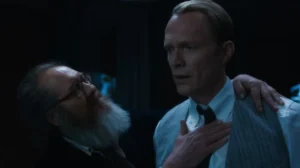
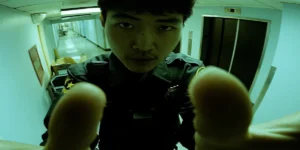
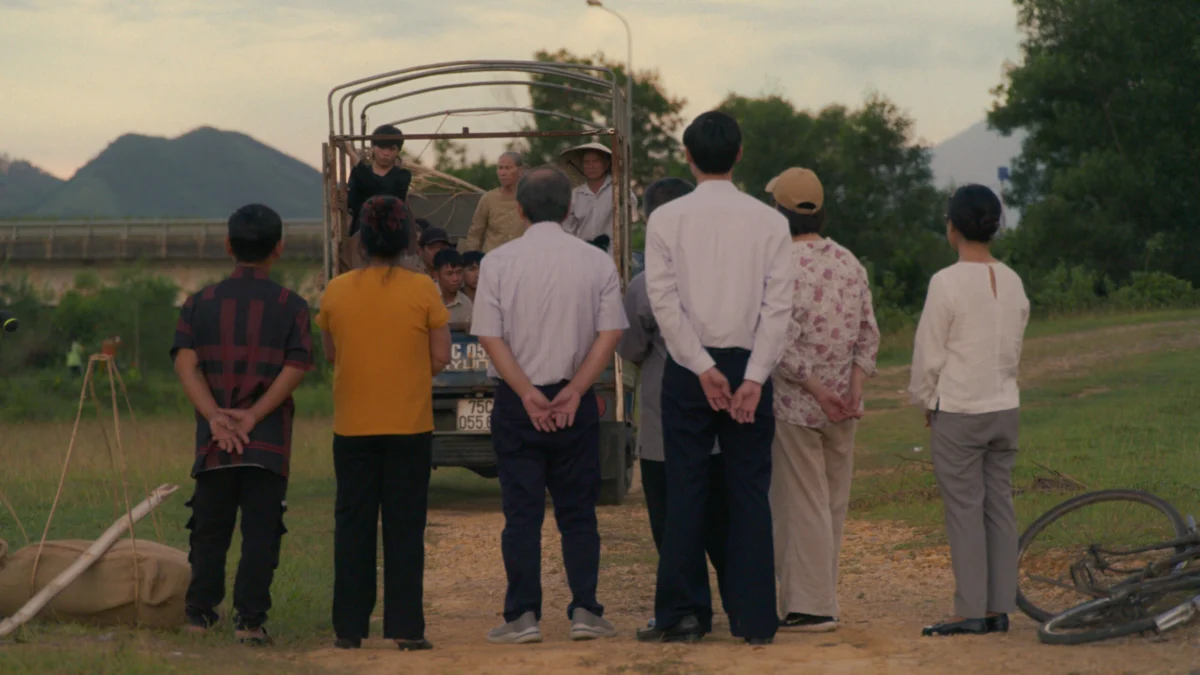
Montreal-based filmmaker Ashley Duong has crafted a transformative bridge between the written word and the visual arts with her latest project, Ba’s Book, a genre-defying hybrid documentary that is currently making waves on the international film festival circuit. The project serves as both a cinematic adaptation and an expansive continuation of the 2024 memoir Dear Da-Le: A Father’s Memoir of the Vietnam War and the Iranian Revolution, penned by the director’s father, Anh Duong. By blending traditional documentary techniques with staged dramatic re-enactments, the film navigates the silence that once defined the Duong family, transforming decades of suppressed trauma into a shared, cathartic dialogue.
The Genesis of a Silent History
For much of his adult life, Anh Duong, affectionately known as "Ba," maintained a stoic, often impenetrable silence regarding the harrowing experiences of his youth. Born into the instability of civil conflict in Vietnam, his path led him through the political volatility of revolutionary Iran in the 1970s before he finally sought asylum and a new beginning in Canada in 1980. This trajectory—one marked by displacement, the necessity of political maneuvering, and the emotional burden of survival—was kept largely hidden from his daughter, Ashley.
The catalyst for the documentary was the publication of Anh’s memoir, which was structured as a series of letters to his daughter. However, the film goes beyond the printed page. While the book provides the structural skeleton, the film functions as a living laboratory for reconciliation. Recognizing that her father’s memoir left significant emotional gaps—particularly regarding the family members left behind in their ancestral Vietnamese village—Ashley Duong utilized the medium of film to confront these omissions directly.

A Chronology of Displacement
The narrative arc of Ba’s Book is tethered to a timeline of global upheaval that shaped the 20th-century diaspora:
- 1960s-1970s: Anh Duong matures in war-torn Vietnam, witnessing widespread brutality and the collapse of social structures.
- Late 1970s: Anh navigates the precarious political landscape of revolutionary Iran, further cementing a survivalist habit of emotional containment.
- 1980: Arrival in Canada. Anh begins the process of assimilation, keeping his past life strictly compartmentalized from his family life in Montreal.
- 2024: The publication of Dear Da-Le, marking the first time Anh publicly articulates his history.
- 2025-2026: Production and festival release of Ba’s Book, facilitating a physical and emotional return to Vietnam to confront the secrets of his siblings and the legacy of his upbringing.
The Hybrid Methodology: Staging Truth
One of the most compelling aspects of Ba’s Book is its rejection of standard documentary constraints. Eschewing the traditional "fly-on-the-wall" approach, Duong opted for a hybrid narrative model. The production team constructed a set in Vietnam, mirroring the home where Anh grew up. Notably, the set was designed with only three walls, a deliberate choice that transformed the space into a theatrical stage.
This environment allowed for a unique collaboration between the director, her father, and his siblings. Rather than simply interviewing her relatives, Duong invited them to act as active participants in the filmmaking process. They provided input on set design, assisted in casting actors to portray their younger selves, and, most crucially, engaged in direct interrogations of their brother’s history.
This process was captured using a sophisticated, multi-camera setup. One camera maintained an observational, documentary-focused gaze, while a separate, fiction-oriented crew followed a loose script written by Duong and collaborator Steven Sych. This allowed for the capture of both raw, unfiltered emotional reactions and highly stylized, scripted sequences, creating a visual language that mirrors the fluidity of memory itself.

The Domestic Cost of Patriarchy
A focal point of the film is the reconciliation with the director’s Aunt Hanh. Throughout the production, the film exposes the rigid patriarchal structures of the family’s past in Vietnam. It is revealed that Hanh sacrificed her own educational opportunities at the age of nine to manage domestic labor, a decision that directly enabled Anh to pursue his studies and eventually build a life in Canada.
For the director, this realization was a moment of profound personal reckoning. "I’m thinking if she didn’t free my dad up from domestic labor, he wouldn’t have been able to study as he did," Duong notes. By "lancing the boil" of this long-held resentment through the collaborative process of the film, Duong facilitates a form of healing that extends beyond her father and into the broader family unit. The film functions as an act of historical justice, acknowledging the invisible labor of women in the Vietnamese diaspora that often goes unrecorded in masculine-centric war narratives.
Implications for Diaspora Studies
The academic and cultural implications of Ba’s Book are significant. The film contributes to a growing body of work focusing on the "second-generation" experience, where children of immigrants and refugees act as the primary investigators of their parents’ hidden traumas. By utilizing performance and set design to "re-enact" memory, Duong provides a blueprint for how families divided by war can bridge the gap of silence.
Sociological data suggests that families affected by forced migration often experience "transgenerational trauma," where the parent’s inability to process wartime events leads to emotional distance within the household. Ba’s Book acts as a case study in clinical and cultural intervention; by providing a safe, structured space for these memories to be externalized, the Duong family has moved from a state of fractured silence to one of active, if complex, reconciliation.

Industry Reception and Critical Analysis
As the film makes its rounds at major festivals, including the Vancouver Film Festival, critics have pointed to the work as a masterclass in subjective documentary filmmaking. By allowing the subjects—her father and aunt—to hold agency over how their stories are dramatized, Duong avoids the extractive nature often associated with documentary filmmaking.
"Not everybody is going to stage recreations with sets and actors," Duong explains, acknowledging the unconventional nature of her approach. However, for those in the diaspora, this method provides a necessary framework for processing the "unspoken." The presence of Duy Nguyen, the Montreal-based actor who portrays the youthful version of Anh, serves as a poignant avatar for the director herself—a bridge between the past struggles of the Vietnamese refugee and the present-day reality of the Canadian-born generation.
Future Prospects and Legacy
The ultimate success of Ba’s Book lies in its transition from a personal family project to a universal narrative. By stripping away the four walls of the family home, Duong has effectively invited the audience to participate in the interrogation of their own histories. The film is a testament to the idea that, 50 years after the onset of the events that displaced millions, the primary task for the next generation is not merely to document history, but to actively participate in its resolution.
As of late 2026, the film is poised to influence a new wave of hybrid documentaries that prioritize family collaboration over journalistic distance. For the Duong family, the legacy of the project is simple: it replaced a lifetime of cold silence with a dynamic, ongoing dialogue, proving that while history may be fixed, the way we choose to remember and interact with it remains, ultimately, an act of creation.