

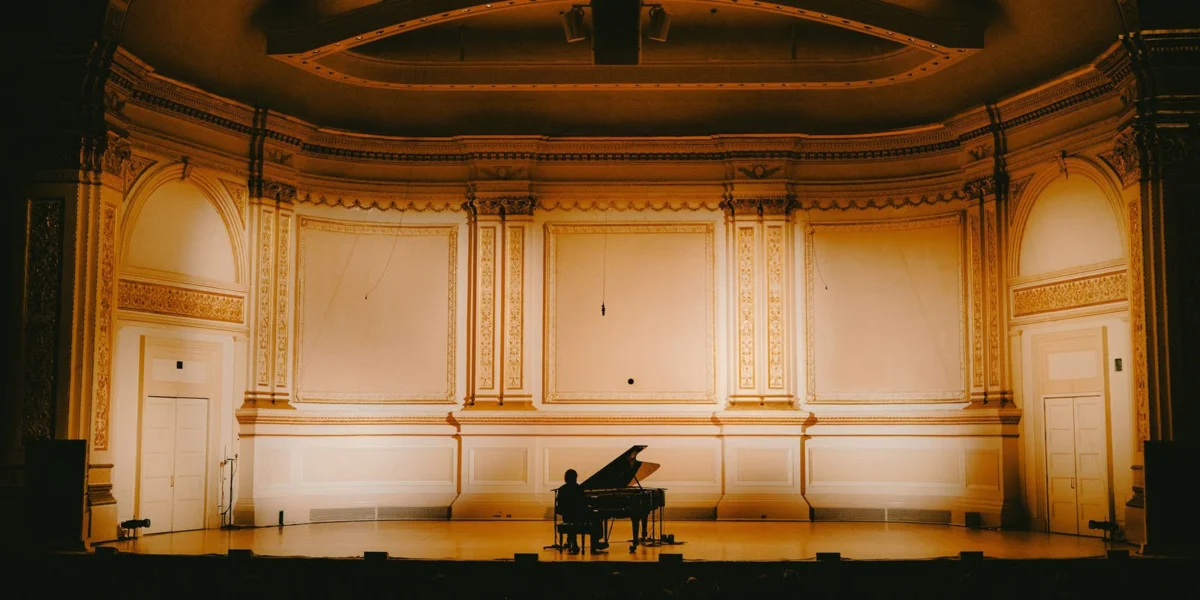
The production, which clocks in at 75 minutes, represents a unique intersection of high-fidelity cinematic craft and the raw, unvarnished reality of live music. The project, which was largely kept under wraps during its development, surfaced as a subject of intense speculation during the awards campaign for Anderson’s previous work, One Battle After Another. When eagle-eyed fans first spotted the director—alongside frequent collaborator and filmmaker Benny Safdie—operating cameras at Carnegie Hall, the industry was left to guess whether the footage was intended for a promotional music video or something more substantial. The subsequent reveal that the footage comprised a full-length concert film, slated for a limited 35mm theatrical release, marked a significant departure from the traditional promotional cycles associated with modern musical performances.
A Chronology of the Production
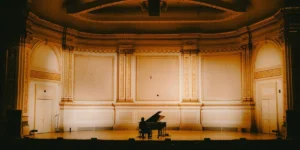
The genesis of the film can be traced back to a specific evening last winter, when Cameron Winter took to the stage at Carnegie Hall for a sold-out performance. The concert, which occurred during a cold December night, was documented with a singular focus: to capture the entirety of the performance without the traditional artifice of multi-night "pickups" or supplementary studio recording.
Following the initial filming, the project entered a period of relative silence. It was not until October 1st of the following year that the film made its world premiere at the New York Film Festival. This screening confirmed that the production team had opted for a minimalist post-production approach, eschewing the over-processed, polished aesthetic typical of modern concert documentaries in favor of a 35mm print that emphasizes texture, warmth, and the organic atmosphere of the venue.
Technical Craft and Artistic Intent
Paul Thomas Anderson’s approach to filming the concert is marked by a deliberate, if occasionally chaotic, sense of immediacy. The film avoids the use of "talking heads"—the standard interview segments often found in music documentaries—and instead thrusts the audience directly into the theater. The opening sequence, which features exterior shots of the venue and the mundane, humanizing process of ticket scanning, functions as an immersive prologue designed to ground the viewer in the physical reality of the performance space.
From a cinematography standpoint, the film utilizes an orange-brown color palette, which, when projected via 35mm, provides a distinct sense of intimacy. The use of natural light and shadow—specifically the projection of Winter’s silhouette against the stage and the subtle reflections of the performer on the piano lid—serves to elevate the visual language of the piece. These intentional compositions contrast with the film’s more spontaneous, "run-and-gun" segments.
However, the film’s commitment to capturing the event in real-time has drawn attention to its technical imperfections. Throughout the 75-minute runtime, viewers will notice instances of camera shake and moments where operators appear to be "searching" for the ideal frame mid-shot. While these anomalies might be viewed by some as technical failings, others argue they are inherent to the project’s central conceit: the desire to present an unfiltered, honest representation of a live event. By refusing to edit out these "warts," the production team has prioritized the preservation of the concert’s specific, fleeting energy over the polish of a studio-produced visual album.
The Role of Minimalist Performance
Cameron Winter’s music serves as the anchor for the entire project. The film is fundamentally a study of his performance style—a minimalist approach that relies heavily on piano and vocal dynamics. The audio mix is notably balanced, capturing the acoustics of Carnegie Hall with a clarity that allows the listener to experience the room’s unique resonance.
Between musical numbers, the film preserves small, theatrical moments where Winter interacts with the audience or engages in brief, performative transitions. These segments prevent the film from becoming a monotonous string of songs and instead frame it as a narrative account of the evening. The decision to retain these moments underscores the project’s goal: to transport the viewer to the front row of a concert they did not attend.
Comparative Analysis and Industry Implications
In the landscape of contemporary concert films—which are often defined by complex editing, high-budget digital color grading, and heavy post-production manipulation—Cameron Winter at Carnegie Hall stands out for its austerity. Many similar films rely on "live-in-the-studio" sessions or the amalgamation of the "best" moments from multiple nights of touring to create an idealized, error-free version of an artist.
Anderson’s refusal to engage in this trend suggests a shifting philosophy toward concert documentation. By capturing the performance as a singular, immutable event, the film forces the viewer to accept the performance on its own terms. If a shot is slightly out of focus or a camera movement is jerky, it is simply what happened at that moment in the hall. This approach aligns with a growing desire in the film community for "analog" experiences, where the physical nature of the medium—the 35mm print—is just as important as the content itself.
The Critical Reception and Target Audience
The film is inherently polarizing, largely because it does not attempt to "sell" Cameron Winter to an uninitiated audience. For those who are already familiar with and appreciative of his work, the film is arguably the definitive capture of his live presence. It provides an access point that is otherwise impossible to replicate without physical attendance.
Conversely, for those who are drawn to the project solely due to the involvement of Paul Thomas Anderson, the experience may be unexpected. The film is not a "masterwork" in the traditional sense of his narrative features; it is a specialized documentary that demands a baseline level of interest in the musical subject. Critics have noted that while the film is an interesting experiment in live-event documentation, it does not redefine the genre of the concert film so much as it strips it back to its most basic elements.
Broader Impact on Documentary Filmmaking
The production of Cameron Winter at Carnegie Hall highlights the trend of high-profile directors moving into the music space with a "less is more" philosophy. By utilizing a small crew and a single-night shooting schedule, Anderson has demonstrated that significant artistic value can be derived from spontaneity and the embrace of imperfection.
The film’s limited theatrical release also serves as a case study in modern distribution. By prioritizing the 35mm theatrical experience over a wide digital or streaming launch, the filmmakers have curated a specific, premium atmosphere for the audience, reinforcing the idea that the film is an event, not merely a piece of content.
Conclusion
Ultimately, Cameron Winter at Carnegie Hall is a project defined by its contradictions. It is both polished in its visual intent and messy in its execution; it is both an intimate portrait of a musician and a technical experiment by one of cinema’s most respected directors. While the film’s occasional technical lapses may provide a point of contention for some, the consensus is that they contribute to the overarching, authentic aesthetic that the production sought to achieve.
For students of film and fans of live music, the project serves as a valuable example of how the limitations of a live, one-night-only shoot can be transformed into the film’s greatest asset. Whether this serves as a template for future collaborations between directors and musicians remains to be seen, but as a standalone piece, it succeeds in its fundamental objective: preserving the ephemeral, human experience of a musician playing for a room full of people on a winter night in New York.