


Decades before she adapted Bret Easton Ellis’s satirical critique of corporate greed and psychopathy in 2000’s American Psycho, director Mary Harron turned her lens toward a different kind of societal fracture in 1996 with her debut feature film, I Shot Andy Warhol. The biographical drama explores the tumultuous life of Valerie Solanas, the radical feminist writer who shot and nearly killed pop art icon Andy Warhol in June 1968. As the film returns to cinema screens in a pristine new 4K restoration supervised by cinematographer Ellen Kuras, the project offers a timely portal into the volatile intersection of art, media, and marginalized rage.
The newly minted 4K release arrives at a moment when cultural conversations surrounding gender politics, institutional exclusion, and the nature of public provocation have taken on renewed urgency. In a wide-ranging retrospective interview conducted by Elissa Suh for Filmmaker Magazine, Harron reflects on the long-term cultural footprint of Solanas’s infamous text, the SCUM Manifesto, the nuanced dynamics of Warhol’s Factory, and the enduring resonance of a cinematic work that resists simplistic categorization.
Main Facts and the Cinematic Resurrection
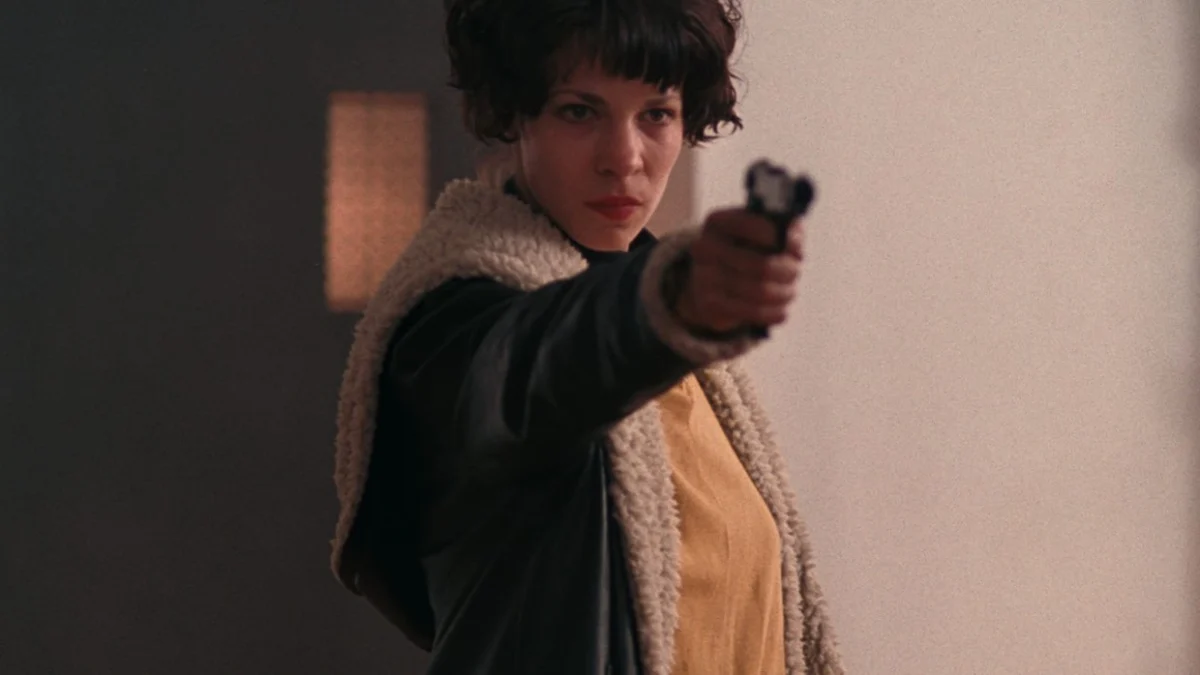
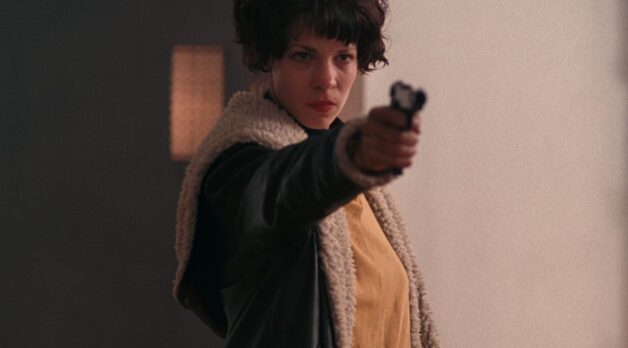
The 4K restoration of I Shot Andy Warhol breathes fresh life into a work that has long held a revered status in the canon of 1990s independent cinema. Anchored by a fierce, career-defining lead performance from Lili Taylor as Valerie Solanas, the film traces Solanas’s trajectory from the fringes of New York City’s avant-garde art scene to the fateful steps of the Factory on Union Square. Taylor portrays Solanas not as a cartoon villain or a clinical madwoman, but as an uncompromising outsider—brilliant, erratic, and profoundly alienated.
The film’s visual landscape, enhanced by Kuras’s meticulous digital remastering, balances the grungy realism of late-1960s New York with the dreamlike, heavily stylized atmosphere of Warhol’s inner circle. Supported by an ensemble cast featuring Martha Plimpton, Michael Imperioli, and Stephen Dorff as trans icon Candy Darling, the production captures the kinetic energy of an era when downtown Manhattan functioned as a laboratory for cultural subversion. The musical score, composed by John Cale after Velvet Underground co-founder Lou Reed denied permission to use original tracks, underscores the film’s status as a living historical document rather than a sterile period piece.
Chronology and Background Context
To understand the cultural earthquake of June 3, 1968, one must examine the timeline of Solanas’s brief yet impactful alignment with the epicenter of pop art. Solanas, who held a degree in psychology and had written the SCUM Manifesto (Society for Cutting Up Men) as a self-published tract, drifted into Warhol’s orbit hoping to get her darkly satirical play, Up Your Ass, produced. Warhol, known for collecting eccentric and charismatic personalities, initially entertained her presence before distancing himself amidst escalating tensions over scripts, control, and intellectual property.
The confrontation culminated on June 3, 1968, when Solanas entered the Factory and fired three shots, critically wounding Warhol and also injuring art critic Mario Amaya. Solanas surrendered to police later that evening. While Warhol survived the shooting, the event fractured the innocent, open-door era of the original Factory, forcing the collective into a more guarded, corporate-adjacent existence. Solanas spent time in psychiatric facilities and prisons before passing away in obscurity in 1988 at a welfare hotel in San Francisco—a bleak ending that Harron initially considered for the film’s final moments before pivoting toward the manifesto’s enduring legacy.
The Evolution of the SCUM Manifesto
Central to both the film and the broader cultural discourse surrounding Solanas is the status of the SCUM Manifesto. In the late 1980s and early 1990s, when Harron was working as a researcher on documentaries and independently developing the script, the text was largely viewed as an obscure curiosity—a "weirdo outlier" circulated among a small faction of radical feminists.
Unlike mainstream feminist texts of the era, such as Shulamith Firestone’s The Dialectic of Sex, Solanas’s work operated on a plane of high-literary irony and blistering polemic. Opening with the famous line, "Life in this society being, at best, an utter bore and no aspect of society being at all relevant to women, there remains to civic-minded, responsible, thrill-seeking females only to overthrow the government, eliminate the money system, complete automation, and destroy the male sex," the manifesto blended deadpan social critique with shocking hyperbole.
Harron notes that when she first encountered a copy in a left-wing bookstore, she was struck by its stylistic elegance and the incisive precision of its critique against institutionalized female inferiority. Over the subsequent decades, the text has undergone multiple re-evaluations, reclaimed, analyzed, and debated by successive generations of theorists, graphic novelists, and gender studies scholars.
Warhol, the Factory, and Gendered Economies
Harron’s depiction of Andy Warhol, brought to life through Jared Harris’s sensitive performance, deliberately avoids the dichotomy of heroes and villains. Drawing on her own brief encounters with Warhol in the 1970s—where she noted his immense fragility, elusiveness, and tendency to deflect interpersonal tension onto figures like Brigid Berlin—Harron crafted a portrait of an artist who was simultaneously captivating and ruthlessly dismissive.
The Factory functioned as a dual-edged sword for the marginalized. On one hand, Warhol provided unprecedented visibility for drag queens, trans women, and social outsiders who had been entirely excluded from mainstream American culture. On the other hand, the economy of the Factory mirrored the cold pragmatism of Hollywood studios: when personalities like Edie Sedgwick or Valerie Solanas became too difficult to manage, they were swiftly discarded.
This dynamic served as a primary source of rage for Solanas, whose rigid essentialist philosophy—grounded in biological and chromosomal interpretations of gender—clashed directly with the fluid identities of the Factory’s superstars. While modern critics and contemporary gender theorists have occasionally re-examined the manifesto through intersectional or trans-affirming lenses, Harron cautions against simply imposing 21st-century frameworks onto 1968 realities. Solanas operated within a strictly binary framework of biological determinism, yet her foundational critique of power structures and male-dominated hierarchies retains its structural potency.
Broader Impact and Implications
The re-release of I Shot Andy Warhol arrives at a politically and culturally volatile juncture. Public discourse surrounding feminist rage, systemic backlash, and the permissible boundaries of female anger frequently mirrors the societal polarization of the 1990s. When the film originally premiered, it coincided with an era of cultural pushback against feminist gains—a period meticulously documented by author Susan Faludi in her seminal book Backlash.
Today, the film’s examination of a woman pushed to the absolute periphery of a male-dominated cultural elite resonates with contemporary audiences navigating hyper-online subcultures, institutional fatigue, and shifting paradigms of fame and notoriety. Harron observes that in the digital age, a figure like Solanas might have found immediate avenues for self-expression and audience acquisition—for better or worse—bypassing the impenetrable gatekeepers of the 1960s media establishment.
Ultimately, the 4K restoration of I Shot Andy Warhol serves as more than a nostalgic nod to the golden age of 1990s indie filmmaking. It stands as a complex, unblinking interrogation of art, alienation, and the high cost of cultural outsiderdom. By refusing to offer pat moral conclusions or comforting narratives, Harron’s film invites viewers to grapple with uncomfortable truths, ensuring that Valerie Solanas and her turbulent legacy remain as provocative, unsettling, and vital as they were nearly six decades ago.