


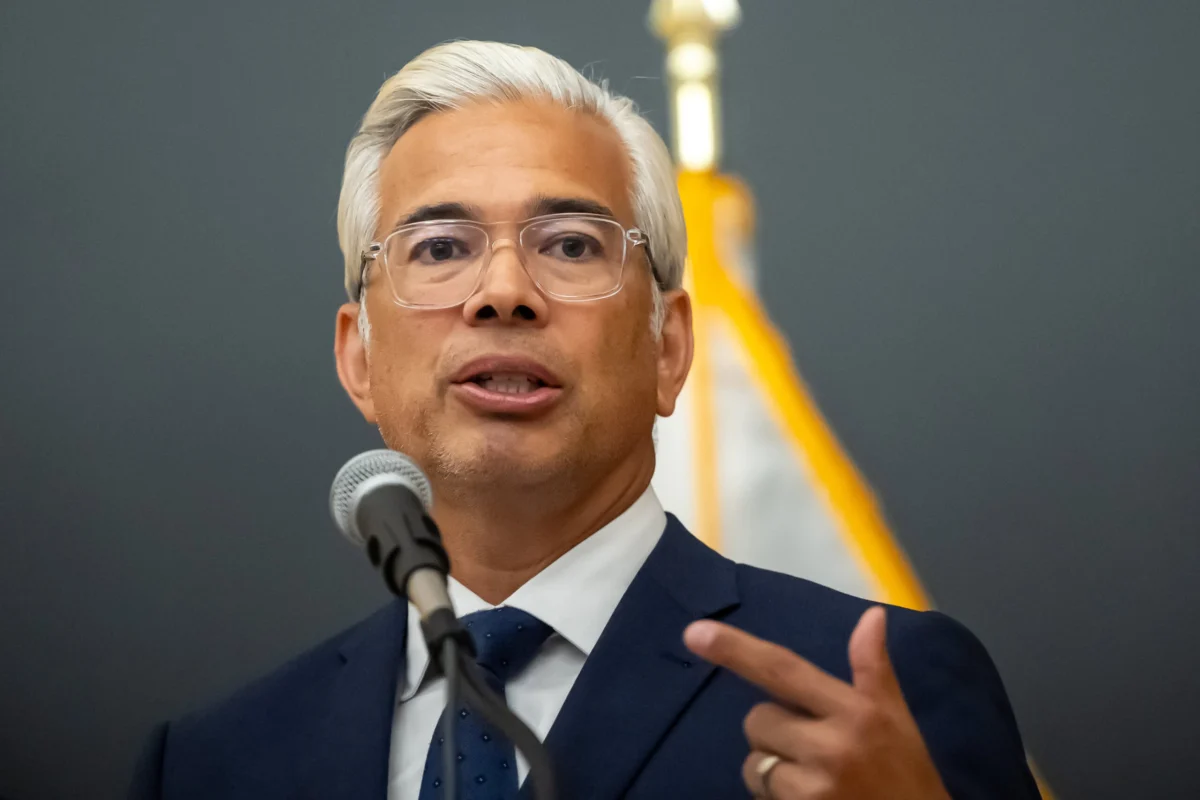
California Attorney General Rob Bonta has signaled a firm stance regarding the high-stakes antitrust litigation aimed at blocking the proposed merger between Paramount Skydance and Warner Bros. Discovery (WBD). Speaking in an interview with CNBC’s David Faber on Thursday, Bonta asserted that any potential settlement between the coalition of state attorneys general and the media conglomerates must be predicated on “robust structural remedies.” This development underscores the mounting legal pressure on a deal that would fundamentally reshape the landscape of the American entertainment industry.
The lawsuit, which was formally filed in July by a coalition of 12 states—including California, New York, New Jersey, Arizona, Colorado, Connecticut, Massachusetts, Minnesota, Nevada, New Mexico, Oregon, and Washington—alleges that the merger would create a market behemoth capable of stifling competition. Central to the plaintiffs’ argument is the claim that the combined entity would control approximately one-third of the motion picture production market and nearly one-third of the basic cable television programming sector.
A Conflict Over Legal Scope and Market Definition
At the heart of the current standoff is a profound disagreement between the state regulators and Paramount regarding the scope of the antitrust inquiry. Bonta expressed frustration with the company’s current approach to settlement discussions, characterizing Paramount’s arguments as tangential to the specific legal challenges outlined in the state’s complaint.
“Paramount wants to talk about everything except for what this case is about,” Bonta stated. “They want to talk about the streaming market, which we don’t allege in our complaint. They want to talk about CNN, which is not a focus of our complaint. They want to talk about the foreign regulators. We want to talk about the three markets that we set forth in our complaint, where we think there’s an antitrust violation.”
Bonta’s emphasis on the “three markets” refers to the specific concentrations in film and television production that the states argue violate the Clayton Antitrust Act. By framing the dispute as a “meat-and-potatoes, black-and-white, bread-and-butter” antitrust case, Bonta is positioning the legal challenge as a classic application of Section 7 of the Clayton Act, which prohibits mergers where the effect “may be substantially to lessen competition, or to tend to create a monopoly.”
Chronology of the Proposed Merger and Legal Resistance
The timeline of this transaction has been marked by aggressive pursuit from Paramount leadership followed by intense regulatory scrutiny.
- Initial Deal Announcement: Paramount Skydance moved to acquire Warner Bros. Discovery with an ambitious goal to finalize the transaction by September 30, 2026.
- The July Filing: The coalition of 12 states filed their antitrust lawsuit in July 2026, triggering an immediate legal battle that threatened to derail the timeline.
- The Strategic Delay: Responding to the legal headwinds, Paramount reached an agreement to postpone the closing of the acquisition to as late as June 2027.
- March Trial Date: A federal court has scheduled a trial for March 2027, which will serve as a pivotal moment in determining whether the merger can proceed or if it must be abandoned.
- Ongoing Settlement Speculation: Since the delay was announced, market analysts have speculated on whether the companies would negotiate a settlement to avoid the uncertainty and cost of a full-scale trial.
The Stakes for the Entertainment Industry
Should the merger be permitted, it would represent one of the most significant consolidations in media history. The combined entity would bring together a vast intellectual property library and a suite of dominant distribution channels. Specifically, it would unify the Warner Bros. and Paramount film studios, while merging a powerhouse network portfolio that includes CBS, MTV, and BET from the Paramount side, alongside CNN and Discovery from the WBD side.
Furthermore, the integration of streaming platforms Paramount+ and HBO Max would create a singular, formidable competitor in the digital subscription space. While Paramount has argued that the shrinking pay-TV subscriber base necessitates such consolidation to remain competitive against big-tech entrants, Bonta dismissed this as a defense against antitrust law. “Whether the market is shrinking or growing is really irrelevant,” Bonta noted, maintaining that the law focuses on market concentration, not the growth trajectory of the industry itself.
Official Responses and Defense Strategies
Paramount has remained steadfast in its commitment to the deal. In public remarks during the company’s August earnings call, CEO David Ellison expressed confidence that the transaction would eventually clear all legal hurdles. The company’s defense strategy appears to rest on the assertion that the states’ lawsuit fails to grasp the modern realities of a fragmented media marketplace.
Paramount has characterized the litigation as a “misrepresentation of competition,” stating that it plans to defend the transaction vigorously. Lead trial counsel Jeffrey Kessler has signaled a willingness to take the matter to the highest judicial levels, including the Supreme Court, should the company face a permanent block to the merger.
To date, the states have remained open to the possibility of a boardroom resolution, provided that such a deal addresses their specific competitive concerns. Bonta’s comments on Thursday clarified that while the states prefer a settlement, they are not interested in a superficial compromise. “Coming to the table has always been on the table,” Bonta said. “If Ellison and Paramount want to come to the table in good faith and talk, we want to talk, too. We’re happy to have that conversation.”
Broader Economic and Regulatory Implications
The outcome of this case will likely serve as a litmus test for the enforcement of the Clayton Act in the 21st century. The case touches on a critical question for regulators: how to apply century-old, bright-line antitrust statutes to a media environment characterized by rapid digital transformation and declining traditional linear television revenue.
Economists and legal experts have noted that if the states succeed in forcing “structural remedies”—such as the divestiture of major assets or the spinning off of specific production divisions—it could set a precedent for how future media mergers are evaluated. Conversely, if Paramount prevails, it could embolden other media conglomerates to pursue similar horizontal integrations, potentially leading to further consolidation in the film and television sectors.
For now, the parties remain on a collision course for the March 2027 trial. While both sides have left the door ajar for a negotiated settlement, the wide gulf between the regulators’ demand for structural changes and the company’s insistence on the merger’s current form suggests that a courtroom showdown remains the most probable path forward. As the trial approaches, the industry, investors, and policymakers will be closely monitoring the rhetoric from the California Attorney General’s office and the Paramount boardroom for any signs of a definitive shift in strategy.
The legal proceedings are expected to involve extensive testimony regarding market definitions, the future of cable television, and the influence of streaming services on traditional broadcasting. Given the duration and complexity of such litigation, the resolution of this case will likely be cited in academic and legal circles for years to come as a definitive interpretation of competition policy in the modern media era.