


The 15th edition of the Taiwan International Documentary Festival (TIDF) concluded its run this May, offering audiences a profound look into the geopolitics of memory, colonial legacies, and systemic state violence through regional and international political nonfiction. Established in 1998—a decade after the formal lifting of martial law in Taiwan—the festival has spent over 25 years championing independent video activism, alternative community media networks, and critically engaged regional Asian cinema. This year’s programming, featuring both newly minted features and meticulously restored archival works, positioned the medium not as a vehicle for easy catharsis or political propaganda, but as a prismatic lens through which to examine individual endurance against vast institutional structures.
Archival Recoveries and the Shadow of Colonial History
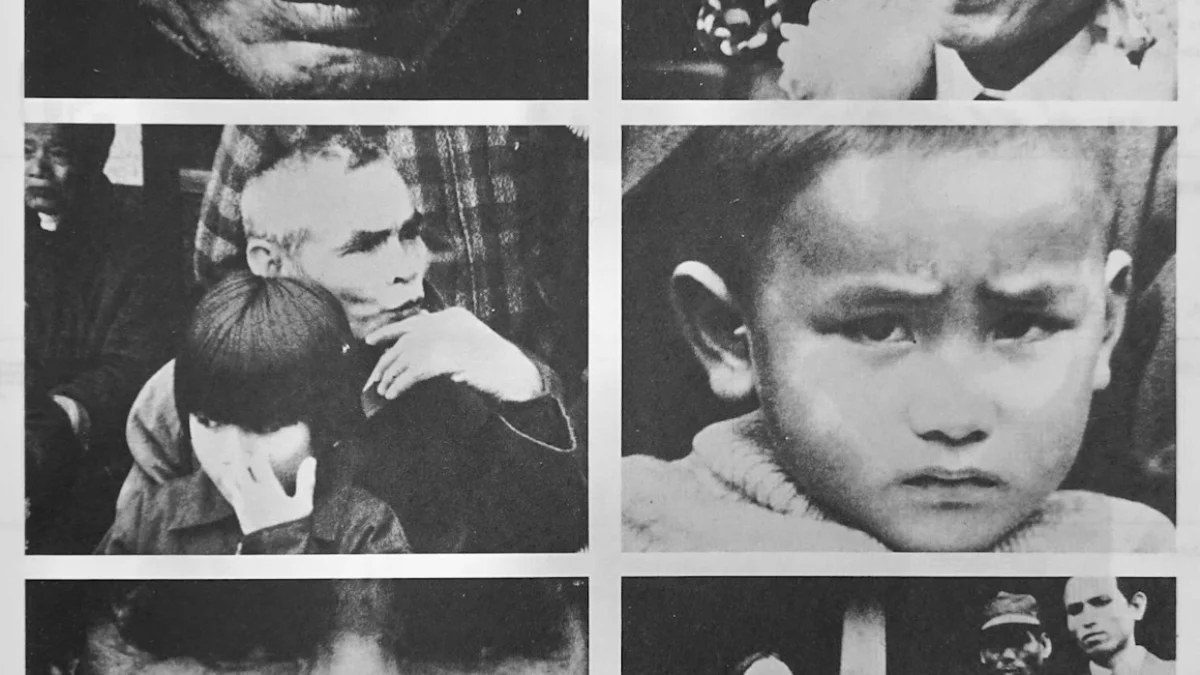
Among the most critically discussed presentations at the 15th TIDF was Archive: Li Guang-hui (1979/2024), a 30-minute compilation of television newsreel outtakes directed by the celebrated late photographer Chang Chao-tang. As a photojournalist for the China Television Company (CTV) between 1975 and 1979, Chang documented a historical event that captured the complex web of mid-century Asian geopolitics: the return of Suniuo, an Indigenous Amis Taiwanese soldier drafted into the Imperial Japanese Army during World War II.
Dispatched to the Indonesian island of Morotai, Suniuo was discovered living in isolation in the jungle in 1974, entirely unaware that the war had ended three decades prior. Upon his repatriation, the Kuomintang (KMT) government quickly folded his survival into a nationalist narrative celebrating the Republic of China’s triumph over the Japanese empire. Re-baptized under a Mandarin name and cast as a national hero who had actively resisted imperial forces—though historical accounts frequently suggest he was simply a stray soldier who had deserted as defeat loomed—Suniuo became a potent symbol for a transforming Taiwan.
Chang’s posthumously recovered footage, donated to the Taiwan Film and Audiovisual Institute (TFAI) following his death in 2024, meticulously chronicles this orchestrated homecoming. Composed chronologically, the short film moves from pre-reunion family press interviews to grand public welcoming ceremonies, concluding with Suniuo’s battle with the lung cancer that claimed his life in 1979. Crucially, Chang restricts the audio to contemporary broadcast news narration, leaving Suniuo entirely voiceless.
In a standout sequence, renowned Taiwanese folk singer Chen Da performs an epic ballad recounting Suniuo’s return as a heroic odyssey to family and nation. Chang’s lingering close-ups capture not deep contemplation on Suniuo’s face, but profound incomprehension as he listens to a traditional Mandarin song entirely alien to his Amis heritage. The film avoids direct voiceover, using associative montage to expose how private trauma was systematically subordinated to a state-authored historical narrative.
This archival excavation forms part of a broader festival focus on the hybrid identities born from colonial subjugation. Programs such as "War Memories, Shifting Identities" and "Reel Taiwan" interrogated Taiwan’s complex relationships with Sinocentric power structures, suppressed Indigenous histories, and regional networks across the Pacific. This archipelagic perspective was further underscored by Asia Is One (1973), a leftist collective work by NDU that traces the interwoven post-war lives of Taiwanese fishermen in Okinawa, Zainichi Okinawan miners in Japan, and rural Tayal villagers. By illustrating the seasonal migration of laborers across maritime borders, the film highlights an East Asia fractured and shaped by competing nationalisms.
Confronting the Bulldozer: Urban Displacement and Generational Resilience
Beyond historical excavation, the festival turned its lens toward the contemporary crises of urban development and systemic erasure. Across the 150-minute runtime of Hu Sanshou’s Xiangzidian Village: The Stage (2026), the filmmaker documents the methodical transformation of a rural Chinese community into a concrete highway over a six-year production period.
Rather than relying on direct, expository interviews—a staple of standard cinéma vérité—Hu adopts a distanced, contemplative approach, serving as narrator through voiceover vignettes. He anchors his subjects firmly within wide, expansive frames where they appear dwarfed by massive mounds of crushed rock, dust, and looming construction machinery. Hu consistently refers to villagers through their familial relationships—aunt, uncle, cousin, or spouse—emphasizing the intricate social fabrics of communities facing forced displacement.
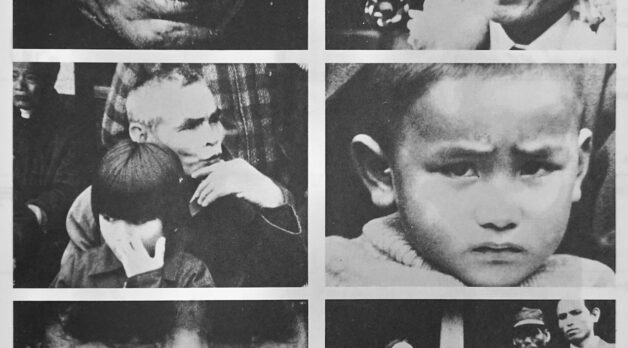
The film’s emotional resonance stems from Hu’s personal ties to the village where he grew up, capturing elders who passed away over the course of filming. Eschewing the conventional European documentary circuit’s appetite for poverty-porn or didactic political exposition, Xiangzidian Village adopts a patient, enduring rhythm. In the coda, a rare close-up pans across villagers’ faces as they watch one of Hu’s previous works during his father’s funeral, illuminating their expressions with recognition and communal memory.
This resistance to despair, even amid profound political and social disillusionment, echoed across other regional entries. In works concerning post-protest Hong Kong, such as Compact Disc (2026) and Maps of Traces (2025), filmmakers explored the aftermath of political suppression, locating resilience and psychological endurance in everyday routines rather than revolutionary triumph.
The Limits of Testimony and Legal Restitution in Thailand
The complexities of translating historic state violence into legal and narrative frameworks took center stage in Anocha Suwichakornpong’s Narrative (2026). The film observes a theatrical workshop involving family members of the Red Shirts pro-democracy activists killed during the 2010 military massacre in Bangkok.
Structured around a three-act theatrical exercise, the participants explore primal emotions, legal challenges regarding their ongoing quest for justice, and personal expressions of gratitude. The formal design deliberately mimics a traditional three-act narrative arc, exposing how cultural and legal institutions sanitize state violence by demanding neat resolutions that alleviate spectator guilt. During the final act, a musical score by Eiko Ishibashi overrides the dialogue, rendering the participants’ voices inaudible precisely when they are asked to articulate gratitude.
Through observational sequences, Narrative critiques the Thai legal system’s approach to the 2010 massacre, which treated hundreds of deaths as isolated civil cases rather than a unified, state-sponsored tragedy. By forcing families into a protracted legal labyrinth to track down individual soldiers, the system disaggregates collective state violence, rendering large-scale accountability nearly impossible.
By interspersing these sterile studio workshops with intimate, domestic moments—such as a mother reviewing dream journals filled with memories of her deceased son—Suwichakornpong interrogates the ethics of testimony. The film questions how personal grief is continuously operationalized by therapeutic, legal, and cinematic frameworks, ultimately asserting that true individual healing cannot occur without collective restitution.
Exhaustion and Absurdity in Post-Pandemic Wuhan
Offering a distinct stylistic counterpoint, Canadian-based Chinese filmmaker Luo Li’s Air Base (2025) reimagines a post-pandemic Wuhan as a theatrical stage for a series of repetitive, Beckettian performances. Set in 2023 as the city tentatively resumes public life, the film follows a cast of non-professional performers engaged in absurd, cyclical tasks: a man posing as a traffic operator from an overpass, a young woman collecting recorded sighs from skeptical pedestrians, and two men fruitlessly fishing in an artificial pond.
Another figure methodically divides fallen autumn leaves into symmetrical piles atop public bicycles or attempts to straighten the curtains of municipal buses. In one recurring motif, a broom continuously tumbles down an ascending escalator, prompting commuters to casually step aside and watch its Sisyphean descent without intervening.
These unscripted, deadpan interventions capture the exhaustion of contemporary interpersonal dynamics, where institutional alienation is met with collective shrugs of apathy. Yet, as the film progresses, the accumulation of these seemingly empty gestures fosters an unexpected sense of camaraderie. By repeatedly performing exhaustion rather than collapsing under its weight, the subjects in Air Base—much like the broader slate of films presented at the 15th TIDF—illustrate a stubborn, prickly survival strategy, continuously mapping out futures beyond what history has already dictated.