


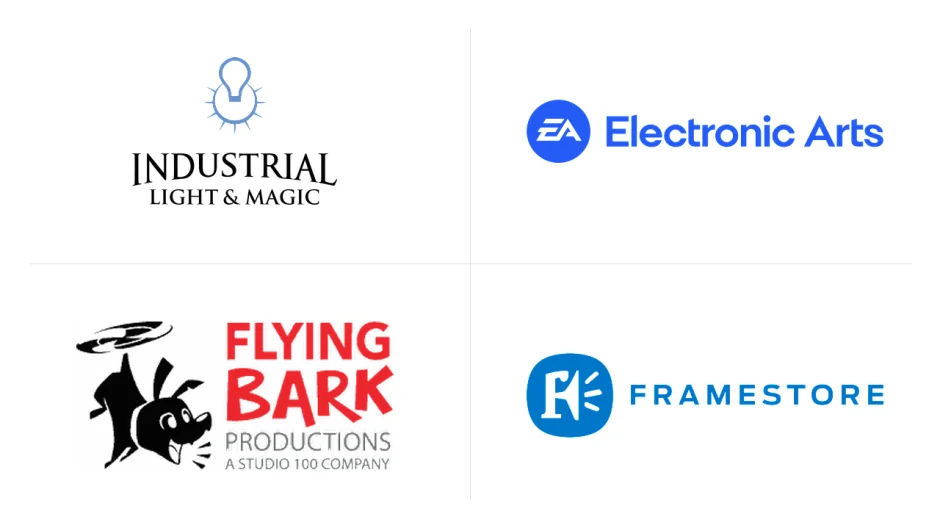
The international animation, visual effects (VFX), and interactive entertainment sectors are experiencing a robust phase of recruitment, as evidenced by the latest industry postings cataloging 19 active high-profile openings across North America, Europe, and the Asia-Pacific region. Prominent industry leaders—including Industrial Light & Magic (ILM), Electronic Arts (EA), Framestore, and Netflix—are actively scaling up their creative and technical departments. This hiring wave reflects a broader economic stabilization and a renewed surge in content production across streaming platforms, feature films, and AAA video game developments.
Global production pipelines are adapting to rapid technological integrations, most notably generative AI tools, real-time virtual production environments, and complex multi-region hybrid workflows. Studios are placing a premium on specialized talent capable of bridging traditional artistic disciplines with cutting-edge technical software. Consequently, the current job market spans a diverse spectrum of seniority, ranging from entry-level graduate placements and specialized internships to senior executive leadership roles steering multi-million-dollar visual pipelines.
Regional Distribution and Key Studio Openings
North America continues to serve as a primary hub for high-level technical direction and executive visual supervision. Major operations in locations such as California, Oklahoma, and Canada are recruiting specialized leadership to oversee advanced production methodologies. Notably, Sony Pictures Entertainment has posted an opening for a Vice President of Creative Technologist and VFX within its advanced production group, Torchlight. This strategic role commands an annual salary ranging between USD $238,400 and $298,000, underscoring the studio’s heavy investment in real-time workflows, artificial intelligence, and virtual production infrastructure.
Similarly, Electronic Arts is bolstering its Research and Engineering teams by searching for a Senior Animator across its hybrid hubs in Vancouver, Montreal, and Redwood City, offering competitive compensation packages between CAD $133,500 and $186,400 annually. In Oklahoma City, boutique studio CombineFx is actively building its crew for upcoming feature projects, recruiting both production concept artists and GFX compositors adept at merging live-action plates with generative and CG assets.

In the United Kingdom and Europe, traditional VFX powerhouses are reinforcing their core departments to meet tight studio delivery schedules. Framestore’s London office is currently sourcing mid-to-senior level layout artists proficient in Maya to manage complex CG camera animation, staging, and previsualization integration. Concurrently, Industrial Light & Magic (ILM) in London is expanding its look development division, seeking a Senior Look Development Technical Director to build custom shading networks and optimize pipeline efficiency for upcoming hero assets.
The Asia-Pacific region demonstrates the most diverse geographic spread of new opportunities, with hubs in India, Singapore, Taiwan, Australia, and South Korea displaying significant expansion. In Sydney, ILM is recruiting a Senior Modeler to handle complex organic and hard-surface creature assets on a hybrid schedule. Meanwhile, Netflix’s office in Taipei is searching for a Manager of Chinese-Language VFX to oversee regional slates from initial development through final delivery, managing complex vendor relationships and pushing local virtual production adoption.
Emerging markets in India are also experiencing notable technical growth. Studios such as Digital Turbo Media in Kerala, HMX Media in Pune, and Lumicel Animation Studios in Thiruvananthapuram are scaling up their local workforces. Lumicel is notably staffing up for its preschool animated series Hana Dreams, bringing on a Senior Animation Consultant and a Senior Animation Supervisor to manage long-term episodic pipelines and international client coordination.
Entry-Level Pathways and Talent Development
While senior leadership roles dominate budget allocations, the current employment landscape maintains vital entry points for emerging professionals. Studios are increasingly utilizing structured graduate placements and targeted mentorship models to cultivate domestic talent pipelines and address localized skill shortages.
In Melbourne, Princess Bento Studio has opened applications for a six-month paid Graduate Placement in Animation, specifically targeting Victorian residents to train in Toon Boom Harmony for an upcoming adult animated series. In Bengaluru, Bose Works is seeking resident animators and motion graphics specialists for commercial and short-film content, while IMAGEBAY in Indiana is hiring 3D architectural modelers to translate blueprints into Unreal Engine-ready environments. Furthermore, volunteer-driven and collaborative initiatives, such as the open artist calls at the UntoldCine Movie Database (UMDB) in Los Angeles, continue to provide portfolio-building environments for artists seeking practical multi-disciplinary pipeline experience.

Technological Integration and Industry Implications
The simultaneous push for senior technological leadership and foundational artistry highlights a fundamental shift in how modern visual media is produced. The integration of generative artificial intelligence, real-time engines like Unreal Engine, and complex cloud-based rendering pipelines has redefined standard studio requirements. Executives note that modern applicants must increasingly demonstrate adaptability across both traditional creative disciplines—such as classical drawing, organic sculpting, and layout composition—and advanced technical frameworks involving node-based compositing, shader optimization, and procedural simulation.
This technological evolution carries significant economic and operational implications for the global entertainment supply chain. Studios that successfully integrate real-time workflows and AI-assisted tooling are positioned to reduce turnaround times and optimize operational expenditures on large-scale cinematic and interactive projects. However, this transition also creates a widening skills gap, forcing educational institutions and regional training centers to rapidly update their curricula to match the software proficiencies demanded by multinational houses like ILM, Framestore, and EA.
As production houses continue to evaluate their staffing needs against shifting global consumption habits, industry analysts anticipate that hybrid work models and cross-border studio collaboration will remain standard practice. While the longevity of individual job listings remains subject to rapid placement cycles, the overarching volume of open positions signals sustained confidence and operational momentum within the global digital arts sector.