

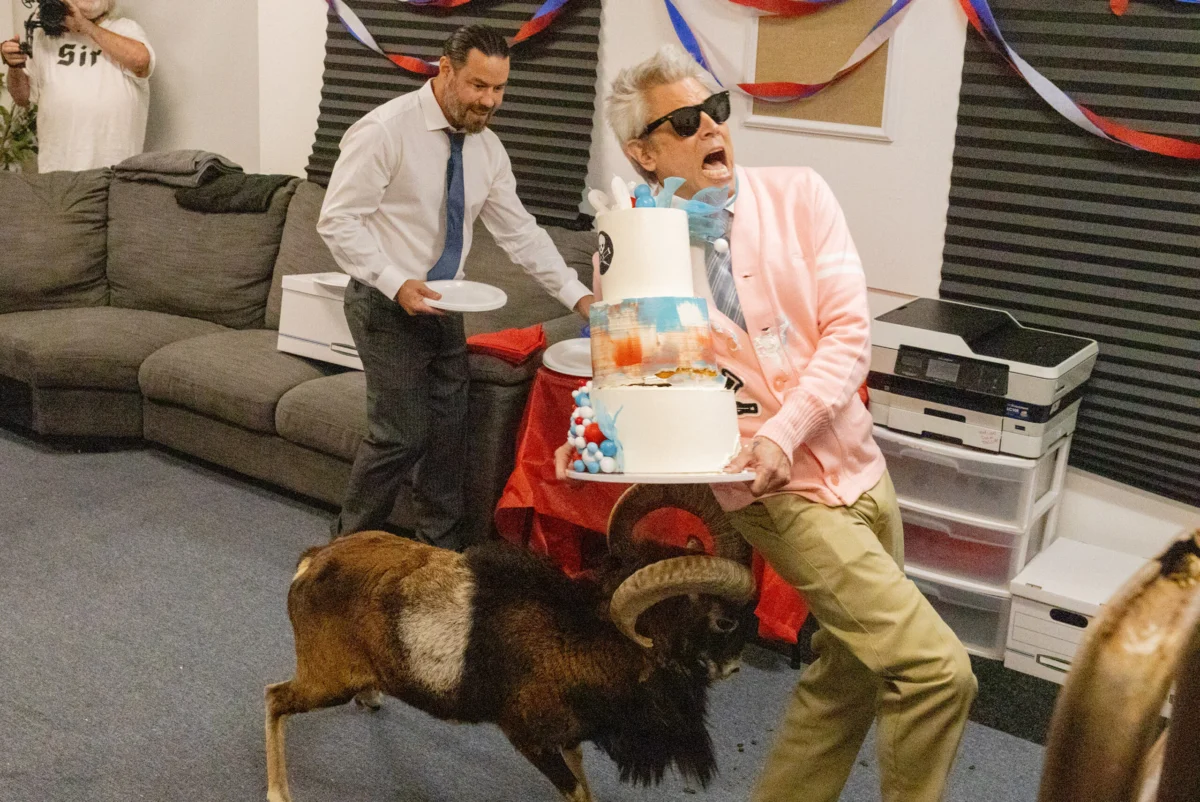
The release of Jackass: Best and Last marks what may be the definitive final chapter in one of the most culturally disruptive and commercially improbable franchises in modern entertainment history. For over two decades, the Jackass phenomenon has operated as an anomaly within the studio system, bridging the gap between underground skate culture and mainstream global box office success. At the center of this cultural milestone is director Jeff Tremaine, whose quiet stewardship has guided a band of professional daredevils from guerrilla-style video cassettes to multi-million-dollar cinematic productions distributed by Paramount Pictures.
While the franchise is globally recognized for its juvenile humor, high-stakes physical comedy, and boundary-pushing stunts, the enduring legacy of Jackass is rooted in a precise, albeit unconventional, directorial vision. Tremaine, an alumnus of fine arts and the countercultural skateboarding magazine Big Brother, has spent the better part of twenty-five years cultivating an aesthetic that merges raw, unscripted chaos with a surprisingly empathetic exploration of lifelong male camaraderie.
Origins in Skate Culture and the Genesis of Guerrilla Media
The roots of the Jackass franchise trace back to the late 1990s and the offices of Big Brother, a countercultural skateboard publication that celebrated anti-establishment behavior, raw athleticism, and transgressive humor. Tremaine, serving as the magazine’s art director, developed a distinct visual sensibility defined by zine-style layouts, bold typography, and an unfiltered approach to documentarian storytelling.
It was during this era that Tremaine curated a collection of outrageous personalities, including Johnny Knoxville, Steve-O, Chris Pontius, and the late Ryan Dunn. The turning point arrived when Knoxville pitched an idea to test various self-defense weapons on himself for a magazine video segment. When Knoxville filmed himself shooting his own vest with a handgun and subsequently tasering himself, Tremaine recognized that the material transcended the traditional boundaries of a skate video.
Collaborating with cocreators Spike Jonze and Johnny Knoxville, Tremaine transitioned the concept into a television pilot for MTV. Initially conceived as a short-lived experiment that network executives anticipated would be immediately canceled, the resulting television series debuted in October 2000. It instantly ignited a cultural phenomenon, redefining late-night television and sparking widespread imitation, which ultimately prompted network censorship battles and intense public scrutiny.
The Cinematic Expansion and Production Evolution
Following the cancellation of the MTV series due to creative and regulatory pressures, the franchise made an unprecedented leap to the theatrical landscape with Jackass: The Movie in 2002. Produced on a modest budget, the film grossed over $79 million worldwide, establishing a lucrative blueprint for subsequent sequels, including Jackass Number Two (2006), Jackass 3D (2010), and Jackass Forever (2022).
As the franchise expanded, the scale of production shifted dramatically. Early installments relied on guerrilla filmmaking techniques—filming without permits, kidnapping unsuspecting celebrities like Brad Pitt for impromptu street bits, and cramming the entire cast and crew into a single conversion van driven by the director himself. Over time, however, the financial stakes and corporate involvement from Paramount Pictures introduced strict insurance regulations, legal permissions, and complex safety protocols.
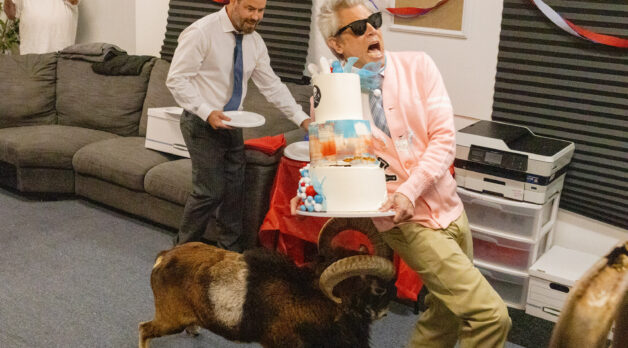
Despite these corporate constraints, Tremaine continually sought to preserve the core spontaneity that defined the original iterations. This delicate balance between studio oversight and unscripted anarchy required constant negotiation. For instance, during the production of Jackass 3D, Tremaine engaged in prolonged battles with the Motion Picture Association (MPA) and studio executives over the inclusion of full-frontal male nudity, leading to creative compromises such as the famous, heavily scrutinized ping-pong paddle sequence.
Furthermore, the physical toll on the cast escalated with every subsequent film. During the making of Jackass Forever, Johnny Knoxville suffered severe injuries, including broken ribs and a concussion, after being charged by a bull for a stunt titled "The Magic Trick." Tremaine has frequently noted the psychological weight of directing performers into high-risk physical scenarios, acknowledging that the line between capturing authentic comedy and ensuring cast safety remains a constant, high-pressure editorial challenge.
Critical Reevaluation and the Museum of Modern Art Shift
For the first decade of its existence, the Jackass franchise was universally dismissed by mainstream film critics as coarse, vulgar, and devoid of artistic merit. Early reviews categorized the films as a dangerous descent into public indecency and mindless self-harm.
However, a significant cultural pivot occurred in 2010 when Jackass 3D premiered with a retrospective screening at the Museum of Modern Art (MoMA) in New York City. Film scholars and cultural critics began to reappraise the series, identifying underlying themes of avant-garde performance art, profound vulnerability, and sociological commentary. Analysts noted that beneath the surface-level slapstick and gross-out gags, the franchise successfully dismantled traditional expressions of toxic masculinity, actively condemning homophobia while championing deep, unconditional emotional bonds among men.
While Tremaine has often expressed discomfort with the intellectualization of his work—preferring to view the material through a purely surface-level, humorous lens—the critical consensus has undeniably shifted. Recent installments like Jackass Forever received overwhelmingly positive reviews from mainstream publications, an extreme rarity for a multi-film comedy franchise entering its third decade. Industry analysts attribute this critical renaissance to a combination of generational nostalgia—as the children raised on the original television series grew up to become film critics—and a growing appreciation for the sheer technical difficulty of physical comedy executed without digital effects.
Broader Impact and Industry Legacy
The cultural footprint of Jackass extends far beyond box office receipts. The franchise established a distinct sub-genre of reality stunt-comedy that paved the way for internet-native content creators, user-generated video platforms, and modern influencer culture. Long before the rise of YouTube creators and social media stunt performers, Tremaine and his collaborators commercialized self-inflicted chaos for mass audiences.
Yet, unlike modern digital content often designed for instantaneous, algorithm-driven consumption, the Jackass films were meticulously crafted theatrical experiences. Tremaine’s background in fine arts and graphic design heavily influenced the framing, pacing, and musical curation of the films, integrating eclectic punk rock soundtracks that elevated the cinematic presentation. His unexpected detour into directing a stylized, musical-esque safety video for American Airlines further demonstrated a versatile command of commercial directing outside the realm of bodily harm.
As the franchise approaches its potential conclusion with Jackass: Best and Last, industry observers and cultural historians are left to evaluate its unusual trajectory. By remaining fiercely committed to a juvenile sense of humor while adapting to the demands of modern studio filmmaking, Jeff Tremaine and his cast redefined the boundaries of cinematic comedy, proving that enduring art can sometimes be found in the most ridiculous places.