



The Financial Fallout: A Breakdown of Overtime Charges
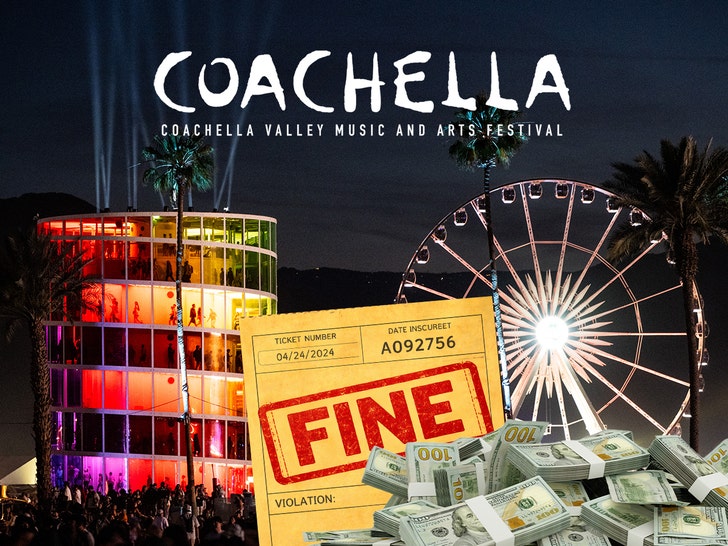
A representative from the city of Indio, the host city for the sprawling festival, confirmed that while the first weekend of Coachella 2026 proceeded without any curfew infringements, Weekend Two incurred significant financial penalties. The violations occurred on both Friday and Saturday nights, leading to a cumulative fine of $44,000 that will be directed into the city’s general fund, bolstering vital public services.
On Friday night, April 18, Anyma, the acclaimed electronic music producer and visual artist, whose set was a highly anticipated closer, extended his performance by nine minutes beyond the 1 AM curfew. This nine-minute overrun resulted in a hefty $24,000 fine for Goldenvoice, the festival’s promoter. The subsequent evening, Saturday, April 19, saw another violation when global sensation Justin Bieber made a surprise appearance. His unscheduled extension, though lasting only two minutes past the 1 AM deadline, triggered a separate fine of $20,000. These figures underscore the stringent nature of the agreement between the festival organizers and the City of Indio, where even brief deviations carry significant monetary consequences.
A Deep Dive into Coachella’s Curfew Regulations
The imposition of these fines is not an isolated incident but rather a recurring facet of Coachella’s operational landscape, reflecting a long-standing agreement between Goldenvoice, a subsidiary of AEG Presents, and the City of Indio. This contractual arrangement, refined over decades, establishes strict parameters for noise levels and operating hours, primarily designed to mitigate the impact of the massive event on the surrounding residential communities.
The general understanding of the curfew penalty structure often cited in previous years indicated fines starting at $1,000 for the first five minutes past curfew, followed by $200 for each subsequent minute. However, the significantly higher figures for Weekend Two 2026 — $24,000 for nine minutes and $20,000 for just two minutes — suggest either a revised, more punitive fine schedule specifically for major infractions or a tiered system where late-night closures carry escalating penalties, particularly on prime nights like Friday and Saturday. These substantial amounts are a clear deterrent, emphasizing the city’s commitment to upholding its agreements, despite the festival’s immense economic benefits.
The curfew is a critical component of the festival’s conditional use permit, a legal document that allows the event to take place in Indio. It addresses concerns from local residents regarding noise pollution, traffic congestion, and general disruption to their quality of life. The 1 AM cutoff on Friday and Saturday, and an earlier 12 AM (midnight) curfew on Sunday, are strictly enforced, with sound engineers and city officials closely monitoring performance times. Breaches not only result in monetary fines but can also potentially impact future permit renewals or lead to stricter conditions for subsequent festivals.
The Performances That Cost: Anyma and Justin Bieber
Anyma, one half of the acclaimed electronic duo Tale of Us, delivered a mesmerizing closing set on Friday night, April 18. Known for his immersive audio-visual experiences, Anyma’s performance reportedly captivated the audience, making the extended nine minutes feel, to many attendees, like a worthwhile bonus. His ability to craft an atmospheric journey with cutting-edge visuals often necessitates meticulous timing, and the decision to slightly prolong the experience likely aimed to maximize the artistic impact for the closing act of the night. The crowd’s enthusiastic reception suggests that, from an entertainment perspective, the extra moments contributed significantly to the festival experience, even if it came at a cost to the organizers.
Saturday night’s overage was courtesy of an unannounced, surprise appearance by Justin Bieber. The pop icon joined another artist on stage, delighting fans with an impromptu performance. A particular highlight, widely circulated across social media, was Bieber serenading Billie Eilish with his hit song "One Less Lonely Girl." Such spontaneous, high-profile moments are a hallmark of Coachella, often generating immense buzz and social media virality that amplify the festival’s global reach. However, even these electrifying, unplanned segments must contend with the rigid operational schedule. The two-minute extension, while seemingly minor, demonstrates the zero-tolerance policy for time overruns, especially when a global superstar like Bieber commands the stage. The buzz created by his performance undoubtedly provided significant promotional value, perhaps offsetting the fine in the eyes of some, but the city’s stance remains resolute on adherence to regulations.
Coachella’s Economic Juggernaut and Local Impact
Coachella is not merely a music festival; it’s an economic powerhouse for the Coachella Valley. Attracting over 125,000 attendees per weekend, the event generates hundreds of millions of dollars in economic activity annually. This includes direct spending on tickets, accommodations, food, transportation, and merchandise, as well as indirect benefits to local businesses, employment opportunities, and tax revenues for the City of Indio and Riverside County.
In 2023, for instance, the festival was estimated to have an economic impact exceeding $700 million on the region. Against this backdrop, a $44,000 fine, while substantial, represents a relatively small fraction of the festival’s overall revenue and operational budget, which itself can run into hundreds of millions of dollars. For Goldenvoice, these fines are often considered an anticipated cost of doing business, a calculated risk associated with the unpredictable nature of live performances and the desire to deliver unforgettable moments, even if they occasionally spill over schedule.
However, for the City of Indio, these fines are more than just a drop in the bucket. The funds are channeled directly into the city’s general fund, which is crucial for financing essential public services. This includes supporting the Indio Police Department, which significantly augments its presence during the festival weekends to manage crowds and ensure public safety; the Indio Fire Department, which provides emergency medical services and fire prevention; and various public works departments responsible for infrastructure maintenance, sanitation, and traffic management before, during, and after the event. Thus, the fines serve a dual purpose: penalizing non-compliance and directly contributing to the city’s capacity to manage the immense logistical demands placed upon it by the festival.
Historical Context and Recurrent Challenges
Curfew violations are a recurrent theme in Coachella’s history. Over the years, numerous artists and sets have extended beyond the allocated time, leading to penalties. In 2014, the festival incurred a reported $94,000 in fines, largely due to extended sets by Arcade Fire and Muse. In 2015, fines reportedly reached $84,000, with Drake’s closing performance contributing significantly to the total. These instances highlight a consistent challenge for festival organizers: balancing the spontaneity and artistic freedom of performers with the rigid constraints of a highly regulated event.
The scale of Coachella, with multiple stages running concurrently and complex logistical transitions between acts, makes precise adherence to schedule a monumental task. A slight delay on one stage can have a cascading effect, pushing subsequent acts, especially headliners and closers, past their allotted times. While Goldenvoice employs sophisticated scheduling and stage management teams, the allure of an encore, a surprise guest, or simply an artist getting lost in the moment, occasionally leads to these breaches.

Implications and Future Outlook
The recent $44,000 fine for the 2026 edition serves as a fresh reminder of the strict enforcement policies in place. While it is unlikely to deter Goldenvoice from continuing to host Coachella in Indio, or significantly impact their financial standing, it underscores the ongoing negotiation between grand-scale entertainment and local governance.
For attendees, the fines are largely an abstract concept, often overshadowed by the thrill of the performances. Many would argue that the extended moments from artists like Anyma and Justin Bieber contributed positively to their festival experience, embodying the spontaneous magic that Coachella is known for. From the city’s perspective, however, the fines are a tangible mechanism for holding organizers accountable and ensuring that the economic benefits of the festival do not come at an unacceptable cost to its residents.
Looking ahead, Goldenvoice will likely continue to refine its scheduling and stage management protocols, perhaps implementing even stricter internal guidelines for artists and production teams. However, the nature of live music, particularly at an event as dynamic and sprawling as Coachella, suggests that occasional overruns, and the ensuing fines, may remain an inevitable, albeit costly, part of the festival’s enduring legacy. The balance between delivering unparalleled entertainment and respecting local regulations will always be a tightrope walk for the organizers of this globally renowned desert spectacle.