

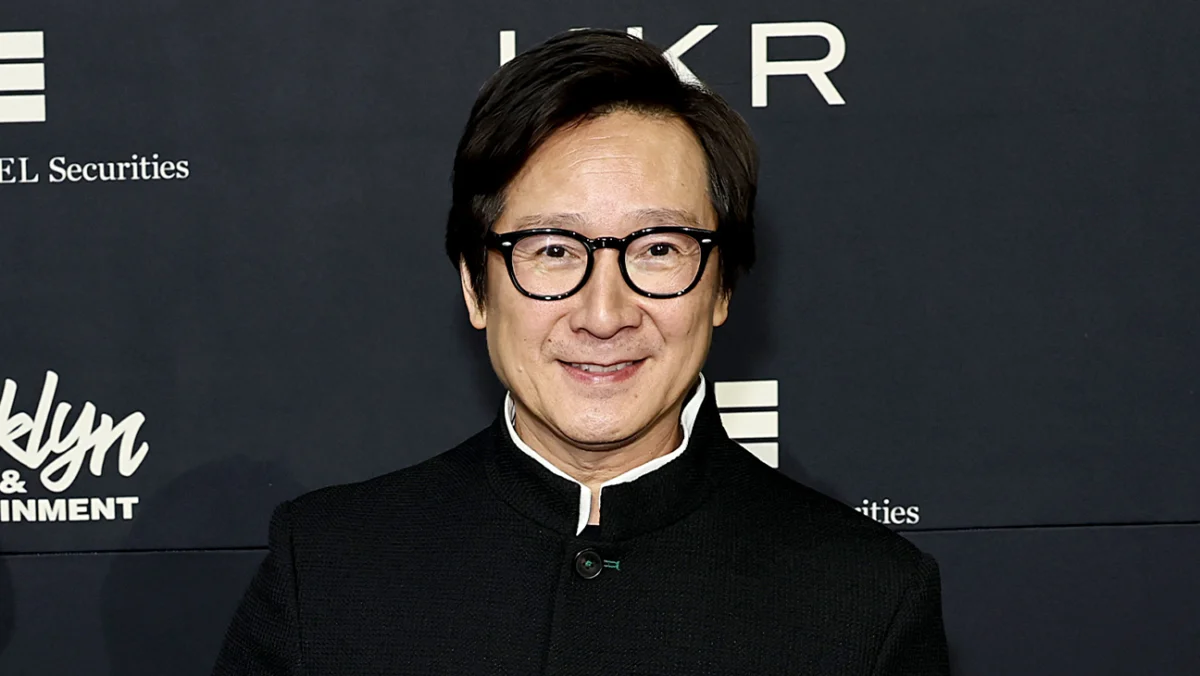
The intersection of cinematic history and personal transformation is often found in the fine print of industry contracts, a reality recently brought to light by Academy Award-winning actor Ke Huy Quan. In his newly released memoir, Never Say Die, Quan details a formative moment from his childhood that serves as a testament to the mentorship and professional grace of industry titans Steven Spielberg and George Lucas. While the world remembers the 12-year-old actor for his iconic portrayal of Short Round in the 1984 blockbuster Indiana Jones and the Temple of Doom, few were aware of the financial safety net provided to him—a gesture that, by his own account, altered the trajectory of his family’s life.
The Kitchen Table Revelation
In the narrative of his memoir, Quan describes a quiet afternoon that would ultimately underscore the life-changing nature of his early success. He recounts walking into his family home to find his parents huddled over a kitchen table, their faces etched with a mixture of shock and disbelief. Upon opening an envelope from Lucasfilm, they discovered a residual check for approximately $100,000. For a young immigrant family, this sum was not merely an unexpected bonus; it was a profound shift in their financial reality.
At the time, the concept of residual payments—the ongoing compensation paid to performers for the reuse of their work—was a complex financial mechanism that the 12-year-old Quan did not fully grasp. Having already been compensated for his base salary, the young actor assumed his financial transaction with the studio had concluded. The receipt of this substantial sum, he later realized, was an intentional, quiet act of generosity orchestrated by the film’s producers.
The Industry Context: A Rarity in the 1980s
To understand the significance of this $100,000 payment, it is necessary to examine the landscape of Hollywood compensation in the early 1980s. During that era, profit participation and residual clauses were almost exclusively reserved for top-tier stars, directors, and producers. The vast majority of supporting actors, particularly child performers, received standard wages with little to no leverage to negotiate for a percentage of a film’s long-term earnings.
Indiana Jones and the Temple of Doom was not a niche independent project; it was the highly anticipated successor to 1981’s Raiders of the Lost Ark. Given the massive commercial expectations surrounding the franchise, the decision to include a young, first-time actor in a profit-sharing arrangement was, as Quan notes, "unheard of." By providing this financial cushion, Spielberg and Lucas extended a form of security that went beyond the standard requirements of a child actor’s contract, reflecting a level of industry mentorship that is rarely documented in such detail.
A Chronology of a Resilient Career
The arc of Ke Huy Quan’s career is one of the most compelling narratives in modern Hollywood history. His trajectory can be broken down into three distinct phases:
- The Early Stardom (1984–1985): Following his debut as Short Round, Quan solidified his place in pop culture as Data in the 1985 cult classic The Goonies. These roles placed him at the center of the era’s most successful entertainment franchises.
- The Professional Hiatus: As Quan transitioned into adulthood, the opportunities for Asian-American actors in Hollywood remained severely limited. He moved away from on-camera work, spending decades behind the scenes as a stunt coordinator and assistant director, working with directors like Wong Kar-wai.
- The Renaissance (2022–Present): After a decades-long absence, his return to acting in Everything Everywhere All at Once garnered him widespread critical acclaim, culminating in an Academy Award for Best Supporting Actor.
Throughout these decades, the influence of his early mentors remained a constant. During his 2023 Golden Globe acceptance speech, Quan explicitly recognized the role Spielberg played in launching his career, publicly bridging the gap between his childhood success and his current professional maturity.
Financial Implications and Talent Management
The revelation of the $100,000 residual check provides a rare glimpse into the mechanics of high-level studio production. In the modern era, the debate over residuals has become a central point of contention in labor negotiations, most notably during the 2023 WGA and SAG-AFTRA strikes. While contemporary actors and writers fight for transparency and fair compensation in the age of streaming, Quan’s story serves as a historical case study in how production houses historically managed the development of young talent.
While the $100,000 figure was life-changing for his family, it also serves as a benchmark for the economic impact of successful franchise films. By ensuring the financial well-being of their performers, studios were able to foster long-term loyalty and professional stability, even if the industry at large did not adopt this model as a standard practice.
The Psychological Impact of Early Success
Beyond the financial aspects, Quan’s memoir addresses the psychological weight of early fame. He writes candidly about the fear that his childhood achievements were merely the result of luck, and the subsequent anxiety that he might never surpass his early work. This internal struggle—the "imposter syndrome" often experienced by former child stars—provides a human dimension to the glossy image of Hollywood success.
The support he received from his parents and his early mentors acted as a ballast during the years he spent away from the spotlight. By acknowledging that his early success was facilitated by the grace of others, Quan frames his career not as a solitary journey of luck, but as a collaborative effort shaped by the individuals who invested in his potential.
Legacy and Broader Industry Impact
The release of Never Say Die comes at a time when the industry is increasingly focused on the treatment of child performers and the importance of inclusive representation. Quan’s experience highlights a positive precedent for the treatment of young talent, contrasting with the more cautionary tales often associated with child stardom.
Furthermore, the story reinforces the enduring power of the mentorship bond in the entertainment industry. The relationship between Spielberg and Quan has spanned nearly forty years, evolving from director-actor to a more peer-to-peer professional respect. This longitudinal relationship is a rarity in Hollywood, where professional associations are often fleeting.
In analyzing the broader impact, it is clear that the decision to include Quan in the film’s financial success did more than pay for his family’s stability; it fostered a sense of professional self-worth that allowed him to eventually return to the industry on his own terms. As he noted in his memoir, the gesture was "a quiet" one, reflecting a style of leadership that prioritized the human element of filmmaking.
Conclusion
Ke Huy Quan’s account of his first residual check is more than a nostalgic anecdote about a childhood windfall. It is a detailed look at the systemic inequities of the film industry, the power of mentorship, and the resilience required to navigate a career that spanned decades of change. As Never Say Die enters the public consciousness, the story of the $100,000 check stands as a poignant reminder that the most significant moments in a career are often those that occur behind the scenes, away from the camera, and long before the awards ceremonies begin.