

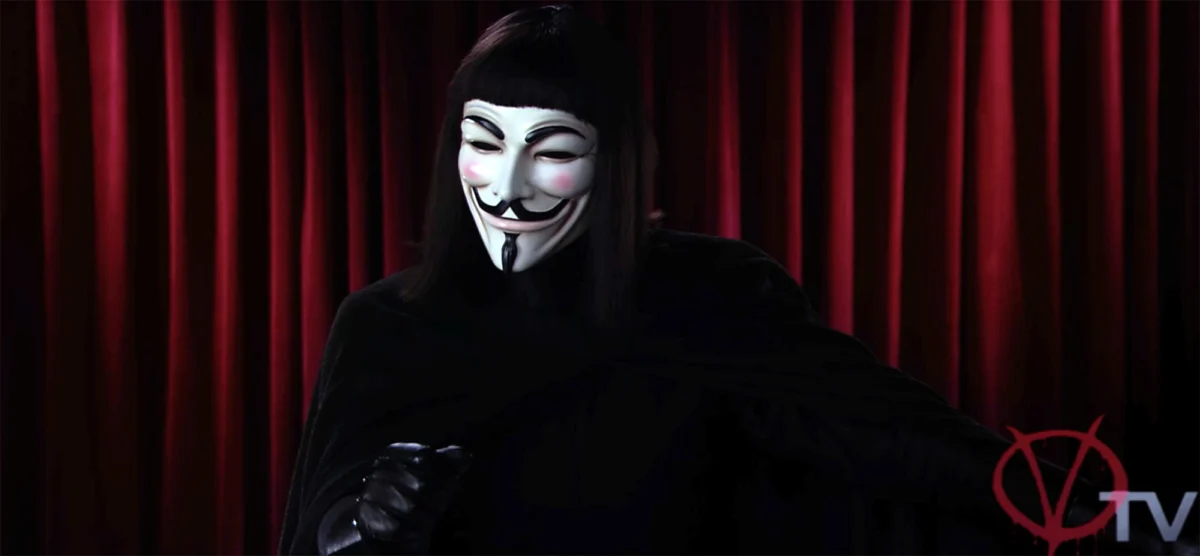
Fathom Events has officially released the final promotional trailer for its upcoming nationwide theatrical re-release of the dystopian masterpiece V for Vendetta, commemorating the film’s milestone 20th anniversary. Originally distributed by Warner Bros. Pictures in the spring of 2006, the cinematic adaptation of Alan Moore and David Lloyd’s seminal graphic novel is set to return to the big screen for two exclusive dates: November 1 and November 5, 2026. The latter date holds profound thematic and narrative significance within the universe of the film, famously invoking the Gunpowder Plot of 1605.
As the milestone date approaches, cinema operators and ticketing platforms report steady anticipation from audiences eager to experience the Wachowski-penned thriller in a theatrical environment. The final preview trailer, distributed via major digital platforms, highlights the striking visual style, high-stakes political rebellion, and enduring cultural resonance that have cemented the film’s status as a modern classic of the sci-fi and action genres.
Chronology of a Revolutionary Production
The journey of V for Vendetta from page to screen spans decades, defined by creative friction, visionary filmmaking, and a timely political subtext that has only deepened with age. Written by Alan Moore and illustrated by David Lloyd, the original comic book series was serialized in the British anthology magazine Warrior between 1982 and 1985, before being completed and published in full color by DC Comics. Moore, famously protective of his intellectual property and critical of Hollywood adaptations, eventually distanced himself from the project, removing his name from the credits long before cameras began rolling.

Development on the film adaptation accelerated in the late 1990s and early 2000s under the stewardship of producers Joel Silver and The Wachowskis (Lilly and Lana), fresh off the historic global success of The Matrix. The sibling filmmakers penned the screenplay adaptation, modernizing the political paranoia while retaining the core philosophical dilemmas of state control, individual liberty, and violent resistance against tyranny.
Directorial duties were handed to Australian filmmaker James McTeigue, marking his feature-film directorial debut after years of working as an assistant director on major Hollywood productions, including the Matrix sequels and Star Wars: Episode II – Attack of the Clones. Filming took place primarily in Berlin, Germany, and London throughout 2004. The release strategy faced initial delays—most notably a postponement from late 2005 to early 2006 following the London tube bombings—before Warner Bros. officially premiered the film in US theaters on March 17, 2006.
Box Office Data and Theatrical Performance
Upon its initial theatrical run, V for Vendetta performed solidly at the global box office, appealing to mature audiences and fans of speculative fiction. Produced on an estimated budget of $54 million, the film grossed approximately $70.5 million domestically in the United States and Canada, with a worldwide cumulative box office take exceeding $132.5 million.
While its box office returns did not reach the astronomical heights of The Matrix, the film achieved considerable commercial longevity through home video sales, broadcast syndication, and digital streaming. It established itself as a staple of Warner Bros.’ catalog of intellectual properties. The upcoming 2026 re-release, spearheaded by Fathom Events, aims to capitalize on this enduring popularity, offering fans a rare opportunity to view the digitally remastered feature on the cinematic canvas. Fathom’s specialized programming model targets eventized cinema-going, allowing older catalog titles to achieve renewed box-office momentum through limited-run theatrical engagements.

Cast and Creative Architecture
The success of V for Vendetta rests heavily on its distinguished ensemble cast and the distinctive physical performances at its core. Natalie Portman stars as Evey Hammond, an ordinary working-class citizen in a totalitarian post-war Britain, whose life is irrevocably altered when she crosses paths with an enigmatic, masked revolutionary. Portman famously shaved her head on camera for the role, a sequence that remains one of the film’s most memorable character transformations.
Opposite Portman, Hugo Weaving delivered a masterclass in voice and physical acting as "V," the scarred, Shakespeare-quoting vigilante. Because the character’s face remains perpetually obscured behind the iconic Guy Fawkes mask—an aesthetic creation by David Lloyd that subsequently inspired real-world activist movements globally—Weaving’s performance relied entirely on vocal cadence, posture, and precise timing. (Notably, James Purefoy was originally cast as V and filmed several weeks before being replaced by Weaving, though some of Purefoy’s physical performance and vocal inflections reportedly remain in the final cut).
The supporting cast features a roster of esteemed British and international actors, including Stephen Rea as Inspector Eric Finch, the weary lead investigator tasked with hunting down V; John Hurt as High Chancellor Adam Sutler, the megalomaniacal leader of the fascist Norsefire Party; Stephen Fry as Gordon Deitrich, a liberal television host harboring dangerous secrets; alongside veteran character actors Tim Pigott-Smith, Rupert Graves, and Roger Allam.
Thematic Resonance and Societal Implications

Two decades after its initial premiere, V for Vendetta continues to provoke discussion regarding its political and sociological themes. Set in a near-future United Kingdom governed by a regime that exploits fear, biological warfare, mass surveillance, and media manipulation to maintain absolute authority, the film mirrors many anxieties of the contemporary socio-political landscape.
Film critics and cultural analysts have frequently re-examined the picture in times of political polarization, noting how its exploration of civil disobedience, government overreach, and the power of collective symbolism transcends its 2006 release window. The Guy Fawkes mask, popularized by the film, famously transcended cinematic fiction to become the visual emblem of international hacktivist networks and grassroots protest movements, altering the intersection between pop culture and real-world political activism.
Official Responses and Industry Outlook
While major studio executives have largely treated the 20th-anniversary window as a catalog exploitation opportunity, industry observers note that eventized screenings of classic films have become an increasingly vital revenue stream for domestic exhibitors. Theater chains, continuing to diversify programming amidst shifting consumer habits, have welcomed specialized distributors like Fathom Events to drive foot traffic on off-peak nights.
Tickets for the November 1 and November 5 screenings are currently available through major ticketing platforms and the Fathom Events portal. As the anniversary date arrives, the renewed theatrical visibility of V for Vendetta serves as a testament to the enduring viability of intelligent, high-concept science fiction in the modern cinematic ecosystem.