


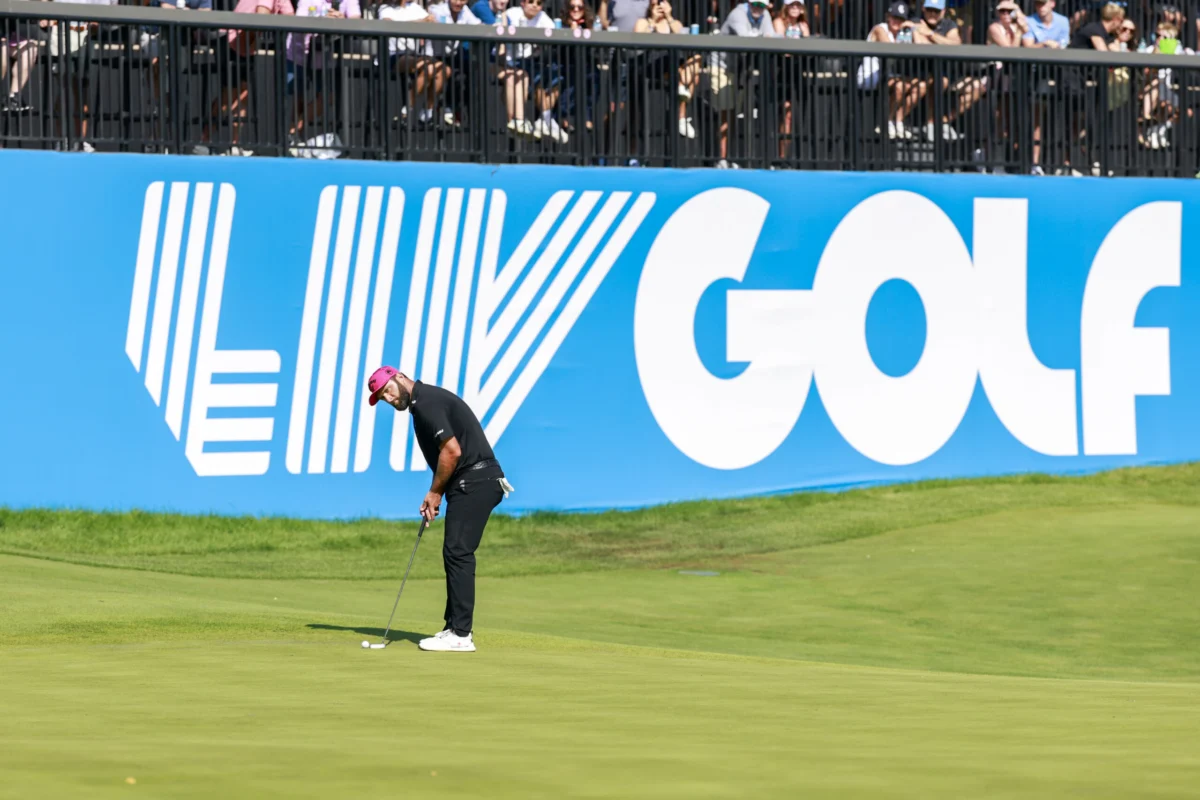
The landscape of professional golf underwent a seismic shift on Tuesday as LIV Golf, the Saudi-backed circuit that once sought to dismantle the traditional hegemony of the PGA Tour, formally filed for Chapter 11 bankruptcy protection in the U.S. Bankruptcy Court for the District of New Jersey. This strategic move marks the culmination of a turbulent year defined by a looming financial precipice, as the Public Investment Fund (PIF) of Saudi Arabia—the organization’s primary benefactor since its 2022 inception—began systematically unwinding its commitment to the venture.
The restructuring plan, facilitated by a support agreement with BC Partners Credit, represents a desperate pivot toward self-sustainability. Under the proposed terms, which remain subject to judicial oversight and court approval, the league intends to transition into an unconventional ownership model that would grant a majority stake to its own players. This metamorphosis is intended to distance the league from the image of a state-funded exhibition and rebrand it as a player-led enterprise, though the road to solvency remains fraught with significant legal and economic hurdles.
A Chronology of Financial Volatility
The descent toward bankruptcy was not sudden but rather the result of a protracted funding crisis that began to manifest in early 2026. The following timeline captures the rapid degradation of LIV Golf’s financial stability:
- June 2023: LIV Golf and the PGA Tour shocked the sports world by announcing a framework agreement to merge their commercial operations, aimed at ending years of litigation and acrimony. However, the deal stalled repeatedly due to antitrust scrutiny and internal discord.
- April 2026: Reports emerged that the PIF, citing the lack of a clear return on investment and ongoing regulatory pressures, would terminate its financial backing at the conclusion of the 2026 season.
- May 2026: Faced with the "funding cliff," LIV Golf initiated an aggressive investor roadshow, attempting to raise $350 million from private equity firms and independent stakeholders to bridge the gap between Saudi capital and operational independence.
- June 2026: CEO Scott O’Neil publicly defended the league’s stability, stating that the organization trusted the PIF to maintain funding through the end of the year. Behind the scenes, however, liquidity constraints had already forced the league to rethink its tournament schedule and operational overhead.
- August 2026: The filing for Chapter 11 protection was finalized, accompanied by a $49.6 million debtor-in-possession financing package provided by the PIF to ensure the league remains operational during the restructuring process.
The Shift to Player-Centric Ownership
The most radical element of the restructuring plan is the proposal to transition ownership to the athletes who compete in the league. For years, LIV Golf relied on astronomical signing bonuses and prize purses to poach high-profile talent from the PGA Tour, including major champions like Jon Rahm and Brooks Koepka. By inviting these players to become equity holders, the organization hopes to transform its greatest expense—player salaries—into a long-term capital investment.
Industry analysts suggest this model is a double-edged sword. While it theoretically aligns the incentives of the players with the success of the league, it also shifts the financial burden of future losses onto the athletes themselves. Should the league fail to secure long-term broadcasting rights or major sponsorship deals, the equity held by the players could prove to be illiquid or, in a worst-case scenario, worthless. Negotiations regarding the specifics of this equity stake are reportedly ongoing, with many top-tier players weighing the risks of tethering their personal brands to a bankrupt entity.
Financial Data and the PIF Exit
The financial reality of LIV Golf has always been obscured by the opaque nature of the PIF’s spending. Since 2022, the fund is estimated to have poured billions into the league, covering not only player contracts but also the massive logistical costs of global travel, venue leases, and marketing campaigns.
The $49.6 million in bankruptcy financing serves as a lifeline to prevent the league from folding mid-season. However, it is a drop in the bucket compared to the annual operating burn rate, which some experts estimate to be in the hundreds of millions. The inclusion of BC Partners Credit as a partner in the restructuring indicates that LIV is attempting to pivot toward institutional debt rather than sovereign wealth grants. Whether BC Partners and other minority stakeholders can stabilize the league’s balance sheet without the deep pockets of the Saudi government remains the central question for the sport’s future.
Official Statements and Corporate Outlook
In a statement released Tuesday, LIV Golf CEO Scott O’Neil maintained a tone of optimistic pragmatism. "This process gives us the structure and time to pursue a landmark transaction and begin the next chapter of LIV Golf—one built around the fans, an innovative, player-first ownership model, and a part of the global golf ecosystem," O’Neil stated. "We are excited about what lies ahead and yet, there is still much to accomplish in the months ahead."
The language of "global golf ecosystem" is telling. It suggests that even in bankruptcy, LIV is looking for a way to integrate itself into the wider sport rather than continuing its role as an external disruptor. The implication is that the league is effectively waving a white flag, signaling that it is prepared to accept a subservient or collaborative position relative to the PGA Tour and the DP World Tour, provided it can emerge from bankruptcy with a viable business model.
Broader Implications for the Golf Ecosystem
The insolvency of LIV Golf sends shockwaves throughout the global golf industry. For the PGA Tour, the collapse of its rival—or its forced transition—could provide leverage in the ongoing negotiations regarding the stalled merger. If LIV is fundamentally weakened, the PGA Tour may find it easier to absorb or neutralize the threat posed by the Saudi-backed entity.
Conversely, the collapse could also lead to a talent exodus. Many players joined LIV with the promise of guaranteed money, often secured by long-term contracts. If those contracts are voided or renegotiated in bankruptcy court, players may look for ways to return to the PGA Tour or pursue opportunities elsewhere, potentially leading to a massive reshuffling of professional golf’s talent pool.
The legal proceedings in New Jersey will be closely watched by broadcasters, sponsors, and fans. The outcome will likely determine whether the "team golf" format, which LIV championed, has a future in the sport, or whether it was a short-lived experiment fueled by a level of capital that simply cannot be sustained in a traditional commercial market.
For the time being, the focus remains on the "restructuring support agreement." If the court grants approval, LIV will emerge as a leaner, player-owned entity. If the restructuring fails to garner sufficient support from creditors and players, the league faces the prospect of full liquidation, which would signal a definitive end to one of the most controversial and disruptive chapters in the history of professional athletics. The coming months will be a test of whether LIV Golf can survive its own financial foundations, or if the sport of golf is destined to return to the status quo that existed before the Saudi entry into the market.