


Matthew Rankin’s latest documentary, Ladies and Gentlemen, Brian Mulroney, represents a radical departure from traditional biographical filmmaking, utilizing a dense, experimental collage of approximately 80,000 pieces of archival footage to reconstruct the ascent of Canada’s 18th prime minister. Eschewing the conventional "talking head" interview format, the 105-minute film chronicles the intricate power dynamics within the Progressive Conservative (PC) Party from the 1976 leadership convention to Mulroney’s ultimate election victory in 1984. By blending the aesthetic sensibilities of German Expressionism with the frenetic editing rhythms of variety television, the documentary transforms dry legislative maneuvering into a stylized, feverish exploration of political ambition.
The 1976 PC Leadership Convention: A Catalyst for Change
The historical focal point of the film is the 1976 Progressive Conservative leadership convention, an event that served as the crucible for the modern Conservative movement in Canada. Following the resignation of Robert Stanfield, who had failed to defeat Pierre Elliott Trudeau in three consecutive general elections, the party sought a leader who could revitalize its image.
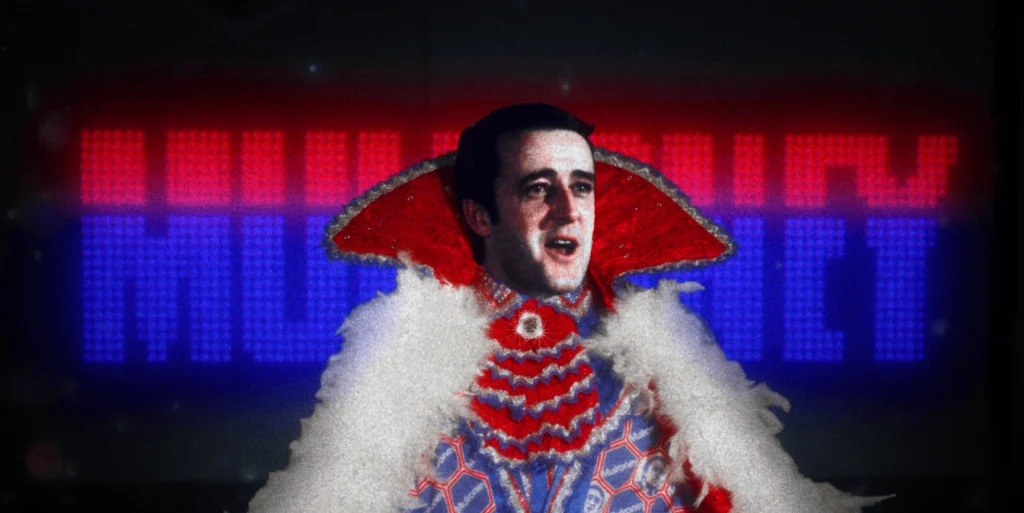
The convention, held in Ottawa, saw a crowded field of candidates including Joe Clark, Claude Wagner, and a young, charismatic Brian Mulroney. While the film depicts the event as a spectacle—employing satirical staging to contrast Mulroney’s projection of rock-star confidence against the tepid response of a skeptical delegate body—the historical reality was a grueling contest of attrition. Joe Clark, often underestimated as a "youthful" outsider, ultimately secured the nomination on the fourth ballot. This defeat proved pivotal, forcing Mulroney to refine his political persona and build a broader base of support that would eventually culminate in his 1983 leadership victory and his landslide 1984 general election success.
Chronology of the Mulroney Era
The narrative arc of the film tracks a turbulent decade in Canadian governance. To understand the political landscape presented in the documentary, one must view the timeline of the Progressive Conservative Party’s evolution:
- 1976: The PC leadership convention marks the rise of Joe Clark and the initial defeat of Brian Mulroney.
- 1979: Joe Clark leads the PCs to a minority government victory, ending 16 years of Liberal hegemony under Pierre Trudeau.
- 1980: The Clark government collapses on a non-confidence vote regarding the budget; the Liberal Party returns to power in the subsequent election.
- 1983: Mulroney successfully challenges Clark for the leadership of the Progressive Conservative Party.
- 1984: Mulroney leads the party to the largest parliamentary majority in Canadian history, winning 211 seats.
Rankin’s film utilizes these milestones as structural beats, though it occasionally dwells on the period of Clark’s leadership to a degree that subordinates the film’s titular subject. By framing Clark’s rise and fall as the necessary preamble to Mulroney’s eventual triumph, the director highlights the cyclical nature of political power.
Technical Innovation and Archival Rigor
Rankin’s directorial approach is characterized by a high degree of technical artifice. By eschewing linear storytelling, he prioritizes the "texture" of the era over a sterile recitation of facts. The film functions as an aesthetic essay, utilizing genre-shifting sequences that range from Western-inspired motifs to infomercial-style aesthetics to contextualize the era’s political discourse.
One of the film’s most evocative, albeit constructed, sequences involves Mulroney navigating a metaphorical museum of Conservative history, engaging in a dialogue with the preserved brain of John Diefenbaker. While factually absurd, this scene captures the internal tension between the party’s historical identity and the pragmatic, often ruthless, requirements of modern electoral politics. This sequence highlights the film’s core thesis: political history is not merely a collection of legislative acts, but a mythology that party members constantly curate and refine.
Political Implications and Historical Context
The film’s reliance on archival footage serves as a stark reminder of the shift in political communication over the last forty years. In the 1970s and 1980s, the battleground for public perception was defined by televised debates, curated convention appearances, and print media. Today, those same events are processed through the lens of modern digital editing, allowing directors like Rankin to deconstruct the "manufactured" nature of political image-making.
Analysts have noted that the PC Party’s internal divisions during the 1970s—between the "Red Tories" and more traditionalist factions—mirrored the broader national debate regarding Canadian identity. Pierre Trudeau, who features in the film as a looming, almost omnipresent antagonist, represented a centralizing, federalist vision that the Progressive Conservatives struggled to counter until Mulroney’s unique blend of bilingual appeal and economic pragmatism emerged.
Reception and Audience Engagement
The documentary’s reception remains tethered to the viewer’s existing knowledge of Canadian parliamentary history. Because the film avoids exposition, it demands a baseline understanding of the mechanisms behind non-confidence votes, constituency associations, and leadership selection processes. For the casual viewer, the density of names and the rapid-fire editing might obscure the gravity of the political stakes. However, for those versed in the history of the era, the film offers a sophisticated, if surreal, commentary on the mechanisms of power.
Critically, the film succeeds where many biographical documentaries fail: it resists the urge to canonize or vilify. By maintaining an ironic distance, Rankin allows the audience to observe the absurdity of the political process without losing sight of the historical significance of the events depicted. The film acknowledges the "supporting cast"—figures like Robert Stanfield and John Turner—not as footnotes, but as essential components of a broader, often messy, democratic experiment.
The Evolution of the Documentary Genre
Ladies and Gentlemen, Brian Mulroney contributes to a growing trend of "post-documentary" filmmaking, where the archive is treated as a malleable medium rather than a static record. By repurposing 80,000 clips, Rankin demonstrates that the truth of a political figure is often found in the interstices of official records—in the grainy B-roll, the background shots of delegates, and the awkward pauses between speeches.
While the film’s pacing may be perceived as a challenge to traditional documentary standards, its rigor is undeniable. It presents a portrait of a political system in transition, capturing the exact moment when Canadian politics shifted from the gentlemanly, parliamentary debates of the mid-20th century to the media-driven, image-conscious campaigns that define the modern era.
Final Assessment
The documentary serves as both an homage to a specific era of Canadian history and a critique of the machinery of political ambition. It is a dense, challenging, and intellectually stimulating piece of work that benefits from its refusal to cater to conventional narrative expectations. By focusing on the 1976 convention and the subsequent rise of Mulroney, Rankin provides a lens through which to view the evolution of Canadian conservatism, revealing the deep-seated ideological tensions that continue to shape the national discourse.
Ultimately, Ladies and Gentlemen, Brian Mulroney is an essential watch for students of political science and film alike. It proves that archival footage, when handled with artistic intent, can offer a more profound understanding of history than a thousand interviews could provide. While the subject matter is niche, the craft is universal, elevating the film from a mere political biography to an ambitious examination of the performative nature of power in the Canadian state.