



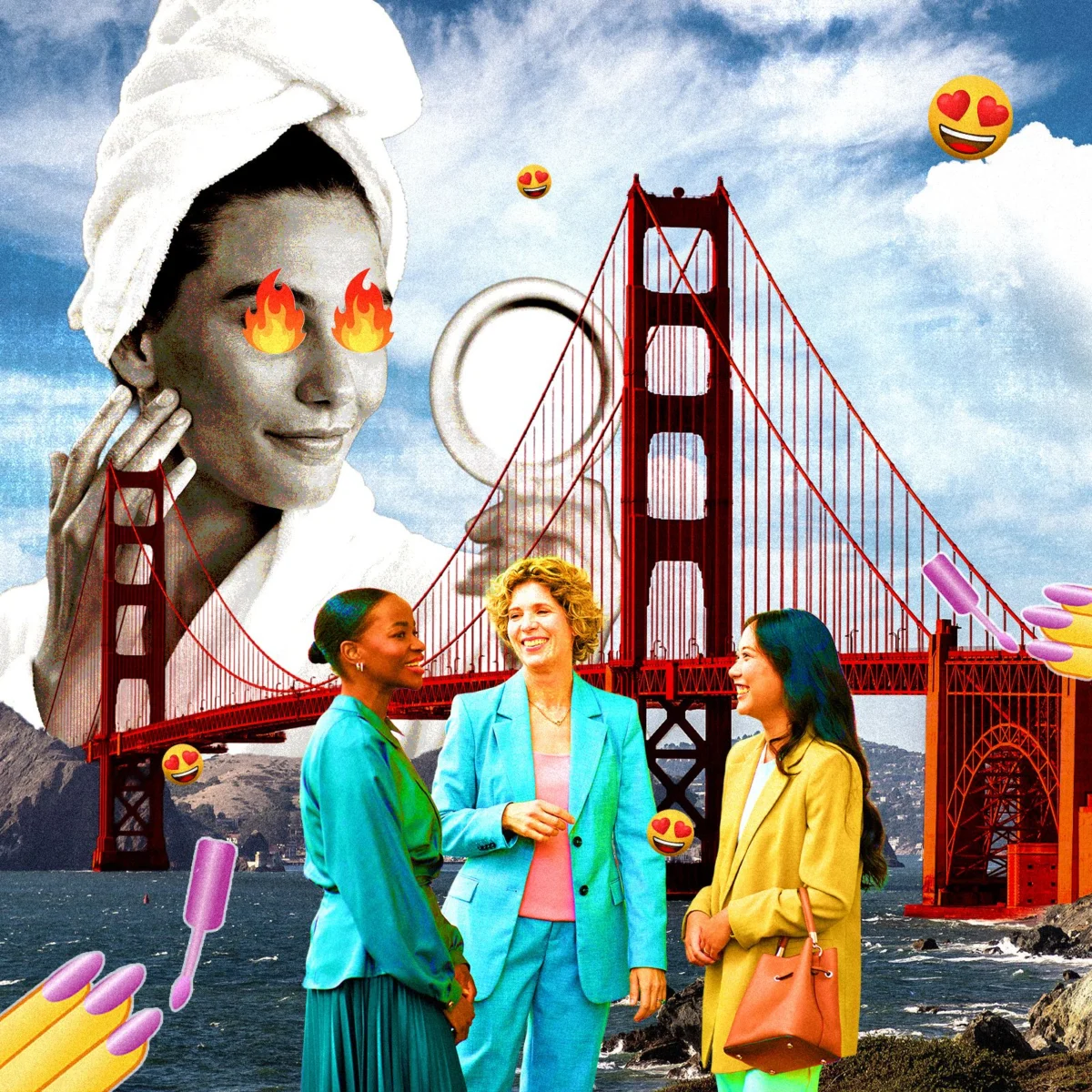
For decades, the cultural perception of San Francisco has been inexorably linked to the archetype of the Silicon Valley technologist: brilliant, highly analytical, yet socially detached and notoriously apathetic toward fashion. From the ubiquitous fleece Patagonia vests to the early iterations of wearable tech, local style has long been characterized by utility over aesthetics. Compounding this stylistic reputation is the city’s well-documented demographic skew. According to recent demographic metrics and local census data, the city maintains a male-to-female ratio of approximately 105 men for every 100 women. For years, these compounding factors have sustained a pervasive narrative that San Francisco is a uniquely challenging environment for romance and dating.
However, a recent marketing campaign launched by the artificial intelligence-powered dating application Known has ignited a fierce online debate, challenging long-standing stereotypes and forcing a wider industry-wide conversation regarding charm, charisma, and personal presentation within the technology sector. The initiative, known colloquially as the San Francisco Hot List, has become a focal point for analyzing how modern startups utilize provocative social media marketing to disrupt traditional industry norms.
The Genesis of the Hot List Campaign
The controversy began on August 31, when Celeste Amadon, founder of the AI-driven dating platform Known, published a thread on the social media platform X. Accompanied by a carefully styled, upward-angled selfie, Amadon announced that her team was actively curating a roster of the city’s most eligible singles under the title San Francisco’s Hot List.
The announcement included an open call for nominations, directing users to submit eligible friends based on a specific set of criteria that extended far beyond traditional physical metrics. Nominees were evaluated on qualities including personal ambition, professional accomplishment, reputation, and an intangible metric described simply as aura.
The campaign immediately polarized online commentators. Critics both within and outside the regional tech ecosystem dismissed the project as symptomatic of tech-bubble narcissism, labeling the effort as deeply unoriginal or overly curated. Some prominent local founders vocalized their skepticism regarding the city’s overall romantic prospects, with one female tech founder posting that the ultimate solution to dating challenges in the Bay Area remains simply leaving the city altogether.
Despite the swift and sometimes harsh critique, the strategic execution proved exceptionally effective from a public relations standpoint. Amadon reported that within the first 24 hours of publication, the campaign amassed more than 15,000 individual submissions. Far from being a mere misfire, the initiative functioned as high-visibility counter-propaganda against the persistent trope that San Francisco lacks social vibrancy and attractiveness.
Defending the Local Romantic Ecosystem
Speaking in interviews following the launch, Amadon defended the underlying motivation of the campaign, arguing that the local dating market has long suffered from unwarranted negative generalizations.
"Not to be cheesy, but I think the SF dating scene deserves some defending," Amadon noted, addressing the pervasive media narratives. "It gets so much flak for being a place where it’s hard to meet people, but there are many people who are super eligible in not just their physical attractiveness but in their holistic dateability."
The campaign was designed not only to drive user acquisition for the Known platform but also to intentionally provoke positive discourse surrounding the holistic qualities of San Francisco singles. By shifting the conversation toward accomplishment and personal magnetism, the platform sought to redefine what it means to be a desirable partner in a city dominated by high-achieving engineers and startup founders.
The Broader Context: A Renaissance of Sales Culture
Known’s Hot List did not emerge in a vacuum; rather, it arrived amidst a broader, concurrent cultural shift regarding aesthetics and visibility within the San Francisco tech community. This movement has been described by local entrepreneurs as a renaissance of sales culture and personal branding within the startup ecosystem.
The evolution of this cultural trend can be traced through a timeline of recent local events:
- Summer of the Previous Year: Two prominent local tech professionals, Madison Kanna and Cat Orman, organized an event at a local Tesla showroom explicitly enforcing an equal gender ratio. Marketed with a vibe described as "unapologetically feminine and fun," the invitation featured a now-infamous dress code stipulation declaring that traditional fleece Patagonia vests would be strictly turned away at the door.
- August 28: Georgia Witchel, founder of Mantis Biotech, published a widely shared commentary on X titled "Tech Is Having a Hot Girl Renaissance." Witchel observed that social media feeds had become increasingly saturated with young, aesthetically polished startup founders utilizing confident, stylized imagery to promote their ventures, pointing to companies like Known and insurance firm Corgi as prime examples.
- August 31: Celeste Amadon launches the Known Hot List on X, directly tying digital marketing strategies to local dating culture.
- September 1: Known officially published its inaugural round of Hot Listers, featuring notable community figures such as Brooke LeBlanc and AI startup CEOs like Jasper Carmichael-Jack. The curated list notably lacked any traditional tech-uniform fleece apparel.
Witchel’s analysis suggests that this hyper-visible embrace of personal attractiveness is rooted in structural changes within the software industry itself. Historically, the software sector operated on a paradigm of nerds selling to other nerds, where deeply technical products could succeed entirely on the strength of their underlying code without requiring traditional charisma or polished marketing presentation.
However, with the lowering barriers to software development—accelerated by modern tooling and generalized AI coding capabilities—the technological moat that once protected purely technical founders has narrowed. In an oversaturated market where building a complex product is no longer an insurmountable differentiator, interpersonal charm, aesthetic presentation, and charismatic marketing have re-emerged as vital competitive advantages.
"The fact that you are able to build a complicated product is not enough to give you the leeway of not being charismatic," Witchel explained. "People are recognizing that."
Industry Reactions and Cultural Implications
Reactions from those directly named in these discussions highlight a generational and cultural fatigue regarding traditional stereotypes of women in tech. Brooke LeBlanc, head of community at Corgi and a featured honoree on Known’s Hot List, noted the irony of framing a fundamental human interest in personal presentation as groundbreaking news. Pointing to familial reactions from outside the tech hub, LeBlanc underscored the disconnect between coastal media commentary and standard cultural expectations elsewhere.
While Amadon maintained that Known’s campaign had only a minimal direct connection to Witchel’s theoretical framework regarding the tech renaissance, she acknowledged that the timing allowed the company to successfully harness an ongoing cultural conversation. The strategy successfully bridged the gap between product marketing and viral social commentary.
The implications of these developments extend beyond simple social media entertainment. As San Francisco attempts to revitalize its global image following economic shifts, remote work migrations, and commercial real estate challenges, the cultural identity of its workforce is undergoing a visible transformation. The rejection of insular, anti-social tropes in favor of outward-facing charisma, rigorous personal branding, and lifestyle cultivation signals a mature pivot in how Silicon Valley presents itself to the world.
Whether the Hot List ultimately translates into long-term relationship success for its participants remains to be seen. However, as an exercise in community engagement and cultural provocation, the campaign has successfully altered the dialogue, proving that the modern tech hub is increasingly eager to shed its old uniform and redefine its romantic and professional appeal on its own terms.