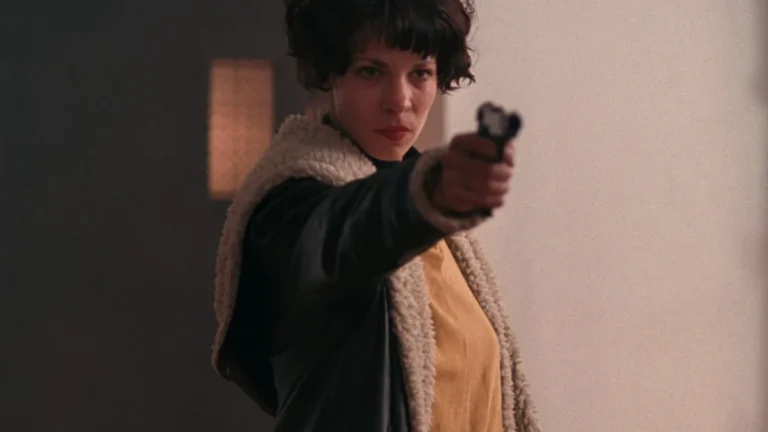

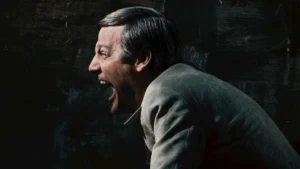


Lana Daher’s debut feature documentary, Do You Love Me, stands as a sprawling, kaleidoscopic examination of Lebanon’s fragmented cultural memory, constructed from seven decades of found footage and archival ephemera. Premiering at Venice Days before making its way to New York’s Metrograph theater, the 76-minute cinematic portrait is the culmination of a multi-year archival scavenger hunt. The Beirut-based multidisciplinary artist assembled the film by stitching together clips from more than 100 independent Lebanese fiction and documentary features, regional newsreels, home movies, podcasts, radio broadcasts, and forgotten or abandoned archives. The resulting collage causes past and present to violently and poetically collide, challenging audiences to reconsider the historical narrative of a nation perpetually caught in the crucible of geopolitical conflict.
The structural mechanics of the film rely on rapid temporal shifts. Daher cuts between scenes from classic action films and gritty real-world newsreel footage documenting street violence in Beirut, deliberately blurring the lines between staged melodrama and historical reality. The audio-visual landscape features everyday civilians and intellectuals reflecting on the Lebanese Civil War and the rigid structures of political confessionalism in both Arabic and French. Moments of domestic intimacy—newlyweds dancing at a celebration, children cutting birthday cakes—exist in immediate proximity to harrowing scenes of families searching for missing loved ones. The auditory experience mirrors this fragmentation, as traditional Middle Eastern melodies give way to the driving rhythms of contemporary hip-hop. In one prominent sequence, French cinematic icon Catherine Deneuve, appearing in the 2008 Beirut-set feature I Want to See, asks about an empty apartment building only to be told it has been transformed into a war monument. In another, pioneering Lebanese filmmaker and journalist Jocelyne Saab laments the loss of generations of family history amidst the rubble of her demolished home following an Israeli bombardment. Together, these elements reinforce Daher’s guiding thesis: that embracing disorientation is an essential part of understanding the complex reality of her homeland.

Origins and Evolution of an Archive-Based Project
The genesis of Do You Love Me dates back to 2018, when Daher initially set out to investigate the intricate relationship between war and music, specifically how musical expression carries memory through zones of conflict. The project originally focused on the Bendaly Family, a popular Lebanese pop band whose musical catalog ultimately inspired the film’s title. While the undertaking was always envisioned as an archival documentary, the scope shifted as Daher began probing deeper into her own relationship with Beirut. Confronting her personal childhood memories, individual traumas, and the collective societal amnesia surrounding the nation’s history, the project transformed into a deeply personal love letter to a city defined by cyclical crises.
Gathering the source material proved to be a monumental challenge, largely due to structural institutional gaps within Lebanon. Unlike many Western nations, Lebanon possesses neither a centralized national archive nor a unified, universally accepted history book. Consequently, Daher’s production process resembled an archaeological excavation rather than a traditional documentary search. Over half of the final runtime utilizes footage sourced from independent Lebanese cinema, drawing from approximately 106 films produced between 1958 and the present day.
The production amassed a staggering library of more than 20,000 audiovisual fragments distributed across multiple hard drives. The oldest surviving piece of media incorporated into the project is a home movie dating back to 1928. Ultimately, only about seven percent of the researched material made it into the final cut, a curation process that required clearing nearly 400 distinct rights contracts. This exhaustive archival recovery was driven by a profound personal loss; like many families in Lebanon, Daher’s relatives saw their personal archives decimated by successive waves of war and mass migration. Deprived of comprehensive family histories and barred from accessing a complete cinematic record of their own country, Daher sought to construct a narrative driven entirely by Lebanese voices speaking for themselves.

Collaborative Editing and the Rejection of Linear Chronology
The editing suite served as the primary crucible for Do You Love Me. Eschewing traditional documentary conventions such as voiceover narration or a single central protagonist, Daher spent nearly five years working independently on early cuts before bringing on Paris-based Syrian editor Qutaiba Barhamji. Barhamji, renowned for his work on Kaouther Ben Hania’s Academy Award-nominated features Four Daughters and The Voice of Hind Rajab, injected an external perspective into the intensely local project.
Daher deliberately sought an editor who was not Lebanese, reasoning that an outsider would lack the deep-seated emotional attachment to the specific images, events, and national traumas embedded in the footage. Together, Daher and Barhamji established strict creative parameters: they banned full scenes lifted directly from existing films and prohibited the appearance of Lebanese politicians on screen or on the soundtrack. Working intuitively, the duo fragmented and recombined isolated shots to establish an emotional logic rather than a strict chronological timeline. This deliberate non-linear structure mirrors the psychological reality of trauma and collective memory, which rarely unfolds in an orderly sequence.
Historical Context and the Shadow of Conflict
The release of Do You Love Me coincides with a volatile period in contemporary Middle Eastern history, as southern Lebanon faces severe devastation amidst ongoing military escalations involving Israel and Hezbollah. Daher has consistently pushed back against simplistic media framing that reduces the current crisis to a localized bilateral confrontation, emphasizing instead a multi-decade history of foreign military intervention and occupation that predates the foundation of Hezbollah by years.
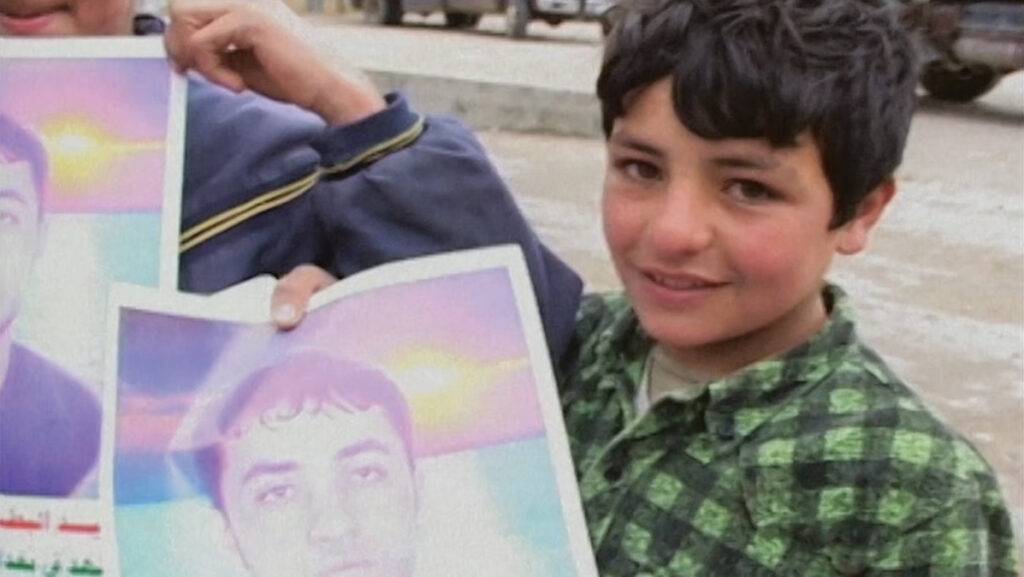
This historical continuity is mirrored in the artistic lineage Daher acknowledges within her work. The prominent inclusion of footage from Jocelyne Saab—whose seminal 1975 documentary Lebanon in Turmoil documented the early horrors of the civil war—highlights the vital role played by female journalists, filmmakers, and preservationists. Daher notes that throughout Lebanese history, women have served as the literal and figurative witnesses to time. Even when excluded from institutional power structures, women were frequently the ones who preserved family photographs, home videos, and personal collections that would otherwise have been lost to history. By centering the female gaze, Do You Love Me repositions the national archive away from official political propaganda and toward domestic, lived experience.
Broader Impact and Implications for Cultural Preservation
As Do You Love Me transitions from international film festivals like Venice Days and CPH:DOX to specialized theatrical runs at venues like New York’s Metrograph, its implications extend far beyond artistic circles. Screenings of the film in Beirut have taken on profound emotional resonance, where contemporary geopolitical realities—such as the acoustic presence of surveillance drones—threaten to bleed directly into the cinematic experience.
For international audiences, the film offers a necessary corrective to standard news media depictions of Lebanon, which frequently reduce the nation’s populace to faceless statistics of war. By foregrounding humor, tenderness, resilience, and daily humanity, Daher’s work acts as a living, breathing alternative to a missing national archive. In doing so, Do You Love Me successfully carves out a vital conceptual space where the unresolved complexities and inherited traumas of a resilient society can be collectively witnessed, felt, and understood.