

A Chronology of Artistic Evolution
Nyla Innuksuk first gained widespread recognition in the Canadian film industry with the 2022 release of Slash/Back, a genre-bending science fiction film that utilized an alien invasion premise to highlight the resilience of Inuit youth in Pangnirtung, Nunavut. The success of that film provided the necessary cultural capital for her to pivot toward more personal, experimental territory.
In the Heart of the South, which began development in late 2023, represents a significant departure from the director’s earlier work. While Slash/Back utilized genre tropes to anchor its narrative for global audiences, the new film functions as a self-reflective analysis of the filmmaker’s own career trajectory. The development timeline moved quickly through the Canadian funding ecosystem, reflecting the very institutions the film serves to critique. By mid-2024, production had wrapped, with the film positioning itself as a cornerstone of the current shift in Indigenous-led cinema, where creators are increasingly reclaiming the narrative from external curators.
Narrative Context and Character Dynamics
The story centers on Yura Ivalu, played by Anna Lambe, an Inuit filmmaker navigating the high-pressure environment of Toronto’s professional art scene. Ivalu serves as an avatar for the modern Indigenous artist—someone caught between the desire to honor their roots and the pragmatic necessity of satisfying the expectations of arts patrons and government-backed funding bodies.
The central conflict is ignited when Ivalu is pressured to produce a narrative that aligns with established tropes of Indigenous trauma. She constructs a story about being lost in the snow with her friend Sesi, portrayed by Zorga Qaunaq. The narrative device of the "shamanistic" friend functions as a commentary on how Western audiences often fetishize metaphysical elements of Indigenous culture to satisfy a desire for "authentic" mysticism.
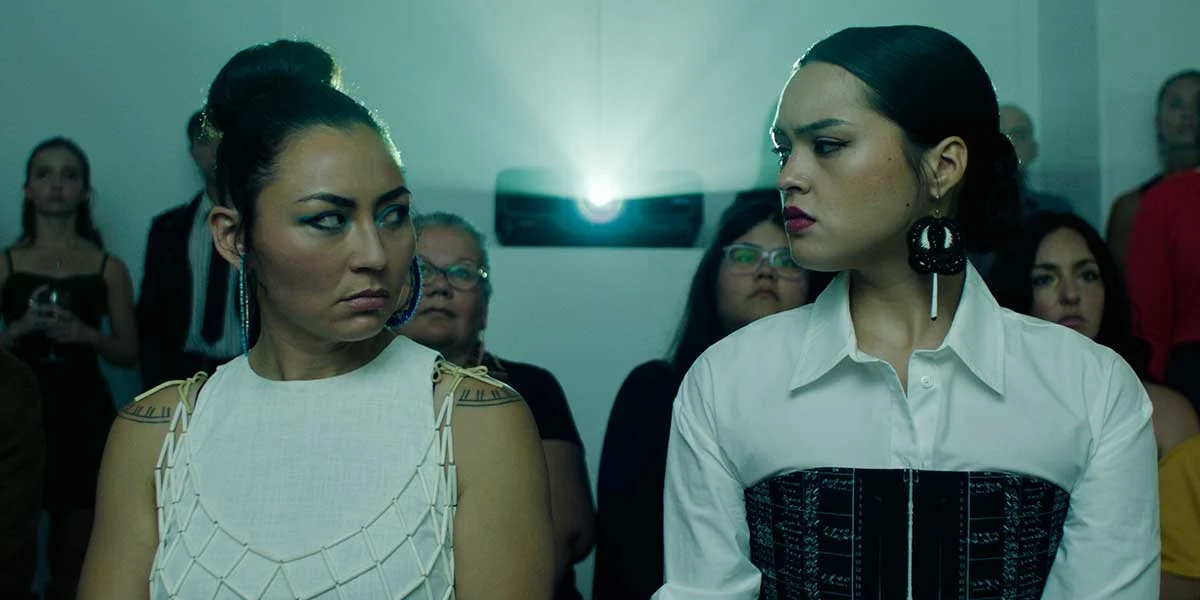
The dynamic between Ivalu and Sesi is the film’s moral and emotional engine. As Sesi reappears in Ivalu’s life, the film explores the "id/ego" dichotomy. Qaunaq’s performance provides an acerbic, often menacing counterpoint to Lambe’s more reserved, cautious portrayal. This sisterhood—informed by the actors’ real-world collaboration on the television series North of North—adds a layer of authenticity to the strained relationship depicted on screen.
The Institutional Landscape: Funding and Expectations
The film’s subtext addresses a well-documented tension within the Canadian arts sector. Statistics from the Canada Council for the Arts and Telefilm Canada have shown a steady increase in funding allocated to Indigenous creators over the past decade. However, this growth has been accompanied by ongoing debates regarding the "box-checking" nature of these initiatives.
Critics and artists have frequently noted that while funding has expanded, the "cultural gatekeeping" remains intact. Projects that align with traditional expectations of Indigenous struggle or spiritualism are often prioritized over contemporary, experimental, or genre-defying works. Innuksuk uses the film to highlight the performative nature of these processes, specifically targeting the industry’s reliance on hollow land acknowledgments and the often-obfuscated agendas of urban curators who seek to enhance their own institutional prestige by platforming Indigenous artists.
Supporting Data and Industry Analysis
The film arrives at a time when the "Indigenous film boom" is undergoing a critical assessment. According to the 2023 report on diversity in Canadian media, while there has been a 22% increase in Indigenous-led productions since 2018, the average budget for these projects remains 30% lower than comparable non-Indigenous productions.
In the Heart of the South acts as a direct response to this disparity. By centering the film on a protagonist who must negotiate with wealthy, "gormless" patrons, Innuksuk provides a factual, albeit dramatized, look at the economic reality of the arts. The film’s critique is not merely one of frustration; it is a clinical observation of how the "fetishization of trauma" functions as a form of currency. When Ivalu provides the investors with the "tale of menace" they crave, she is engaging in a survival mechanism that reflects the experiences of many BIPOC artists operating within white-dominated institutional frameworks.
Official Perspectives and Artistic Intent
While no formal statement has been issued by the funding bodies depicted in the film, industry analysts suggest that the project marks a turning point in how Indigenous filmmakers interact with their benefactors.
"The film is not a rejection of the system, but a roadmap for surviving it," notes a representative for an independent media collective in Toronto. By utilizing humor and biting satire, Innuksuk avoids the trap of "petulant" storytelling. Instead, she presents a sophisticated argument for artistic autonomy. The use of traditional storytelling techniques—integrated into a modern, cynical, urban environment—suggests that the future of Indigenous cinema lies in its ability to be simultaneously ancient and avant-garde.
Broader Impact and Implications
The implications of In the Heart of the South reach beyond the Canadian borders. As global cinema moves toward more inclusive programming, the pressure for Indigenous creators to define themselves solely through the lens of their ancestry remains a significant challenge. By highlighting the psychological toll of this pigeonholing, the film serves as a cautionary tale for arts programmers and audiences alike.
The film’s success in balancing its heavy thematic load with moments of levity—a hallmark of Innuksuk and Cavan’s writing style—ensures that the message is accessible. By focusing on the "conjoined" nature of the two leads, the film also emphasizes that the struggle for artistic identity is not a solitary one. It is a shared, often messy process of negotiation.
Furthermore, the film challenges the definition of "Indigenous art." By refusing to keep the story within the confines of the North, and instead situating the conflict in the heart of Toronto’s cultural elite, Innuksuk asserts that Indigenous identity is not geographically bounded. It is a portable, evolving, and assertive presence that demands to be viewed on its own terms rather than as a curated exhibit.
Conclusion: A New Standard for Indigenous Narrative
As the film enters the international festival circuit, its reception will likely serve as a barometer for how audiences respond to more aggressive, meta-critical storytelling from Indigenous directors. In the Heart of the South is poised to influence future policy discussions regarding how grants are awarded and how institutional mandates regarding diversity are enacted.
Through its rigorous structure, exceptional performances, and unflinching examination of the "icy cultural landscape" of Toronto’s art scene, the film establishes Nyla Innuksuk as a formidable voice in global cinema. It is a work that manages to bite the hand that feeds while simultaneously demonstrating the inherent value of the story being told. By rejecting the narrow boxes prescribed by the industry, the film ultimately succeeds in creating a new space—one where the artist is no longer a guest in the gallery of their own life, but the architect of their own narrative future. The film stands as a testament to the resilience of the creative spirit when faced with the performative hypocrisy of modern cultural institutions.