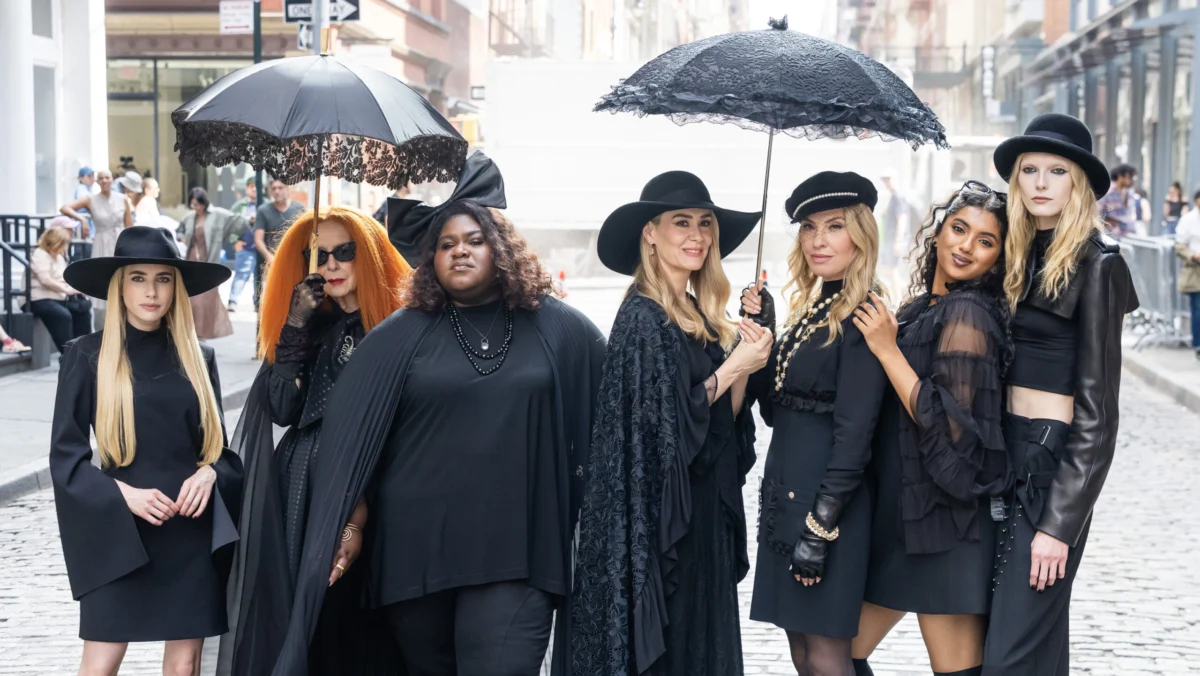
The production of the thirteenth installment of Ryan Murphy and Brad Falchuk’s seminal horror anthology series, American Horror Story, is officially underway, marking a significant milestone for one of television’s most enduring and influential franchises. On July 9, 2026, cameras began rolling in the SoHo district of New York City, capturing a star-studded ensemble that signals a high-profile return to the series’ roots. The sighting of veteran performers—including Sarah Paulson, Emma Roberts, Frances Conroy, and Gabourey Sidibe—alongside newer cast additions like Avantika Vandanapu and Alex Consani, has ignited intense speculation among the show’s dedicated fanbase regarding the narrative direction of the upcoming season.
A Legacy of Television Horror
Since its debut in 2011 with the atmospheric Murder House, American Horror Story has redefined the horror genre for a modern television audience. The brainchild of Ryan Murphy and Brad Falchuk, the series introduced a unique anthology format, allowing for a rotating cast and a self-contained narrative arc each season. This structural flexibility has allowed the show to explore diverse sub-genres of horror, ranging from the psychological tension of Asylum (2012) to the high-fashion gore of Hotel (2015) and the social commentary inherent in Cult (2017).

Over the past fifteen years, the series has garnered widespread critical acclaim, securing numerous Primetime Emmy Awards and Golden Globes. Its influence extends beyond its ratings; it has become a cultural phenomenon that has revitalized the careers of veteran actors and launched the profiles of rising stars. The upcoming thirteenth season serves as a testament to the show’s longevity, proving that even after a dozen iterations, the appetite for Murphy’s brand of hyper-stylized terror remains insatiable.
The Evolution of the Anthology: A Chronology
The history of American Horror Story is a roadmap of television trends and creative risks. Below is a breakdown of the series’ chronological progression:
- 2011: Murder House – The series launches, establishing the "haunted house" trope with a modern, darker edge.
- 2012: Asylum – Widely regarded as one of the series’ strongest entries, it explored themes of institutionalization and religious fanaticism.
- 2013: Coven – A fan-favorite season that centered on witchcraft and intergenerational conflict in New Orleans.
- 2014: Freak Show – A visually ambitious season set in the 1950s that highlighted the "othering" of marginalized communities.
- 2015: Hotel – Starring Lady Gaga, this season brought a high-gloss, noir aesthetic to the franchise.
- 2016: Roanoke – An experimental shift that utilized a "show-within-a-show" documentary format.
- 2017: Cult – A visceral, grounded exploration of American political polarization.
- 2018: Apocalypse – The first major crossover season, blending the timelines of Murder House and Coven.
- 2019: 1984 – A nostalgic homage to 1980s slasher films.
- 2021: Double Feature – A split season involving aliens and sirens.
- 2022: NYC – A poignant, gritty look at the AIDS crisis and the underground queer scene in the early 1980s.
- 2023: Delicate – A psychological thriller focused on motherhood and fame, based on the novel Delicate Condition.
Data-Driven Success and Industry Impact
The commercial viability of American Horror Story is underscored by its consistent performance on linear television and its sustained popularity on streaming platforms. As part of the 20th Television stable, the series has served as a cornerstone for FX and subsequently for Disney-owned streaming services. Analysts note that the "Murphy-verse" model—characterized by a recurring stable of actors—has optimized production costs while maintaining a high level of audience engagement.

Statistically, the franchise has remained a top performer in the 18–49 demographic, which is the gold standard for network advertisers. By frequently rotating its cast, the show avoids the "stale character" syndrome that plagues many long-running procedurals. Instead, it offers actors a chance to reinvent themselves, which keeps the casting process fresh and attracts A-list talent who might otherwise avoid multi-year commitments to a single role.
Behind the Scenes: The Creative Powerhouse
The production of season 13 is overseen by an expansive team of executive producers, including creators Ryan Murphy and Brad Falchuk, as well as Ned Martel, Charlie Carver, Eric Kovtun, Nissa Diederich, Scott Robertson, Tanase Popa, Crystle Roberson Dorsey, Jennifer Salt, and Tim Minear. This collective brings together a wealth of experience, with many having worked on previous iterations of the show.
The inclusion of younger, culturally relevant stars like Avantika Vandanapu and Alex Consani suggests that the new season may be looking to bridge the gap between long-term devotees of the series and a younger, social-media-savvy generation of horror fans. This strategic casting is indicative of Murphy’s long-standing ability to tap into the zeitgeist, ensuring the franchise remains relevant in an increasingly crowded streaming landscape.

Implications for the Franchise
The return of icons such as Sarah Paulson and Jessica Lange—names synonymous with the show’s "golden age"—is being interpreted by industry experts as a move to reclaim the narrative prestige of earlier seasons. Following the mixed reception of some later, more experimental seasons, the decision to assemble a "dream team" of original cast members signals a desire to stabilize the brand.
From a production standpoint, filming in New York City—a location previously used for the acclaimed NYC season—suggests a return to a grounded, urban aesthetic. For the city of New York, the presence of such a high-profile production provides a boost to the local economy, utilizing local crews, catering, and logistical infrastructure. For the viewers, it raises questions about whether this season will be a standalone story or if it will attempt to tie together the loose threads of the previous twelve years of canon.
Looking Toward the Premiere
While details regarding the plot, title, and specific character archetypes remain under strict lock and key, the production schedule indicates that post-production will be a priority through the end of 2026. The series, which has historically premiered in the fall, is expected to maintain its tradition of aligning with the Halloween season.

As the industry monitors the progress of this thirteenth season, the focus remains on whether Ryan Murphy can continue to innovate within the rigid boundaries of the horror genre. With a history of subverting expectations, the production team has left themselves enough room to surprise audiences, even with familiar faces in front of the camera. As this story develops, The Hollywood Reporter will continue to track updates, casting announcements, and official footage releases, providing comprehensive coverage of what is shaping up to be the most anticipated season in the history of American Horror Story.
Ultimately, the longevity of this series proves that the horror anthology format is not merely a television fad but a robust medium for storytelling. By balancing nostalgia with fresh perspectives, the creators have ensured that the house that Murder House built continues to find new, terrifying ways to invite audiences in. The question remains: in a world where the lines between reality and fiction are increasingly blurred, will the thirteenth season be the one that finally scares us all to death? Fans will have to wait until the premiere to find out.