



Singaporean filmmaker Clare Chong, a rising talent whose multidisciplinary artistic practice encompasses cinema, installation art, and community-based initiatives, is making waves at the prestigious Fantasia International Film Festival with her latest short film, "Tamasira." This eighteen-minute cinematic offering, co-written with Moira Loh and executive produced by acclaimed filmmaker Mattie Do, delves into the insidious pressures of societal beauty standards and the psychological toll they exact on individuals, particularly women. Chong, an alumna of the School of the Arts Singapore and LASALLE College of the Arts, where she honed her craft with a BA in Film, and a graduate of the 2023 Locarno Filmmakers Academy, where she presented her short "A Waking," demonstrates a mature and incisive approach to complex themes. "Tamasira" represents a significant step in her burgeoning career, showcasing a compelling narrative interwoven with striking visual and auditory elements, making it a standout entry at this year’s festival.
The Unsettling Genesis of "Tamasira"
The genesis of "Tamasira" can be traced to Chong’s keen observation of societal narratives surrounding self-improvement and aesthetic ideals. The film opens with a disquieting scene: Ruby, a young woman, fixates on another, seemingly more conventionally attractive and fit woman dressing. This intense scrutiny culminates in an uncomfortable confrontation, highlighting Ruby’s profound insecurity and her yearning for an unattainable physical ideal. The subsequent moments depict Ruby’s hesitant arrival at a secluded retreat with her mother, who harbors reservations about the purpose of their visit. It soon becomes apparent that this is not merely a wellness getaway but a specialized yoga retreat designed to foster physical perfection. The stark visual contrast between Ruby and the other attendees, who are uniformly slender, agile, and seemingly identical in their pursuit of an aesthetic ideal, immediately positions her as an outsider, a stark anomaly in this homogeneous environment.
A Descent into Psychological and Supernatural Terror
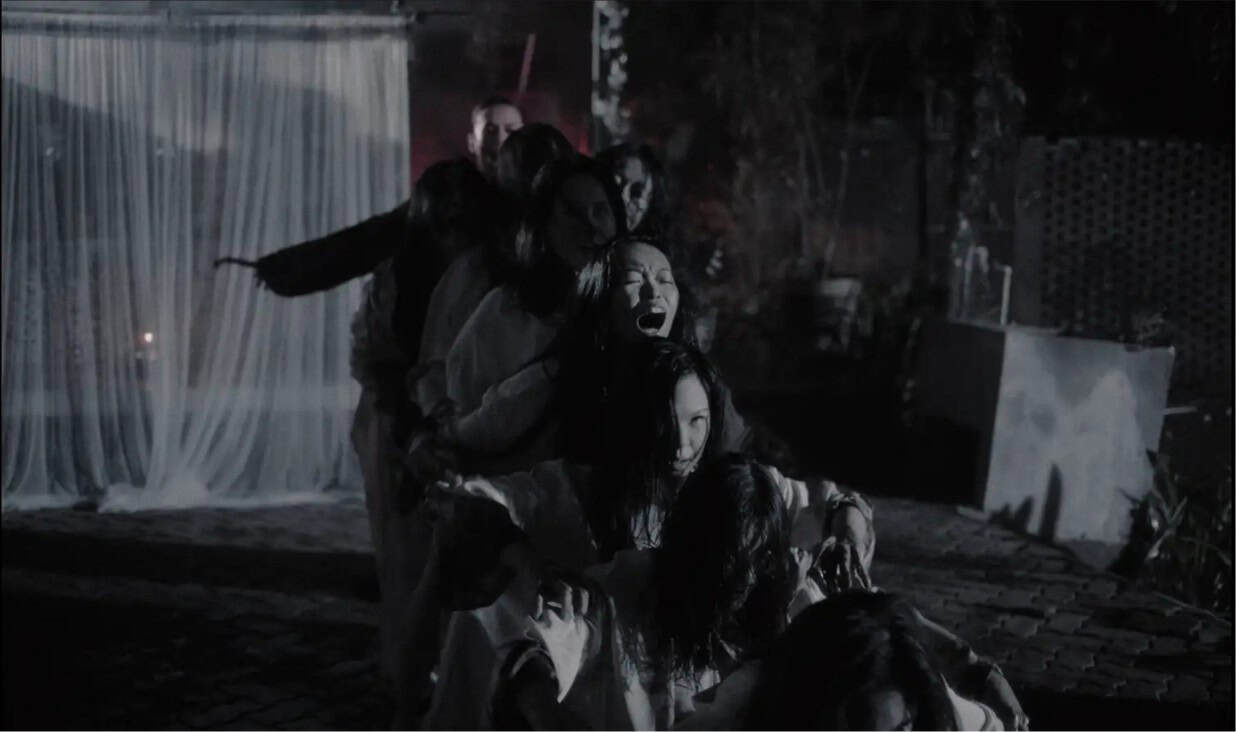
As Ruby navigates the demanding regimen of the retreat, her struggles to keep pace with the other participants become increasingly evident. Her physical shortcomings are amplified by the seemingly effortless grace of her peers, intensifying her feelings of inadequacy. The enigmatic instructor, identified only as Yogini, played with chilling efficacy by Moira Loh, offers a veneer of guidance. However, Yogini’s methods prove to be far from conventional. They usher in a profound psychological unravelling for Ruby, characterized by increasingly vivid and horrifying hallucinations. The film masterfully blurs the lines between perceived reality and Ruby’s deteriorating mental state, as the internal horror of not measuring up externally manifests as grotesque visions. This descent is meticulously crafted, mirroring the escalating pressure Ruby feels to conform to the retreat’s exacting standards.
The thematic core of "Tamasira" resides in its pointed critique of the relentless pursuit of beauty and the broader societal imperative for self-optimization. Chong uses the retreat setting as a microcosm to expose how women, in particular, are conditioned to adhere to stringent and often arbitrary standards of appearance and mental disposition. The narrative suggests that the pressure to conform can lead individuals to sever ties with their past and identity in a desperate attempt to achieve an idealized self. While the film acknowledges that some of Ruby’s actions, particularly towards its conclusion, may appear extreme, the underlying message of societal coercion and its devastating impact is undeniably conveyed. This potent commentary, delivered within the concise runtime of eighteen minutes, underscores Chong’s skill as a storyteller and her ability to pack significant thematic weight into a short format.
A Symphony of Sound and Vision: Technical Prowess in "Tamasira"
The impact of "Tamasira" is significantly amplified by its exceptional technical execution. Aaron Ang’s cinematography is a standout, employing a visual language that is both arresting and unsettling. The camerawork often immerses the viewer in Ruby’s subjective experience, utilizing extreme close-ups and unsettling angles to convey her psychological turmoil. Maryann Yee’s special effects are seamlessly integrated, contributing to the film’s escalating horror without feeling gratuitous. The sound design, meticulously crafted by Yu Ting Yen, plays a crucial role in building atmosphere and tension. From the subtle ambient sounds of the retreat to the jarring auditory cues accompanying Ruby’s hallucinations, the soundscape is an integral part of the narrative’s emotional resonance. Russell Goh’s production design further enhances the film’s immersive quality, creating an environment that is both aesthetically sterile and psychologically charged.
The editing, a critical component in a film that hinges on rapid psychological shifts, is expertly handled. The pacing allows the narrative to unfold with a propulsive urgency, mirroring Ruby’s spiraling mental state. The judicious use of sudden cuts serves not only to heighten the sense of dread but also to punctuate key moments of psychological breakdown, becoming an intrinsic element of the horror. This cohesive audiovisual presentation elevates "Tamasira" beyond the typical scope of short filmmaking, offering a polished and professional cinematic experience that is rarely seen in the genre.
Stellar Performances Anchoring the Narrative
At the heart of "Tamasira" lies the compelling performance of Rebekah Dorai as Ruby. Dorai masterfully embodies Ruby’s journey from tentative curiosity and deep-seated despair to a profound and unsettling resolve. Her expressive eyes convey a wealth of emotion, communicating vulnerability, confusion, and ultimately, a transformation that is both captivating and disturbing. Dorai’s ability to convey such a complex emotional arc, culminating in a startling final act, is a testament to her talent. Complementing Dorai’s performance is Moira Loh as Yogini. Loh delivers a captivating portrayal of an instructor who is simultaneously seductive and menacing. Her ability to embody the seductive allure of self-improvement while subtly hinting at the sinister undercurrents of her methods is chillingly effective, solidifying her role as the embodiment of the retreat’s dangerous ethos.
Critical Reception and Festival Significance
The inclusion of "Tamasira" in the Fantasia International Film Festival lineup is a significant recognition of Clare Chong’s talent and the film’s thematic resonance. Fantasia, renowned for its dedication to showcasing innovative and boundary-pushing cinema, particularly within the realms of genre filmmaking, provides an ideal platform for a film like "Tamasira" that tackles difficult subjects with artistic flair. The festival, which typically runs in late July and early August in Montreal, Canada, attracts a global audience of filmmakers, critics, and enthusiasts, offering invaluable exposure and networking opportunities. While specific critical reactions from the festival are yet to be fully disseminated, the film’s thematic depth and technical proficiency suggest it is poised to garner significant attention.
The festival’s commitment to diverse voices and perspectives aligns perfectly with Chong’s work. Her background as a Singaporean filmmaker, navigating and commenting on cultural specificities within a globalized context, adds another layer of interest to her contributions. The film’s exploration of beauty standards, a universally relevant topic, is presented through a lens that is both culturally informed and broadly accessible, making it a compelling selection for an international audience.
Broader Implications and the Future of Short Filmmaking
"Tamasira" stands as a testament to the power and potential of short films to engage with complex societal issues. In an era where attention spans are often perceived to be shortening, filmmakers like Clare Chong demonstrate that compelling narratives and profound commentary can be delivered effectively within a condensed timeframe. The film’s success in blending social critique with visceral horror suggests a growing appetite for genre films that offer more than mere entertainment, delving into psychological depths and societal critiques.
The film’s exploration of the pressures to conform to idealized beauty standards is particularly relevant in the age of social media, where curated images and aspirational lifestyles are constantly bombarding audiences. "Tamasira" serves as a cautionary tale, illustrating the potential dangers of internalizing these external pressures to an unhealthy degree. The film’s success at a festival like Fantasia is likely to encourage further exploration of these themes by other filmmakers, contributing to a richer and more diverse cinematic landscape.
While acknowledging that certain elements, particularly in the film’s final act, might benefit from slightly more measured pacing, the overall execution of "Tamasira" is highly commendable. The film artfully balances entertainment value with incisive social commentary, all wrapped within an impressive audiovisual package. Clare Chong has firmly established herself as a filmmaker to watch, and "Tamasira" is a powerful statement of her artistic vision and her capacity to craft deeply resonant and technically brilliant cinema. As the film continues its festival run, it is expected to spark conversations and inspire audiences to critically examine the societal pressures that shape our perceptions of self and beauty.