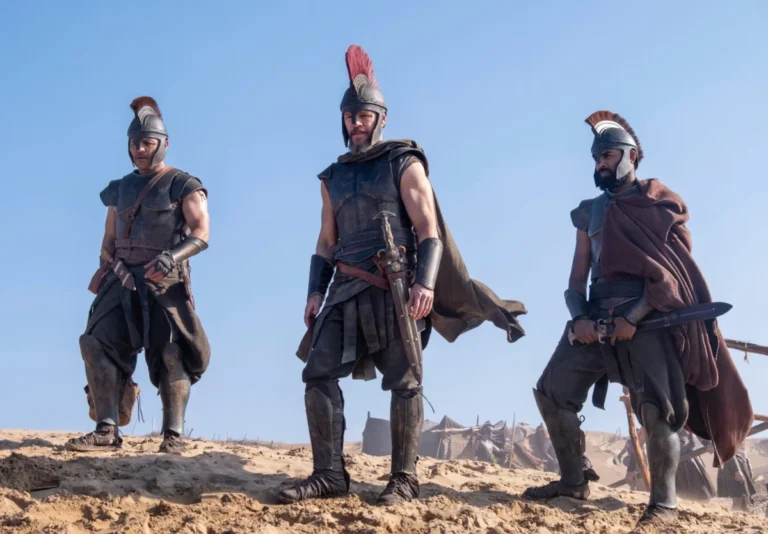
Universal Pictures’ high-stakes adaptation of Homer’s ancient Greek epic, The Odyssey, directed by Academy Award-winner Christopher Nolan, has achieved a historic opening weekend, grossing $264.1 million globally. The film’s commercial success comes despite a months-long campaign on social media platforms, most notably X (formerly Twitter), where critics and high-profile figures, including Elon Musk, called for a boycott over casting choices and the film’s creative direction. The production, which carried a $250 million production budget and an additional $125 million in marketing costs, appears to have overcome the "anti-woke" sentiment that dominated digital discourse leading up to its release.
The Genesis of the Controversy and the Role of Social Media
The friction surrounding Nolan’s The Odyssey began during its early production phases when the studio announced its primary source material: Emily Wilson’s 2017 translation of the epic poem. Wilson, a professor of Classical Studies at the University of Pennsylvania, was the first woman to publish an English translation of The Odyssey. Her work was both celebrated for its modern clarity and criticized by traditionalists for its stylistic choices, such as her decision to describe the protagonist Odysseus as "complicated" rather than "wily" or "of many turns," and her blunt depiction of the violence against enslaved women in the household.
This academic tension migrated into the broader culture war when casting details were leaked. The casting of Lupita Nyong’o as Helen of Troy and Elliot Page as Sinon became focal points for a segment of the audience on X. Critics, led by Elon Musk and several prominent conservative influencers, argued that the casting represented a "desecration" of Western heritage and a sacrifice of "historical accuracy" in favor of diversity, equity, and inclusion (DEI) initiatives.
Musk, who has frequently used his platform to criticize Hollywood’s "woke" culture, amplified posts claiming that the film’s departure from traditional European aesthetics was an affront to the source material. These critiques often ignored the fantastical nature of the narrative—which features Sirens, a one-eyed Cyclops, and divine intervention—focusing instead on the ethnicity and gender identity of the actors. Despite the actors in question appearing for a combined total of approximately ten minutes in the three-hour film, the digital backlash grew into a concerted effort to discourage theater attendance.
Box Office Performance and Global Reception
The narrative of a failing production was abruptly challenged when Universal Pictures released the opening weekend figures. With $264.1 million in worldwide ticket sales, The Odyssey marks one of the strongest openings in Christopher Nolan’s career, rivaling the performance of his previous blockbusters like The Dark Knight Rises and Oppenheimer.
Industry analysts suggest that Nolan’s brand—defined by large-scale practical effects, IMAX cinematography, and complex storytelling—remains a significant draw for the general public, largely insulating his projects from localized social media boycotts. The film’s success was bolstered by strong performances in international markets, where the specific nuances of the American culture war hold less sway over ticket-buying decisions.
| Metric | Details |
|---|---|
| Production Budget | $250 Million |
| Marketing Budget | $125 Million |
| Opening Weekend (Global) | $264.1 Million |
| Primary Source | Emily Wilson (2017 Translation) |
| Director | Christopher Nolan |
| Lead Cast | Cillian Murphy, Lupita Nyong’o, Elliot Page, Robert Downey Jr. |
In response to the box office data, some conservative commentators shifted their stance. Ben Shapiro, a prominent critic of DEI policies, acknowledged the film’s technical and narrative achievements, describing it as a "landmark achievement" despite his reservations about modern Hollywood values. This split among conservative voices signaled a breakdown in the uniformity of the boycott movement.
Conspiracy Theories and Claims of Astroturfing
Following the announcement of the film’s financial success, a new wave of skepticism emerged on X. Anonymous accounts began circulating claims that Universal Pictures was "faking" ticket sales through a practice known as astroturfing—buying up blocks of theater seats to create the illusion of high demand.
One viral post on Monday claimed the film was "already $400 million in the hole" and alleged that moviegoers were finding theaters largely empty despite being told that only "terrible seats" were available. These claims were accompanied by unverified screenshots from Reddit and other forums. However, theater owners and independent box office trackers, such as Comscore, have not reported any anomalies that would suggest fraudulent activity.
Logistically, the cost of "faking" a $264 million opening would involve an expenditure that far exceeds any potential benefit for a publicly traded studio like Universal. Furthermore, the claim that critics’ reviews were "published at the same time" as part of a conspiracy was debunked by industry standard practices, where "review embargos" are used to ensure all outlets release their coverage simultaneously to maximize impact and fairness.
Musk’s Grok Proposal and the AI Counter-Narrative
As the live-action film continued its dominance, Elon Musk proposed a technological alternative to traditional Hollywood productions. Responding to an AI-generated clip of The Odyssey that featured a more traditional, Eurocentric aesthetic and British accents, Musk declared that his AI company, xAI, would utilize its "Grok Imagine" model to produce a full-length movie of the epic.
"Before this year ends, Grok Imagine will make a full-length movie of The Odyssey that is historically accurate and true to the art of Homer," Musk posted.
This announcement has met with skepticism from both the tech and film industries. While generative AI has made rapid strides in short-form video, the creation of a three-hour, narratively coherent, and high-fidelity feature film remains a massive technical hurdle. Critics of Musk’s promise point to his history of missed deadlines regarding Tesla’s Full Self-Driving (FSD) capabilities and SpaceX timelines.
Furthermore, Musk’s project is not the only AI-driven Odyssey in development. The AI studio Fountain 0 announced its own project, Odyssey: The Fall, slated for an online release this summer. This indicates a growing trend of "parallel productions" where AI is used to create alternative versions of popular stories to cater to specific ideological or aesthetic niches.
Chronology of the Odyssey Controversy
- November 2023: Christopher Nolan announces he will adapt The Odyssey using Emily Wilson’s translation as the primary text.
- January 2024: Casting of Lupita Nyong’o and Elliot Page is confirmed, triggering the first wave of social media backlash.
- March 2024: The first teaser trailer is released. Online groups call for a "total boycott," citing "historical inaccuracy."
- June 2024: Conservative influencers and Elon Musk amplify criticisms of the film’s "woke" themes.
- July 17, 2024: The Odyssey premieres in London and New York to critical acclaim.
- July 19-21, 2024: The film earns $264.1 million in its opening weekend.
- July 22, 2024: Claims of "fake ticket sales" emerge on X.
- July 23, 2024: Musk announces plans for a Grok-generated version of the story.
Academic and Critical Analysis of "Accuracy"
The debate over "historical accuracy" in The Odyssey highlights a fundamental tension between classical scholarship and popular perception. Historians and classicists note that the concept of "race" as understood in 21st-century America did not exist in the Bronze Age Mediterranean. The Greeks identified themselves by language, city-state, and culture rather than skin color.
Emily Wilson has frequently addressed these points, noting that the world of Homer was a multicultural crossroads of the Mediterranean. Scholars argue that Nolan’s casting reflects the mythic, rather than strictly historical, nature of the poem. As a work of fiction involving gods and monsters, The Odyssey has always been subject to reinterpretation by the cultures that inherit it.
Nolan’s decision to use Wilson’s translation also brought a different rhythmic and moral weight to the screen. Unlike earlier translations that often romanticized Odysseus’s actions, Wilson’s version—and Nolan’s film—grapples with the darker elements of the protagonist’s homecoming, including the summary execution of his household staff. This thematic depth has been cited by critics as a primary reason for the film’s high "Rotten Tomatoes" score and its early positioning as an awards-season frontrunner.
Broader Industry Implications
The failure of the boycott against The Odyssey may serve as a turning point for how Hollywood studios approach social media controversy. For several years, the "Go Woke, Go Broke" narrative has been a looming threat in marketing boardrooms. However, the success of The Odyssey, following the massive success of films like Barbie—which also faced similar digital backlash—suggests that there is a significant disconnect between "viral" social media sentiment and the actual behavior of the global moviegoing public.
Market data suggests that while social media can generate significant "noise," it rarely translates into a definitive commercial outcome for high-quality productions with broad appeal. For Universal Pictures, the controversy may have even served as "earned media," increasing awareness of the film among demographics that might not have otherwise been interested in a three-hour Greek epic.
As the industry moves forward, the focus is likely to remain on the "Nolan model": prioritizing directorial vision and technical excellence over attempts to appease polarized digital factions. Meanwhile, the emergence of AI-generated "counter-content" like Musk’s Grok project represents a new frontier in the culture war, where technology allows dissatisfied audiences to create their own versions of reality, further fragmenting the shared cultural landscape.
The success of The Odyssey stands as a testament to the enduring power of ancient storytelling when paired with modern cinematic mastery. While the digital storm on X continues to rage, the reality of the box office suggests that the voyage of Odysseus remains as compelling to the masses today as it was nearly three millennia ago.