In an ambitious declaration that signals a new era of expansion for one of the United Kingdom’s most storied video game developers, Jagex CEO Phil Bellamy has outlined a strategic roadmap intended to position RuneScape as the world’s leading Massively Multiplayer Online (MMO) brand within the next five years. Speaking in a comprehensive interview with Chris Dring at The Game Business, Bellamy articulated a vision that would see the RuneScape franchise surpass its long-standing rival, Activision Blizzard’s World of Warcraft, to claim the industry’s top spot.
The transition from a "number two" position to the global leader represents a significant undertaking, given the decades-long market dominance of World of Warcraft. However, Bellamy remains undeterred, emphasizing a pragmatic yet aggressive approach to growth that leverages the brand’s unique player demographics and a diversifying portfolio of titles.
The Three-Pillar Growth Strategy
Central to Jagex’s plan for global leadership is the expansion of the RuneScape ecosystem into a multi-title powerhouse. Bellamy revealed that the company’s objective is to sustain at least three major, growing RuneScape-branded games simultaneously. These titles are expected to cater to a combined multi-million person audience, providing a variety of gameplay experiences under a single intellectual property (IP) umbrella.
The current strategy relies on three distinct pillars:
- RuneScape (RS3): The modern iteration of the game, featuring advanced graphics, complex boss mechanics, and a robust microtransaction ecosystem.
- Old School RuneScape (OSRS): The 2013-launched "legacy" version based on 2007 builds, which has paradoxically become more popular than the main game due to its community-driven development and nostalgic appeal.
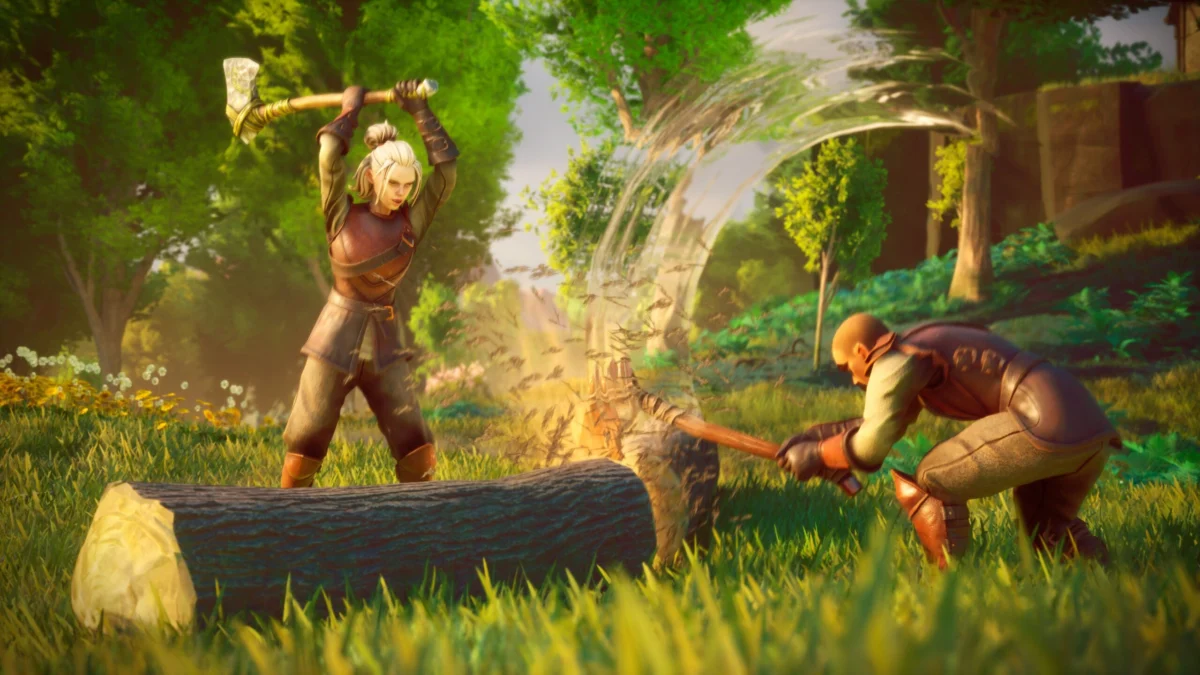
- RuneScape: Dragonwilds: A recently announced survival-crafting title that represents Jagex’s foray into a high-growth genre. Currently in development, the game is slated to exit Early Access in late September, marking a pivotal moment in the franchise’s diversification.
Addressing potential concerns regarding market cannibalization—where the new survival game might pull players away from the existing MMOs—Bellamy utilized a culinary metaphor to describe the company’s philosophy. "I’m not worried if the strawberry ice cream outsells the chocolate ice cream," Bellamy stated. "We just want to sell ice cream." This perspective suggests that Jagex is less concerned with which specific title players choose, provided they remain within the RuneScape ecosystem and contribute to the brand’s overall footprint.
Demographics and the Second-Screen Phenomenon
A key component of Jagex’s confidence lies in the unique behavioral patterns of its player base. During the interview, Bellamy highlighted data showing that the average play session for Old School RuneScape is just under five hours per day. This high level of engagement is particularly notable given the age of the audience; the average RuneScape player is now 32 years old.
This demographic profile—professionals in their early thirties—has led to the development of what Bellamy calls "designing for reality." He acknowledged that many players engage with the game while multitasking, often during work hours.
"Ask me what I’m doing behind the scenes while I’m doing the job: I’m logged into Old School, right now I’m fishing," Bellamy admitted. "That’s true for many people. There are millions of Deloitte consultants out there somewhere who have Excel open on one screen and Old School open on another."
By embracing the "second-screen" nature of RuneScape—where certain activities like Woodcutting or Fishing require minimal attention—Jagex has secured a level of daily active user (DAU) consistency that few other MMOs can replicate. This "low-intensity" gameplay allows the game to coexist with the professional lives of its aging audience, ensuring long-term retention that persists even as players’ external responsibilities increase.
Historical Context: From Browser Game to Billion-Dollar Asset
The pursuit of the top spot in the MMO rankings is the latest chapter in a 23-year history that began in a basement in Nottingham. Founded by Andrew, Paul, and Ian Gower, RuneScape launched in 2001 as a Java-based browser game. Its accessibility—requiring no high-end hardware or expensive software downloads—allowed it to spread rapidly across schools and libraries worldwide.
By the mid-2000s, RuneScape had entered the Guinness World Records as the world’s most popular free-to-play MMORPG. However, the landscape shifted in 2004 with the release of World of Warcraft, which set a new standard for high-fidelity, subscription-based gaming. For two decades, the two titles have occupied different niches: WoW as the premier high-fantasy theme park MMO, and RuneScape as the king of the sandbox, "point-and-click" genre.
The franchise faced a major turning point in 2012 with the "Evolution of Combat" update, which modernized gameplay but alienated a significant portion of the veteran community. This led to the 2013 launch of Old School RuneScape, a move that proved visionary. By allowing players to vote on every single game update via an in-game polling system, Jagex pioneered a democratic development model that has kept the community intensely loyal.
Financial Backing and Market Valuation
Jagex’s current push for dominance is supported by recent corporate maneuvers that have provided the company with significant capital. In February 2024, Jagex was acquired by CVC Capital Partners and Haveli Investments from the Carlyle Group. The deal was reportedly valued at approximately £900 million ($1.1 billion), reflecting the high market value of long-term, recurring revenue streams in the gaming sector.
This acquisition has provided Bellamy and his executive team with the mandate to expand the IP. The investment from CVC, a private equity giant, suggests that the market sees RuneScape not as a legacy product in decline, but as an undervalued asset with significant growth potential in the mobile and cross-platform markets.
Comparative Analysis: RuneScape vs. World of Warcraft
To become the "number one" MMO brand, Jagex must bridge a gap that is both quantitative and cultural. While Blizzard Entertainment does not regularly release exact subscriber counts for World of Warcraft, industry estimates and quarterly earnings reports generally place WoW’s active player base in the range of 7 to 9 million during expansion launches. RuneScape, while boasting over 300 million registered accounts over its lifetime, typically maintains a combined active player base (RS3 and OSRS) in the low millions.
However, the "number one" metric can be measured in several ways:
- Active Daily Users: Where RuneScape’s "AFK-friendly" mechanics give it a distinct advantage in daily engagement time.
- Revenue: Where WoW’s $15/month subscription model and expansion sales compete with RuneScape’s hybrid model of subscriptions (Memberships) and "Bonds" (an in-game item that can be traded for gold or membership).
- Cultural Longevity: Where RuneScape’s continuous, single-world history (never resetting or "sequeling" the main game) provides a sense of permanent progression that appeals to long-term investors of time.
Bellamy’s focus on three games suggests that Jagex intends to win through aggregate volume. By capturing the survival-crafting market with Dragonwilds while maintaining the MMO strongholds of OSRS and RS3, the company aims to create a broader "RuneScape Universe" that rivals the reach of Blizzard’s Azeroth.
Potential Challenges and Industry Outlook
Despite the optimistic outlook, industry analysts point to several hurdles Jagex must overcome. The "point-and-click" mechanical nature of RuneScape is a niche that may have a natural ceiling compared to the more action-oriented combat of competitors like Final Fantasy XIV or World of Warcraft. Additionally, the aging engine of the games presents technical debt that can make implementing modern features difficult.
Furthermore, the survival-crafting genre is highly saturated. While the RuneScape IP carries significant weight, Dragonwilds will be competing against established giants like Rust, Ark: Survival Evolved, and Valheim. The success of this third pillar is crucial to Bellamy’s five-year goal; if Dragonwilds fails to gain traction, the "multi-million person audience" target becomes significantly harder to reach.
Conclusion
The next five years will determine if Jagex can successfully transition from a specialist developer of a cult classic into the steward of the world’s most dominant MMO brand. With the backing of CVC Capital Partners, a clear demographic advantage among working professionals, and an aggressive diversification strategy, Phil Bellamy has set a high bar for the Nottingham-based studio.
As RuneScape approaches its 25th anniversary, the "dream" of toppling World of Warcraft is no longer a mere corporate platitude, but a stated business objective. If the company can successfully launch Dragonwilds and continue to grow its "ice cream" flavors, the MMO hierarchy may look vastly different by 2029.