


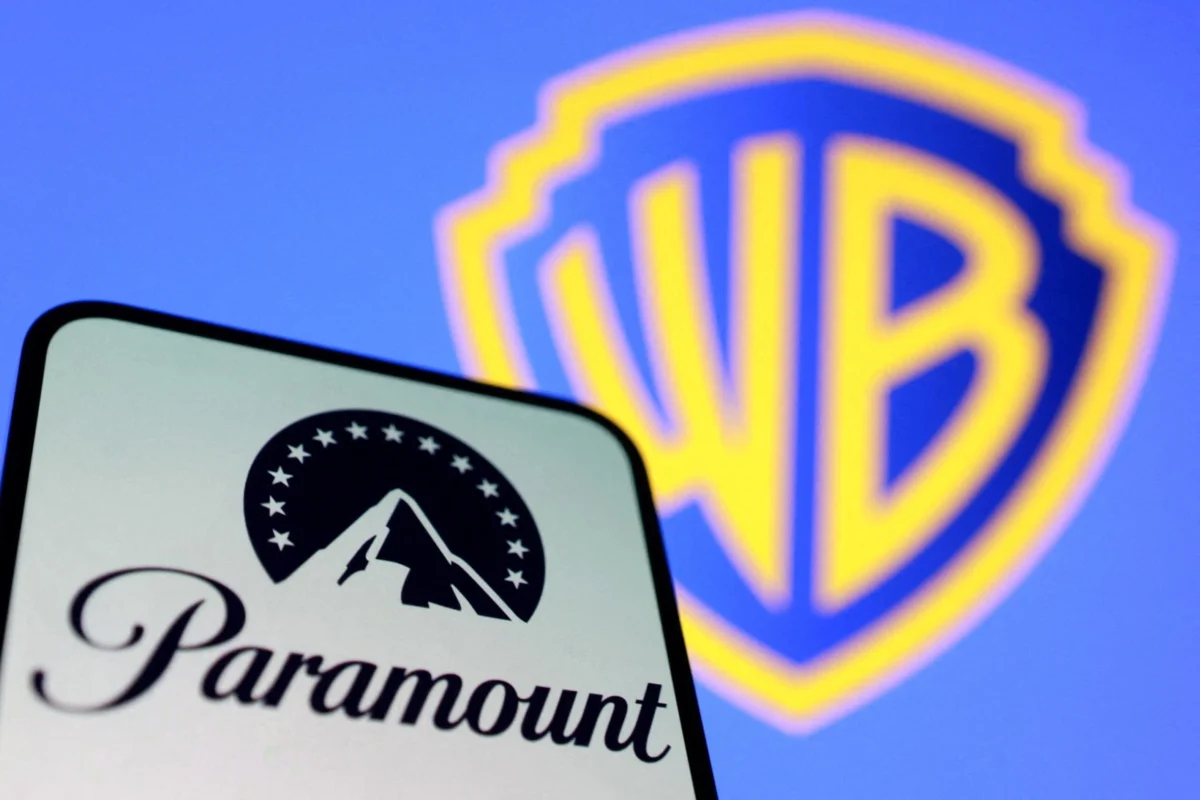
The landscape of American media and entertainment faced a significant legal tremor on Monday as a federal judge issued a temporary restraining order (TRO) to halt the proposed $110 billion merger between the newly formed Paramount-Skydance entity and Warner Bros. Discovery (WBD). District Judge Araceli Martínez-Olguín, presiding in the U.S. District Court for the Northern District of California, signed the order following a high-stakes hearing in Oakland. The decision effectively imposes a 14-day moratorium on all proceedings related to the consolidation, marking the first major judicial setback for a deal that would fundamentally reshape the global entertainment industry.
The legal intervention stems from a comprehensive lawsuit spearheaded by California Attorney General Rob Bonta and supported by a coalition of attorneys general from 11 other states, including New York, New Jersey, Massachusetts, and Washington. The coalition argues that the union of two of the "Big Five" Hollywood studios violates the Clayton Antitrust Act, a century-old cornerstone of American competition law designed to prevent mergers that substantially lessen competition or tend to create a monopoly.
The Judicial Decision and the 14-Day Freeze
In her ruling, Judge Martínez-Olguín noted that the coalition of states provided "compelling evidence" suggesting that the combined entity would wield disproportionate power within the theatrical distribution market. The court’s decision to grant the TRO serves as a preventative measure, maintaining the "status quo" while the judiciary deeper examines the potential for anticompetitive harm.
The timing of the order is particularly critical. Paramount’s lead trial counsel, Jeffrey Kessler, recently indicated that the companies intended to finalize the transaction as early as July 22, 2026, assuming all regulatory clearances were secured. By imposing the 14-day pause, the court has effectively neutralized that deadline, forcing the corporate giants to wait until at least late July or early August before taking further steps toward integration. While Paramount attorneys attempted to negotiate a voluntary delay until mid-August to avoid the formal imposition of a TRO, the court opted for the legal weight of a restraining order to ensure compliance.
A Portfolio of Unprecedented Scale
The sheer scale of the proposed merger is at the heart of the legal controversy. If allowed to proceed, the consolidated company would bring an immense array of cultural and commercial assets under a single corporate umbrella. The deal seeks to unite:
- Film Studios: The historic Paramount Pictures and Warner Bros. Pictures, two of the most influential names in cinema history.
- Broadcast and Cable Television: The CBS broadcast network, alongside a dominant portfolio of cable channels including CNN, TNT, TBS, MTV, BET, Nickelodeon, and the Discovery Channel.
- Streaming Services: A merger of Paramount+ and Max (formerly HBO Max), creating a streaming titan capable of rivaling Netflix and Disney+.
- Sports and News: Significant control over live sports broadcasting rights and the global news infrastructure of CNN.
The state attorneys general contend that this concentration of power would allow the merged firm to control nearly one-third of all wide-release theatrical films and approximately 30% of basic cable television programming. Attorney General Rob Bonta emphasized that such dominance would likely lead to "higher prices, lower quality, and less content," affecting everyone from theater owners to the average consumer streaming content at home.
The Corporate Defense: Modern Market Realities
Paramount has remained steadfast in its defense of the merger, characterizing the legal challenge as being out of touch with the current economic climate of the entertainment industry. In a statement released following the judge’s order, a Paramount spokesperson asserted that the "alleged markets and claims of anticompetitive effects are without any basis in modern market realities."
The defense’s primary argument rests on the existential threat posed by "cord-cutting"—the trend of consumers abandoning traditional cable packages in favor of digital streaming. Paramount’s legal team argues that the merger is not a monopolistic grab, but a necessary survival strategy to stabilize legacy media assets. They contend the deal is "pro-competitive" because it will:
- Incentivize investment in high-quality, job-creating film production.
- Provide a more robust platform to compete against tech giants like Amazon, Apple, and Netflix, who have disrupted the traditional Hollywood model.
- Increase the volume of theatrical releases, supporting a cinema industry still recovering from the pandemic-era shifts in consumer behavior.
In court filings, Paramount described the states’ lawsuit as "one of the weakest merger challenges in modern antitrust history," suggesting that the merger would actually benefit consumers by ensuring the longevity of storied institutions that might otherwise struggle to compete independently.
Financial Risks and the "Ticking Fee"
The delay introduced by the TRO carries substantial financial implications for Paramount and its shareholders. The company has publicly stated its goal to close the transaction by the end of September 2026. However, the merger agreement includes specific clauses designed to penalize delays.
If the deal is not finalized by September 30, a "ticking fee" is triggered. This mechanism requires Paramount to pay WBD shareholders an additional 25 cents per share for every quarter the deal remains unclosed. Financial analysts estimate this could equate to approximately $650 million in cash value per quarter. Furthermore, the agreement stipulates a staggering $7 billion breakup fee that Paramount would be required to pay if the merger is ultimately abandoned due to regulatory or legal roadblocks. These financial stakes put immense pressure on the legal teams to resolve the state-led challenges swiftly.
A Divergence in Regulatory Perspectives
One of the most striking aspects of the case is the divergence between federal and state regulators. In June 2026, the Antitrust Division of the U.S. Department of Justice (DOJ) signed off on the merger, signaling that the federal government did not find sufficient grounds to block the deal on a national level. The merger has also received various approvals from international jurisdictions.
However, the U.S. legal system allows state attorneys general to bring independent antitrust actions if they believe their residents will be uniquely harmed. This "double-track" regulatory environment has become a significant hurdle for large-scale M&A activity in recent years. The current situation draws parallels to the $6.2 billion merger between Nexstar Media Group and Tegna, which was also halted by a lawsuit led by Bonta. That case resulted in a preliminary injunction and a trial date set for 2027, providing a sobering precedent for Paramount and WBD.
Timeline of the Paramount-WBD Merger Challenge
To understand the current impasse, it is necessary to look at the rapid progression of events leading to the Oakland courtroom:
- Early 2026: Paramount Global and Skydance Media announce a definitive merger agreement, followed shortly by a proposal to acquire Warner Bros. Discovery in a complex multi-stage transaction.
- June 12, 2026: The U.S. Department of Justice clears the merger, citing no federal antitrust violations.
- July 6, 2026: A coalition of 12 states led by California files a lawsuit in the Northern District of California to block the $110 billion deal.
- July 10, 2026: Judge Martínez-Olguín hears arguments regarding a temporary restraining order. Paramount offers a voluntary delay to avoid the order, but the states push for a formal judicial freeze.
- July 13, 2026: The court officially grants the TRO, pausing the merger for 14 days.
- July 22, 2026: The original target date for Paramount to secure all remaining regulatory clearances, including those from the European Union and the United Kingdom.
- Late July 2026: The court is expected to hold further hearings to determine if the TRO should be extended or converted into a preliminary injunction.
Broader Implications for the Media Industry
The outcome of this legal battle will likely set a benchmark for future consolidation in the media sector. If the states are successful in blocking the merger, it may signal the end of the "mega-merger" era in Hollywood, forcing companies to seek growth through internal innovation rather than acquisition. Conversely, a victory for Paramount and WBD would validate the "survival of the biggest" theory, potentially triggering a final wave of consolidation among the remaining mid-sized media players.
Industry analysts are also watching the impact on the labor market. The state AGs have raised concerns that the merger could lead to significant layoffs as the companies seek "synergies" and eliminate redundant roles in their television and film divisions. For creative professionals, a reduction in the number of major studios often means fewer buyers for scripts, less leverage in contract negotiations, and a potential homogenization of content.
As the 14-day window begins, the eyes of the financial and entertainment worlds remain fixed on the Oakland district court. The next phase of the litigation will determine whether this $110 billion vision of a unified media empire will move forward or join the list of ambitious corporate unions dismantled by the renewed vigor of state-level antitrust enforcement.