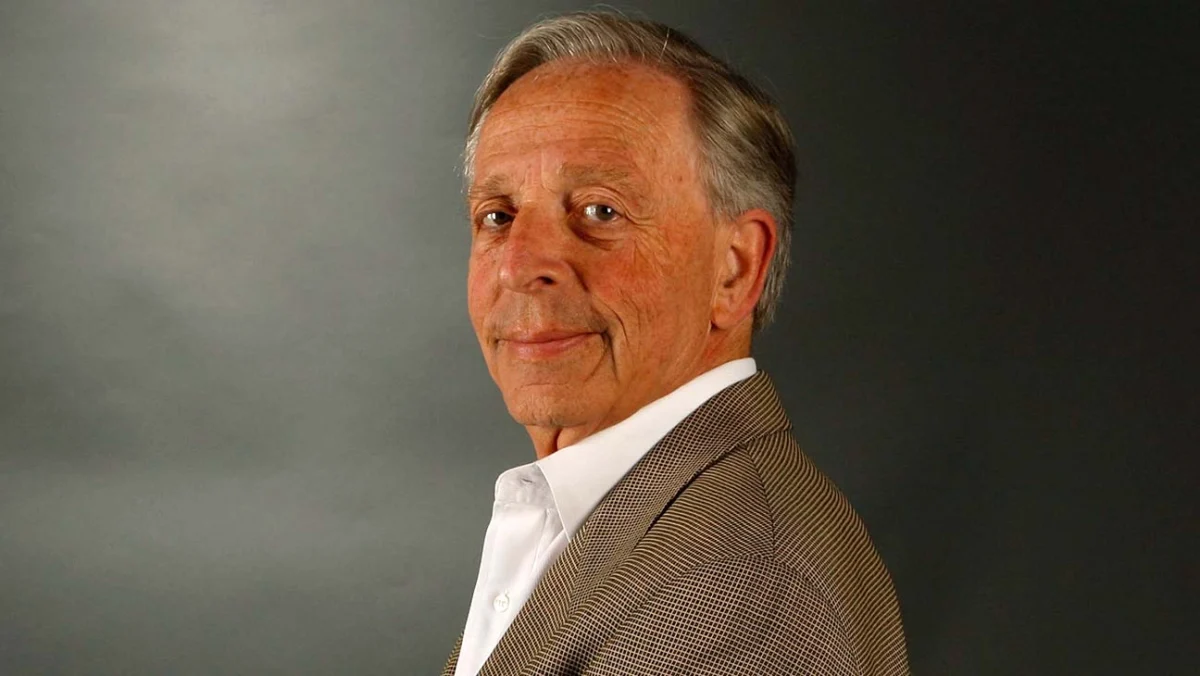
Peter Lassally, a revered figure in late-night television whose profound influence earned him the moniker "Host Whisperer" for his pivotal roles in the careers of Johnny Carson, David Letterman, and Craig Ferguson, passed away on Sunday at the age of 93, his family announced. Lassally’s remarkable journey from a concentration camp survivor to one of television’s most respected producers is a testament to his resilience, keen eye for talent, and unwavering commitment to truth-telling. His passing marks the end of an era for a man who quietly yet definitively shaped the landscape of American talk shows for over five decades.
A Legacy Forged in Resilience and Honesty
Lassally’s career was characterized by a unique blend of empathy, strategic vision, and an almost instinctual understanding of what makes a host connect with an audience. His ability to guide and nurture comedic talent, often behind the scenes and away from the glare of the spotlight, was legendary. He was the quiet counterpoint to boisterous personalities, a steadfast presence whose counsel was sought by the biggest names in the business. His journey began under the shadow of the Holocaust, an experience that, while harrowing, instilled in him a profound sense of purpose and a refusal to compromise on honesty, a trait that would become his professional hallmark. This dedication to authenticity, he often explained, was the secret to his success and the origin of his "Host Whisperer" reputation, as he always told his hosts the truth, even when it was difficult.
Early Life: Survival and the Seeds of a Career
Born Peter Eduard Lassally on October 14, 1932, in Hamburg, Germany, his early life was irrevocably marked by the rise of Nazism. His father, Paul, was an importer/exporter in the coffee business, and his mother, Elsa, was a homemaker. In 1938, as the Nazi regime escalated its persecution of Jews, the Lassally family attempted to flee Germany for England. However, their journey led them to Amsterdam, a move Lassally later reflected on as "not far enough." In Amsterdam, he attended the same grade school as Anne Frank, a poignant detail that underscores the perilous environment of his youth.
The German invasion of the Netherlands in May 1940 brought the full horror of the war to their doorstep. After his father’s death, his mother and older sister were confined to two different concentration camps from 1943 to 1945. The second of these was Theresienstadt in Czechoslovakia, a notorious "model ghetto" used by the Nazis for propaganda purposes. Lassally recalled Theresienstadt as "a very strange place," where the Nazis meticulously staged the camp with fake decor and cultural activities to deceive Red Cross visitors, presenting a facade of humane treatment while concealing the brutal reality of their extermination policies. This early exposure to profound deception and the struggle for survival undoubtedly shaped Lassally’s character, fostering a deep appreciation for truth and an aversion to pretense that would later define his professional relationships.
In 1947, at the age of 14, Lassally found refuge in the United States, living with an uncle in Canton, New York. He completed high school in Queens before attending St. Lawrence University. His entry into the entertainment world began humbly, working as an usher at Radio City Music Hall and as a page at NBC, where he famously shared duties with another future television icon, Regis Philbin. These formative experiences in the bustling heart of New York City’s entertainment industry provided him with an invaluable apprenticeship, allowing him to observe the machinery of broadcasting up close.
His passion for discovering and developing talent truly ignited during his early radio career. He reviewed Broadway plays for a WOR radio program hosted by Ruby Mercer, eventually moving on to produce her show. He then produced the NBC radio program Nightline, where he began to flex his talent-scouting muscles, notably hiring emerging comedians like Mort Sahl, Shelley Berman, and the iconic duo Nichols & May for short comedy bits. "That’s where I found doing what I really love more than anything else, finding talent and developing them," he once stated, pinpointing the moment his lifelong calling became clear.
The Architect of Early Talk: From Godfrey to Wallace
Lassally’s burgeoning reputation as a sharp-witted producer and talent spotter quickly led him to more prominent roles. He began producing shows for Arthur Godfrey on both CBS radio and television, eventually rising to the position of president of Godfrey’s production company. Godfrey, a dominant force in early television and radio, offered Lassally a masterclass in the demands of live broadcasting and the cultivation of a popular persona. This period further honed Lassally’s understanding of how to manage high-profile talent and navigate the complexities of television production.
In 1961, Lassally transitioned to PM East, a syndicated talk show produced by Westinghouse and hosted by the formidable journalist Mike Wallace, long before his legendary tenure on 60 Minutes. This show allowed Lassally to continue his work in talent booking, and he famously recounted regularly inviting a then-unknown Barbra Streisand to appear because she lived in an apartment above the studio. Streisand, at that time, had not even launched her illustrious singing career, highlighting Lassally’s uncanny ability to spot raw, undeniable talent long before it became mainstream. His early work with these seminal figures established his credentials as a producer capable of handling both established stars and promising newcomers, a skill that would prove invaluable in his later career.
The Johnny Carson Era: Defining "The Tonight Show"
Lassally’s career reached its zenith with his nearly 23-year tenure on NBC’s The Tonight Show Starring Johnny Carson. He joined the show, then based in New York, in 1969, thanks in part to an introduction from Carson’s second wife, Joanne, for whom he had produced a TV pilot. This was a pivotal moment, as The Tonight Show was not merely a program; it was a cultural institution, setting the standard for late-night entertainment and serving as a launchpad for countless comedians, actors, and musicians.
Lassally formed an iconic producing partnership with the more effusive Fred De Cordova. Lassally often described their dynamic with characteristic frankness: "He would be Mr. Jolly and schmooze with the guests, which I didn’t like to do, and I would do all the work. And that worked perfectly." This complementary relationship allowed De Cordova to manage the show’s public face and guest relations, while Lassally meticulously handled the complex logistical and creative elements behind the scenes. They maintained a strong bond, sharing lunch daily for more than two decades, often engaging in a game of poker, a testament to their enduring personal and professional rapport.
As the final arbiter of all Tonight Show guests, Lassally wielded immense power in the entertainment industry. His booking decisions could make or break careers. He famously recognized Garry Shandling’s potential during an appearance on The Merv Griffin Show and pursued Steven Wright after seeing his unique stand-up act at a Chinese restaurant. His philosophy for guest selection was simple yet profound: "The gift that I keep looking for in people, whether they’re hosts or guests, is likability. I don’t care if you have the No. 1 record or the No. 1 movie; if you’re not likable, I’d rather not put you on because I don’t think the audience will stay up." This focus on genuine appeal over fleeting fame was a cornerstone of The Tonight Show‘s enduring success, ensuring that audiences connected with the personalities on screen.
Lassally also played a crucial role in developing the rotating cast of guest hosts who filled in when Carson was on vacation, a tradition that offered valuable exposure to up-and-coming talent. Joan Rivers, a frequent guest, eventually became the permanent guest host. When she landed her own late-night show at Fox in 1986, she naturally expected Lassally to join her. However, in a display of his deep loyalty, Lassally chose to remain with Carson, underscoring the strength of his bond with the legendary host. He stayed with The Tonight Show until Carson’s final broadcast on May 22, 1992, marking the end of an era for television and a significant chapter in Lassally’s career. His work on The Tonight Show earned him one of his two Emmy Awards in 1992, a fitting tribute to his long and impactful service.
Navigating the Late-Night Wars: Guiding David Letterman
The retirement of Johnny Carson ignited what became known as the "Late Night Wars," a fierce battle for supremacy in the coveted 11:30 p.m. time slot. While Jay Leno was controversially chosen to succeed Carson on The Tonight Show, Lassally’s next move proved to be another masterstroke. After just one week of rest, he joined Late Night With David Letterman as an executive producer for what would be the NBC program’s final season.
It was during this tumultuous period that Lassally offered David Letterman perhaps the most critical advice of his career. When Leno was selected over Letterman, Lassally recognized the professional and personal peril of Letterman accepting a lesser slot. "I said to Dave, ‘If you’re going to follow Jay Leno at 12:30 when he gets The Tonight Show, you’re going to hate yourself, you’re going to be miserable,’" Lassally recalled in a 2009 interview for the Television Academy Foundation website, The Interviews. "‘You’re going to think, ‘Why am I following Jay Leno when I for 12 years hosted the 12:30 show… and my reward should be The Tonight Show?’ If you agree, I’ll try to get you an 11:30 show – not knowing when I said that just how I was going to do that.’"
This bold counsel, delivered with Lassally’s characteristic honesty, propelled Letterman to explore new opportunities. Lassally connected Letterman with the powerful Creative Artists Agency (CAA) agent Michael Ovitz, leading to a cascade of lucrative offers from syndication, cable, and broadcast networks. Ultimately, Letterman decided to move to CBS in 1993 to headline Late Show With David Letterman from the historic Ed Sullivan Theater on Broadway, airing at 11:35 p.m. This move not only revitalized Letterman’s career but also fundamentally reshaped the competitive landscape of late-night television, establishing CBS as a formidable contender against NBC. Lassally’s foresight and strategic guidance were instrumental in this historic transition, securing his second Emmy Award in 1994 for Late Show With David Letterman.
Building a New Franchise: "The Late Late Show"
The deal that brought Letterman to CBS also included the ownership of a 12:35 a.m. program, The Late Late Show. Lassally returned to California to set up this new franchise, initially with host Tom Snyder, whose distinctive, often meandering interview style provided a unique contrast to Letterman’s more structured approach. Lassally’s vision was to create a different kind of late-night experience, and he successfully launched the show, once again demonstrating his ability to build a program from the ground up.
However, Lassally was not one to compromise on talent or vision. When Snyder departed after four years in March 1999, Lassally found himself at odds with the network’s choice for a replacement, the snarky Craig Kilborn. Lassally had passionately advocated for Jon Stewart, believing his intellectual wit and genuine likability were a better fit. When Kilborn was chosen, Lassally, true to his principles, stepped aside from direct production duties, though he remained a consultant.
His opportunity to fully shape the program returned in 2004 when Kilborn quit in a salary dispute. Lassally seized the moment, finally getting his preferred man: the charming and unconventional Scottish actor-comedian Craig Ferguson. Ferguson’s intelligent, often absurdist humor and deeply personal monologues brought a fresh energy to the late-night slot, quickly developing a dedicated following. Lassally’s belief in Ferguson’s unique talent was vindicated, and he continued as executive producer of The Late Late Show until Ferguson’s departure in 2014, at which point Lassally also retired, bringing his illustrious career to a close. His commitment to authenticity and his ability to see beyond conventional choices ultimately allowed The Late Late Show with Craig Ferguson to carve out its own distinct and beloved niche.
The "Host Whisperer" Philosophy: A Masterclass in Talent Management
The title "Host Whisperer" was not merely a catchy nickname; it encapsulated Peter Lassally’s unique and highly effective approach to working with television’s most demanding and often idiosyncratic personalities. His method was rooted in radical honesty, trust, and a deep respect for the creative process, coupled with an understanding that true talent often comes with its own set of eccentricities.
"I always had a good relationship with the hosts that I worked with because I would tell them the truth. That has really worked well for me. That’s how I got the title the ‘Host Whisperer,’" the two-time Emmy winner explained. "I’m not good at pumping sunshine up their rears. If I didn’t like it, I can’t fake it, I can’t pretend it was good. I’m very lucky the hosts respected that." This candidness, often rare in the image-conscious world of entertainment, fostered an environment of trust where hosts felt they could rely on Lassally for genuine feedback, free from flattery or political maneuvering.
Lassally understood that nurturing talent required more than just booking guests or scheduling segments. It demanded a psychological insight into the artists themselves. He famously said, "I respect talent, I’m in awe of talent. If you are really talented, I will put up with your craziness. Because if you’re that talented, you’re not a normal person; there’s something wacky about you." This acceptance of the "wackiness" inherent in genius allowed him to navigate the often-temperamental nature of creative individuals, providing a stable, honest anchor amidst the pressures of live television. His hosts, from the seemingly unflappable Johnny Carson to the intensely cerebral David Letterman and the wonderfully idiosyncratic Craig Ferguson, all benefited from his unique blend of support and tough love.
A Lasting Legacy: Influence Beyond the Broadcast
Even after Johnny Carson’s retirement, Lassally’s influence continued. He convinced Carson, initially hesitant, to send jokes to David Letterman for his monologues. "He didn’t want to force Dave to use them because of who Johnny was," Lassally told Mark Malkoff on The Carson Podcast. "I said, ‘No, these jokes are wonderful, and Dave would be honored and proud to do them on his show.’ He finally gave in." This act of gentle persuasion underscored Lassally’s ability to bridge divides and foster camaraderie among even the most competitive figures in comedy.
His expertise was also sought by other industry creatives. Garry Shandling, whose potential Lassally had recognized years earlier, frequently bounced talk-show ideas off him for HBO’s critically acclaimed The Larry Sanders Show. "Shandling and his writing partner would ask me, ‘Could this have happened?’ I would say yes and no," Lassally recounted, demonstrating his role as a trusted consultant whose real-world experience lent authenticity to the satirical show.
Peter Lassally’s career spanned a transformative period in television history, from the golden age of radio to the fierce competition of modern late-night. His 13 Emmy nominations and two wins are but a small measure of his profound impact. He was more than a producer; he was a mentor, a confidant, and a strategic visionary who helped define the art of the talk show. His unique journey, from the shadows of the Holocaust to the bright lights of Hollywood, imbued him with a perspective that valued authenticity above all else, making him an irreplaceable force in the careers of some of television’s most beloved hosts.
He is survived by his children, Andrea and Tom, and his grandchildren, Walker, Eloise, Annabel, and Owen. Peter Lassally’s life story is a testament to the enduring power of resilience, the critical importance of honesty, and the indelible mark one individual can leave on an entire industry through an unwavering commitment to talent and truth. His contributions will continue to resonate in the annals of television history, a quiet legacy of a man who whispered greatness into being.