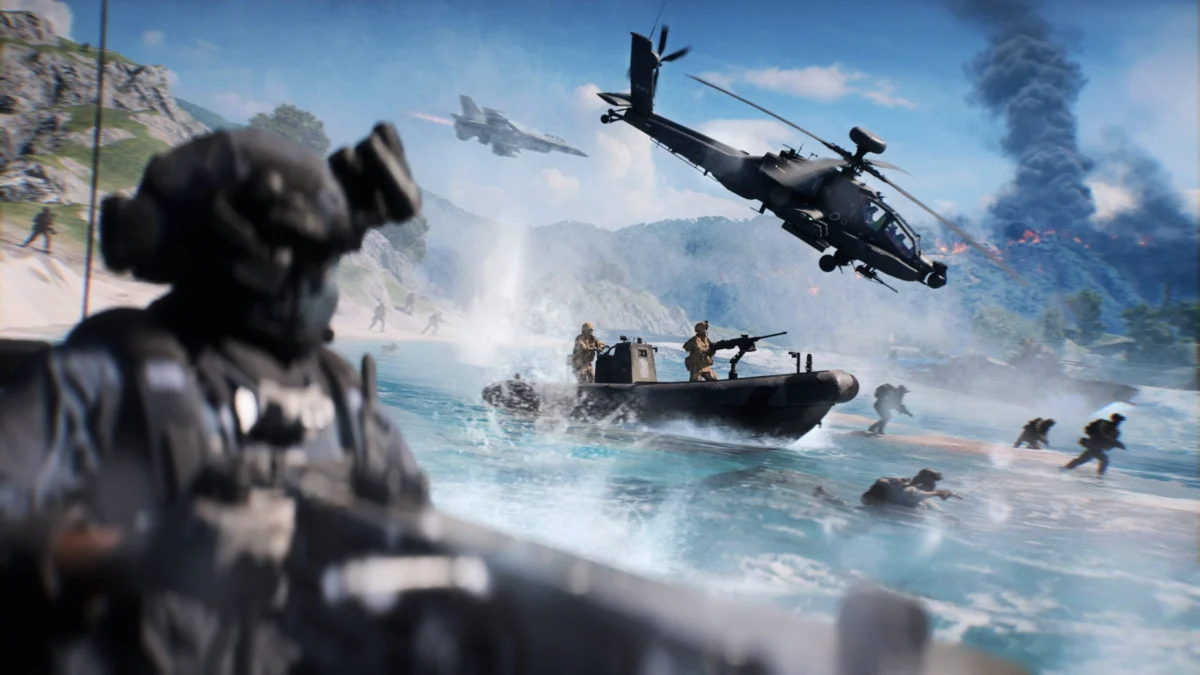
The launch of Season 4 for Battlefield 6 marks a significant milestone in the evolution of the long-running military shooter franchise, headlined by the introduction of Tsuru Reef. Developed by Battlefield Studios and published by Electronic Arts, this new environment represents the largest playable area ever created for the series, designed to showcase the full spectrum of modern combined-arms warfare. Arriving tomorrow, Season 4 seeks to address long-standing community requests for larger-scale engagements while integrating a robust naval combat component that has been largely absent since the early days of the franchise’s current iteration.
The Architecture of Tsuru Reef: Scale and Strategic Design
Tsuru Reef is engineered to be a flagship experience for Battlefield 6, functioning as a technical and design showcase for the Frostbite engine. The map features nine distinct capture points, a significant increase from the standard five to seven points found in previous maps. This expansion is not merely for the sake of size; the developers have structured the environment to support simultaneous ground, air, and naval operations without these elements feeling disconnected from one another.
The geographic layout of Tsuru Reef is diverse, ranging from dense coastal villages to high-altitude mountainous ridges. These topographical variations are intended to create "sub-arenas" within the larger map. For instance, the central town area is characterized by narrow corridors and multi-story structures, favoring infantry-focused close-quarters combat. Conversely, the surrounding archipelago and open water stretches are designed for high-speed naval intercepts and aerial dogfights.
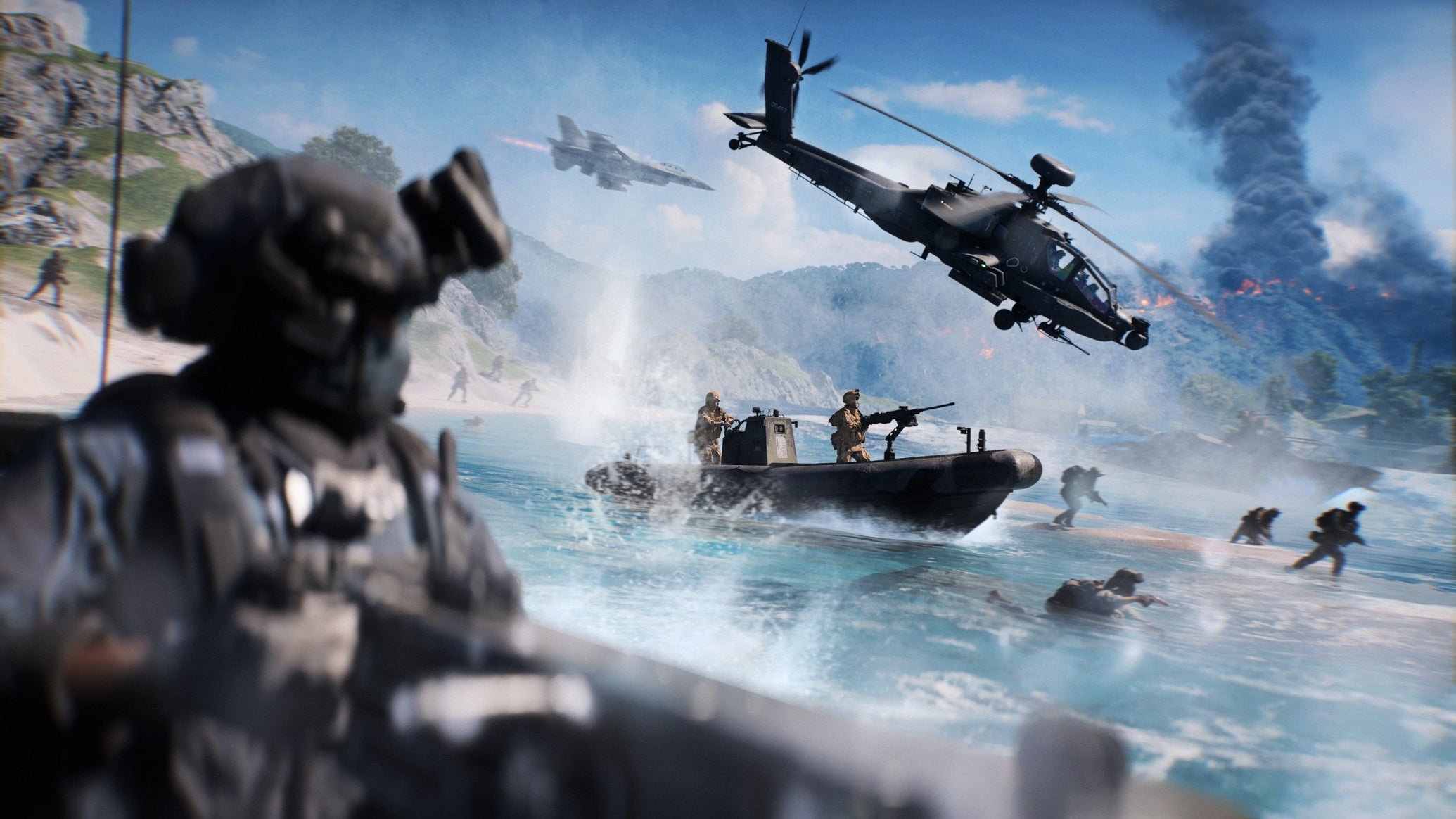
One of the most notable features of Tsuru Reef is the distribution of its vehicle pool. To manage the flow of combat across such a vast distance, Battlefield Studios has implemented a staggered vehicle deployment system. While standard transport vehicles are available from the start of a match, heavier assets—including advanced main battle tanks and specific naval vessels—are tied to the control of specific capture points or become available as the match progresses. This mechanic is intended to prevent "steamrolling" in the early game and forces squads to make strategic decisions about which sectors to prioritize.
A Return to Naval Warfare: Technical Innovations and Gameplay Impact
Naval combat serves as the cornerstone of the Season 4 update. While previous maps in Battlefield 6 focused primarily on terrestrial and aerial domains, Tsuru Reef reintegrates the sea as a primary theater of war. A critical technical achievement in this update is the reintroduction of server-synced waves, a feature last seen in high-fidelity during the Battlefield 4 era.
Server-synced waves ensure that every player in a match sees and interacts with the water’s surface in the exact same way. This is not merely an aesthetic choice; it has profound implications for gameplay. Rising tides can provide temporary cover for smaller patrol boats, while large swells can obstruct the line of sight for tank gunners on the shore. This dynamic environment forces players to account for the physical state of the ocean when engaging in combat.
The naval arsenal has been expanded to include attack boats equipped with heavy machine guns and mortar systems. However, early analysis of the map’s flow suggests a complex relationship between sea and land units. Several capture points have radii that extend into the water, allowing naval vessels to contribute directly to the objective. This design choice aims to integrate boats into the core "Conquest" loop, though it also introduces new frustrations for infantry, such as long-range shelling from boats moored in hard-to-reach coastal nooks.

Chronology of Development and Community Feedback
The path to Season 4 has been shaped by a iterative process of community feedback and technical refinement. At the launch of Battlefield 6, the game faced criticism for its initial map roster. While the launch maps were praised for their graphical fidelity and specific "levolution" events, many veteran players felt the scale was too restricted, focusing heavily on infantry-centric "meat grinder" corridors that lacked the "Only in Battlefield" scale the series is known for.
In response, the development timeline was adjusted to prioritize larger environments:
- Launch Phase: Focus on high-density urban maps and infantry-focused layouts.
- Season 1 & 2: Introduction of hybrid maps that began to incorporate more vehicle-friendly terrain.
- Season 3: The release of the Golmud remake. Originally a fan favorite from Battlefield 4, the Season 3 version of Golmud served as a proof of concept for large-scale vehicle warfare in the new engine. Its massive success and high player retention rates signaled to EA and Battlefield Studios that the community was hungry for even larger spaces.
- Season 4 (Current): The culmination of this feedback loop. Tsuru Reef is the developer’s answer to the demand for a "Big Map," designed to dwarf Golmud in both square footage and tactical complexity.
Arsenal Expansion and the Evolution of Gunplay
Alongside the new map, Season 4 introduces a suite of new weaponry designed to complement the long-range engagements typical of Tsuru Reef. Leading the new additions is the Bren 3 Carbine, a versatile mid-range weapon that early testers have compared to the legendary ACW-R for its reliability and handling.
The update also introduces the VSSM, a specialized marksman rifle that can be modified with a high-cost full-auto attachment. This weapon is specifically designed for the "recon-aggressive" playstyle, allowing snipers to transition from long-range overwatch on the Tsuru mountains to close-quarters defense when their position is compromised.

These weapons arrive on the heels of a significant gunplay overhaul implemented late in Season 3. This update increased the "spread" of weapons at long distances, making it more difficult for players to achieve laser-like accuracy with assault rifles across large gaps. This mechanical change is vital for Tsuru Reef; without it, infantry attempting to cross the map’s vast open spaces would be easily picked off by distant enemies. The current system requires players to pace their shots and utilize transport vehicles—such as the "flying bus" transport helicopters—to move safely between objectives.
Official Responses and Strategic Collaboration
In a statement regarding the Season 4 launch, Battlefield Studios emphasized their commitment to the "sandbox" nature of the franchise. "Tsuru Reef is more than just a map; it is a commitment to the scale and freedom that defines Battlefield," a lead designer noted during a recent preview event. "We wanted to create a space where every player, whether they prefer a cockpit, a captain’s chair, or a pair of boots on the ground, feels they have a vital role to play in the outcome of the battle."
The season also features a high-profile collaboration with the "Top Gun" franchise, specifically tied to the new Carrier Strike mode. This collaboration includes themed cosmetics and specific challenges that lean into the aerial combat strengths of the new map. By aligning with major cultural properties, EA aims to broaden the game’s appeal and draw in new players who may have been intimidated by the game’s initial complexity.
Broader Impact and Future Implications for the Franchise
The success of Tsuru Reef and Season 4 is seen by industry analysts as a bellwether for the future of the Battlefield franchise. As a live-service title, Battlefield 6 relies on consistent engagement and the perceived value of its seasonal content. Tsuru Reef represents a "return to form" strategy, pivoting away from the experimentation of the launch period and leaning back into the classic large-scale warfare that established the series as a leader in the genre.

From a technical standpoint, the map’s ability to handle naval, air, and ground combat simultaneously at this scale will likely influence the design of future installments. If the community embraces the slower, more methodical pace of Tsuru Reef, it could signal a shift away from the "twitch-shooter" trends that have dominated the market in recent years.
Furthermore, the emphasis on naval combat in Season 4 suggests that EA is looking to diversify the gameplay experience to compete with other major shooters. By carving out a niche in high-fidelity naval warfare—a segment that remains relatively underserved in the modern military shooter market—Battlefield 6 secures a unique selling point that could sustain its player base for years to come.
As Season 4 goes live tomorrow, the focus will shift to how the player base adapts to the unprecedented scale of Tsuru Reef. While the map is designed to be a permanent fixture in the rotation, its ultimate legacy will depend on whether players embrace the "Big Map" philosophy or return to the familiar, tighter confines of the game’s launch-era environments. For now, Tsuru Reef stands as a bold statement of intent from Battlefield Studios, proving that in the world of Battlefield, size still matters.