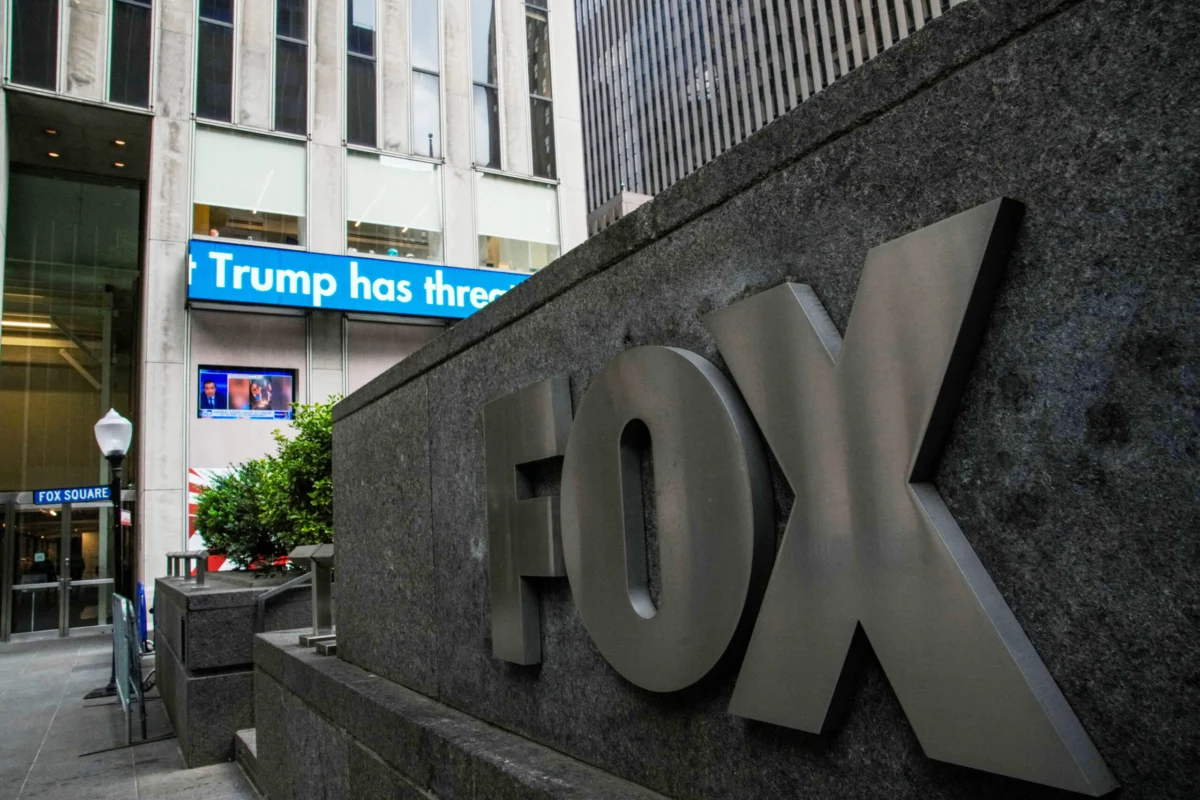
Fox Corporation has officially entered into a definitive agreement to acquire Roku Inc. for approximately $22 billion, a landmark transaction that signals a massive shift in the media landscape as traditional broadcasters race to secure a foothold in the digital future. The deal, announced Monday, involves a cash-and-stock transaction valued at $160 per share, representing a significant premium over Roku’s recent trading averages. To facilitate the acquisition, Fox has secured a $12 billion loan, combining new debt with existing cash reserves to fund the cash portion of the purchase. This move marks Fox’s most aggressive expansion since the 2019 sale of its entertainment assets to The Walt Disney Company, repositioning the media giant as a dominant force in both content distribution and streaming hardware.
The market reaction to the announcement was immediate and underscored the complexities of such a large-scale consolidation. Fox’s shares fell by 17% in morning trading on Monday, as investors weighed the long-term strategic benefits against the immediate burden of $12 billion in new debt. Conversely, Roku’s stock saw a 2% dip on the day of the announcement, though this followed a massive 20% surge the previous Friday as rumors of the impending deal began to circulate. Upon the closing of the transaction, which is expected in the first half of 2027, existing Fox shareholders will own approximately 73% of the combined entity, while Roku shareholders will retain a 27% stake.
Strategic Rationale: The Marriage of Content and Distribution
The acquisition represents a vertical integration strategy designed to insulate Fox from the ongoing decline of traditional linear television. By acquiring Roku, Fox gains control over one of the world’s most significant streaming gateways. Roku currently reports reaching more than 100 million streaming households globally, with users engaging in over 145 billion hours of content annually. This massive footprint provides Fox with a direct-to-consumer pipeline that bypasses traditional cable providers, offering a hedge against the accelerating trend of "cord-cutting."
Lachlan Murdoch, Executive Chair and CEO of Fox Corporation, characterized the deal as a "defining moment" for the company. During a call with investors, Murdoch emphasized that the acquisition allows Fox to "drive the business aggressively into the 21st century," shifting from a legacy broadcast model to a digitally-native powerhouse. The synergy between Fox’s premium live content—specifically its lucrative sports and news portfolios—and Roku’s hardware and operating system is expected to create a formidable competitor in the advertising market.
A key component of this strategy is the Free Ad-supported Streaming TV (FAST) sector. Fox already owns Tubi, which it acquired in 2020 for $440 million. Roku operates The Roku Channel, a direct competitor to Tubi. Despite their similarities, Murdoch stated that the company intends to keep both platforms separate for the foreseeable future. He described the two services as "incredibly complementary," noting that there is only about a 33% overlap in their respective audiences. While Tubi leans heavily into on-demand library content, The Roku Channel has found success with a mix of licensed content and linear-style "live" digital channels.
Historical Context and the Evolution of "New Fox"
To understand the magnitude of this acquisition, it is necessary to look back at the 2019 restructuring of the Murdoch media empire. In a $71 billion deal, Fox sold its film and television studios, along with its stake in Hulu and various international assets, to Disney. The remaining "New Fox" was a leaner entity focused almost exclusively on live assets: Fox News, Fox Sports, and the Fox broadcast network.
Since that divestiture, Fox has been criticized by some analysts for lacking a robust streaming strategy compared to rivals like Disney+, Max (formerly HBO Max), and Paramount+. While competitors burned billions of dollars on high-budget original streaming series, Fox focused on the "FAST" model through Tubi, betting that viewers would eventually tire of high subscription fees and return to ad-supported models. This bet appears to have paid off, as Tubi has consistently grown its user base and revenue.
The acquisition of Roku is the culmination of this "reorientation." It transforms Fox from a company that simply provides content to other platforms into a company that owns the platform itself. This is a return to a "walled garden" philosophy, where Fox can control the user experience, the data, and the advertising inventory from the moment a viewer turns on their television.
Financial Dynamics and Operational Synergies
The $22 billion price tag reflects the premium Fox is willing to pay for Roku’s data and advertising infrastructure. Fox expects to realize approximately $400 million in annual run-rate cost synergies. These savings are expected to come from the integration of back-end technologies, the consolidation of advertising sales teams, and the streamlining of corporate overhead.

However, the financial risk is substantial. The $12 billion loan adds significant leverage to Fox’s balance sheet at a time when interest rates remain a concern for capital-heavy transactions. The 17% drop in Fox’s stock price suggests that the market is skeptical of the company’s ability to manage this debt while simultaneously investing in the high-cost rights for live sports. Fox currently holds the broadcast rights for the NFL’s "America’s Game of the Week" and is in the midst of airing the FIFA World Cup, both of which require massive capital outlays.
Anthony Wood, the founder and CEO of Roku, will play a critical role in the transition. Wood noted that Roku enters this deal from a "position of strength," highlighting its market-leading status in the U.S. streaming device market. For Roku, the deal provides the financial backing of a major media conglomerate, which is essential as it faces increasing competition from tech giants like Amazon (Fire TV), Google (Google TV), and Apple (Apple TV).
The Advertising Factor: Data as the New Currency
At the heart of the Fox-Roku deal is the shift in how television advertising is bought and sold. Traditional Nielsen ratings are increasingly viewed as insufficient in a digital world. By owning Roku, Fox gains access to granular, first-party data on 100 million households. This allows for "addressable advertising"—the ability to show different ads to different households watching the same program based on their interests and demographics.
In recent years, advertising has taken on renewed importance for media companies. As the subscription streaming market reaches saturation, the industry has pivoted toward "hybrid" models that include lower-cost, ad-supported tiers. Fox’s focus on live news and sports provides a unique advantage in this space, as these are the only types of content that still reliably draw large, simultaneous audiences. Integrating these "must-watch" events into the Roku interface gives Fox unprecedented leverage with advertisers.
Chronology of the Acquisition and Next Steps
The path to the $22 billion deal involved several key milestones:
- March 2019: Fox completes the sale of its entertainment assets to Disney, creating "New Fox."
- April 2020: Fox acquires Tubi for $440 million, marking its first major entry into the streaming space.
- 2021–2024: Roku expands its hardware footprint and grows The Roku Channel, reaching the 100-million-household milestone.
- July 17, 2025: Reports surface of a potential "mega-merger" in the streaming space, causing Roku stock to jump 20%.
- July 20, 2025: Boards of both Fox Corp and Roku Inc. formally approve the merger agreement.
- July 21, 2025: Official announcement of the $22 billion acquisition is released to the public.
- H2 2025 – 2026: Regulatory review period. The deal is expected to undergo scrutiny from the Federal Communications Commission (FCC) and the Department of Justice (DOJ) regarding media concentration.
- H1 2027: Anticipated closing date of the transaction.
Industry Implications and Regulatory Outlook
The Fox-Roku merger is likely to trigger a new wave of consolidation in the media and technology sectors. Analysts suggest that other "content-only" companies, such as Warner Bros. Discovery or AMC Networks, may now feel pressured to seek partnerships with hardware or distribution platforms.
The deal is also expected to face significant regulatory scrutiny. In an era where the government has become more aggressive in enforcing antitrust laws, the combination of a major news and sports broadcaster with the leading streaming platform in the U.S. will raise questions about fair competition. Critics may argue that Fox could give its own channels (Fox News, Fox Sports 1) preferential placement on the Roku interface, potentially disadvantaging rival news and sports networks.
However, Fox is likely to argue that the deal is necessary to compete with "Big Tech" players like Amazon and Alphabet, who already operate vertically integrated ecosystems. By framing the acquisition as a survival move against Silicon Valley giants, Fox may find a path toward regulatory approval.
As the media industry moves toward 2027, the Fox-Roku entity will be a central player to watch. If successful, the merger will provide a blueprint for how legacy media companies can reinvent themselves for a digital-first audience. If the integration falters under the weight of debt or regulatory hurdles, it may serve as a cautionary tale about the limits of consolidation in an increasingly fragmented entertainment world. For now, the $22 billion bet represents Lachlan Murdoch’s definitive play to ensure that Fox remains relevant in the 21st-century media landscape.