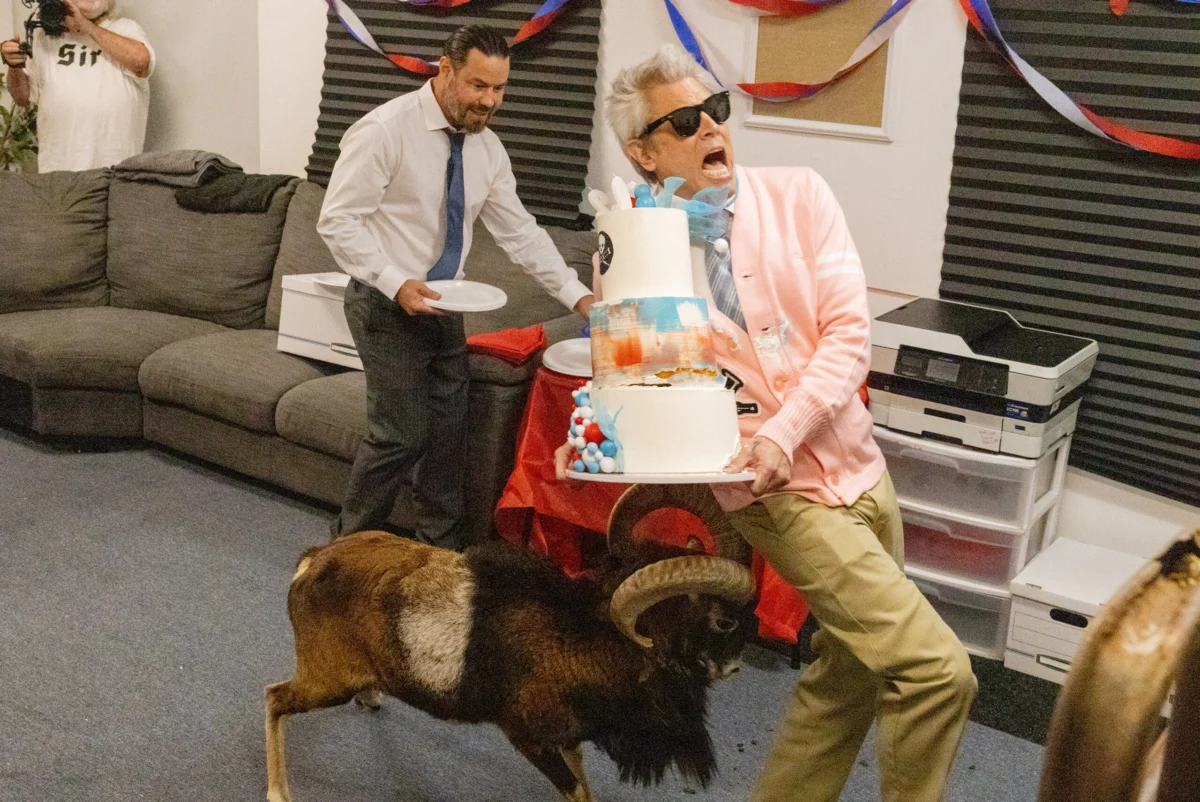
In Jackass: Best and Last (2026), the long-running franchise reaches a reflective milestone, marking what director Jeff Tremaine suggests may be the final chapter of a series that defined a generation of alternative comedy. The film arrives at a time when the cast and creators are increasingly contemplative, looking back at a journey that began in the late 1990s as a fringe skateboarding project and evolved into a multi-million-dollar global property. Tremaine, who has steered the franchise since its inception alongside Johnny Knoxville and Spike Jonze, recently noted the emotional weight of reviewing decades of archival footage. During the editing process, Tremaine observed that seeing the cast as "babies" highlighted the unexpected longevity of a project that was never designed for "long-distance" success.
The director’s perspective offers a rare glimpse into the mechanics of a series often dismissed as mere sophomoric chaos. Despite his association with "knucklehead" humor, Tremaine’s background is rooted in the fine arts, a discipline he studied as an undergraduate. This artistic foundation has quietly informed the aesthetic of Jackass, which balances visceral, lowbrow slapstick with a specific, curated visual style. As the franchise potentially concludes, the industry is re-evaluating Tremaine not just as a prankster, but as an architect of a cultural phenomenon that subverted traditional notions of masculinity and physical comedy.
The Genesis of a Subculture: From Big Brother to MTV
The origins of Jackass are inextricably linked to Big Brother, a skateboarding magazine where Tremaine served as an editor and art director. In the late 1990s, the magazine began producing home-video-style content that prioritized personality and absurdity over technical skating prowess. Tremaine’s primary skill was curation; he sought out individuals who possessed a natural magnetism and a willingness to engage in extreme behavior.
The turning point occurred when Johnny Knoxville filmed himself being shot with a handgun while wearing a bulletproof vest for a Big Brother video. Tremaine identified this footage as something that transcended the niche skateboarding community. By assembling a cast that included Steve-O, Wee Man, Chris Pontius, and Bam Margera, Tremaine created a collective of "outrageous personalities" that appealed to a broad demographic.
In 2000, MTV picked up the series, and it immediately became a lightning rod for controversy. Politicians and parent groups criticized the show for its perceived recklessness, yet its popularity skyrocketed. The show’s DIY aesthetic—characterized by handheld cameras, natural lighting, and a lack of traditional narrative structure—became its hallmark. This "guerilla" style was a necessity in the early days, with Tremaine often driving the production van himself and operating without official permits.
A Chronology of the Jackass Franchise
The trajectory of the Jackass franchise is marked by several key eras, each reflecting the changing landscape of media and the aging of its participants:
- 2000–2002: The Television Era. The original series aired on MTV, quickly becoming one of the network’s highest-rated programs despite significant pushback from censors and public officials.
- 2002: Jackass: The Movie. The transition to the big screen proved that the format could sustain a feature-length runtime. Produced on a modest $5 million budget, it grossed over $79 million worldwide.
- 2006: Jackass Number Two. This sequel refined the production value while maintaining the series’ raw edge. It introduced more elaborate stunts and cemented the cast’s status as cultural icons.
- 2010: Jackass 3D. This installment represented a major technological leap. Utilizing high-speed Phantom cameras and 3D technology, Tremaine elevated the visual presentation of the stunts. This period also saw the franchise’s premiere at the Museum of Modern Art (MoMA), signaling a shift in critical reception.
- 2022: Jackass Forever. After a long hiatus and the tragic loss of cast member Ryan Dunn, the group reunited. The film was praised for its warmth and its exploration of aging and enduring friendship.
- 2026: Jackass: Best and Last. The latest release serves as both a retrospective and a potential finale, incorporating never-before-seen footage and reflecting on the group’s legacy.
The Production Shift: From Spontaneity to Scale
One of the greatest challenges Tremaine faced throughout his career was the transition from a small, mobile crew to a massive studio production. In the early 2000s, the production was agile enough to film spontaneous segments, such as the famous kidnapping of Brad Pitt. Tremaine recalls that the idea was conceived in the office, and within five minutes, the crew was in a van heading to a location to execute the prank without permits or a large security detail.
As the franchise grew, so did the logistical requirements. By the time of Jackass 3D and Jackass Forever, the "360-degree" shooting style—where the crew and cameras are often part of the shot—became difficult to manage. Tremaine noted that a crew that once fit into a single van had expanded to over 120 people. This scale introduced restrictions and the need for permits, which Tremaine argues forced the team to be more creative.
The director’s relationship with the Motion Picture Association of America (MPAA) also became a defining aspect of the production process. Tremaine frequently negotiated with censors over male nudity and the graphic nature of the stunts. A notable example involved a slow-motion sequence in Jackass 3D featuring Chris Pontius. The MPAA demanded cuts to the length of the shot, leading Tremaine to implement a "black bar" that moved in and out of the frame—a solution that satisfied the censors while adding an extra layer of absurdist humor to the scene.
Critical Re-evaluation and the MoMA Gala
For much of its existence, Jackass was dismissed by critics as a low-point in American culture. However, the 2010 premiere of Jackass 3D at MoMA marked a significant "sea change" in how the franchise was perceived. Academics and film critics began to analyze the work through the lens of performance art and the history of slapstick, comparing the cast to modern-day Buster Keatons or Charlie Chaplins.
Tremaine has expressed a complicated relationship with this intellectualization. While he acknowledges that some critics are "dead-on" in their psychological assessments of the group’s dynamics, he remains wary of pretension. He describes his process as "magnifying stupid," preferring to operate with a "punk rock" mindset rather than that of a traditional auteur. Nevertheless, the high critical scores for Jackass Forever—which holds an 85% rating on Rotten Tomatoes—suggest that the "kids who were raised on the show" have become the new generation of critics, viewing the franchise with a mixture of nostalgia and genuine respect for its craft.
Supporting Data: The Financial Impact of Jackass
The financial success of the Jackass films is a testament to the franchise’s enduring appeal. Despite low production costs relative to Hollywood blockbusters, the films have consistently delivered high returns for Paramount Pictures:
| Film Title | Release Year | Budget (Estimated) | Global Box Office |
|---|---|---|---|
| Jackass: The Movie | 2002 | $5 million | $79.5 million |
| Jackass Number Two | 2006 | $11.5 million | $84.6 million |
| Jackass 3D | 2010 | $20 million | $171.7 million |
| Jackass Forever | 2022 | $10 million | $80.5 million |
The franchise has also generated significant revenue through home media sales, spin-offs (such as Wildboyz and Viva La Bam), and digital streaming. The ability of the brand to maintain profitability over 25 years is a rarity in the entertainment industry, particularly for a series rooted in reality-based stunts.
Broader Impact and Cultural Legacy
Beyond the box office, Jackass has had a profound impact on the digital media landscape. The series’ format—short, punchy segments with immediate payoffs—is often cited as a precursor to the content found on platforms like YouTube, Vine, and TikTok. Tremaine’s ability to capture authentic, unscripted reactions created a blueprint for modern "vlogging" and prank culture.
Furthermore, Jackass has been praised by some social commentators for its celebration of healthy, non-toxic male friendships. In an era where traditional masculinity is often scrutinized, the Jackass cast provides a model of vulnerability and platonic love. The group’s willingness to endure pain for one another’s amusement, combined with an environment that openly condemns homophobia, has made the series an unlikely beacon of inclusivity and camaraderie.
As Jeff Tremaine looks toward the future, his legacy is defined by a paradox: he is a fine-arts-educated director who found his greatest success drawing dicks on things and filming his friends getting hit by bulls. Whether Jackass: Best and Last truly serves as the final curtain call remains to be seen, but the influence of Tremaine’s "safety third" philosophy has already left an indelible mark on the history of American cinema and digital culture. For a filmmaker who never aspired to direct, Tremaine has managed to build one of the most resilient and beloved franchises in modern history.