

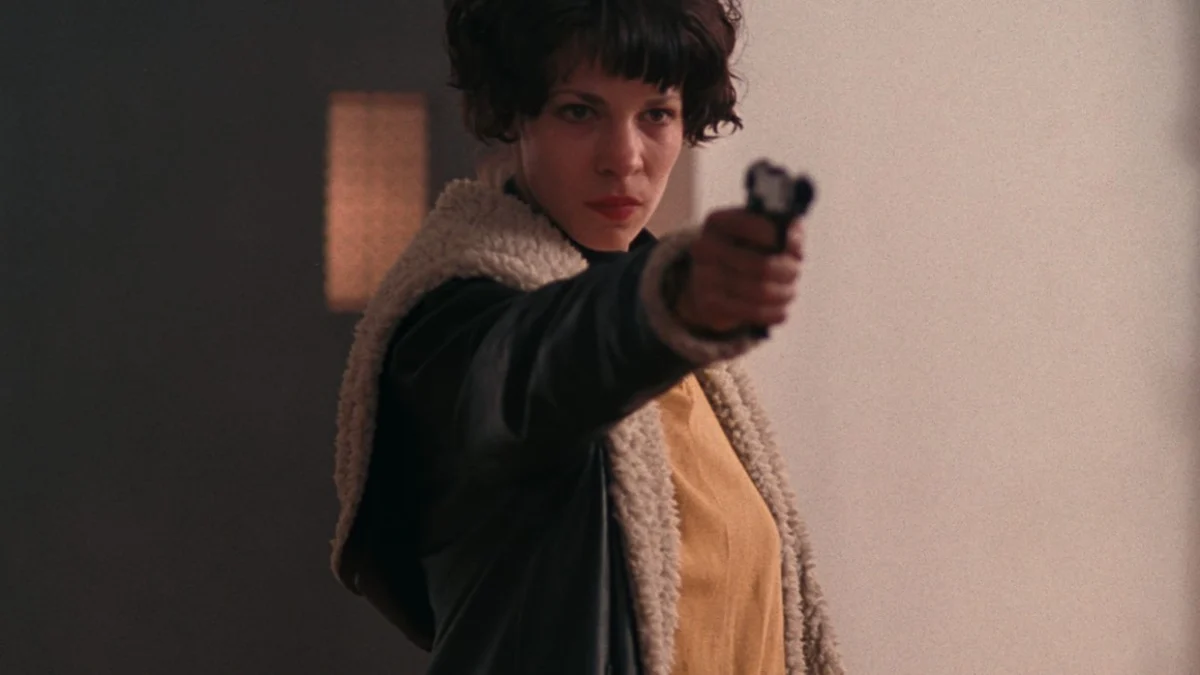
The cinematic landscape of the 1990s was defined by a surge in independent filmmaking that sought to challenge mainstream narratives, and few debuts were as provocative as Mary Harron’s I Shot Andy Warhol. Originally released in 1996, the film served as a stark, deadpan portrait of Valerie Solanas, the radical feminist whose life and ideologies collided violently with the pop art world of the 1960s. Nearly three decades after its initial premiere at the Sundance Film Festival, the film is returning to theaters in a pristine 4K restoration. This revival offers a renewed opportunity to examine the film’s meticulous reconstruction of New York’s downtown art scene and its exploration of a woman whose "SCUM Manifesto" remains one of the most polarizing documents of 20th-century radicalism.
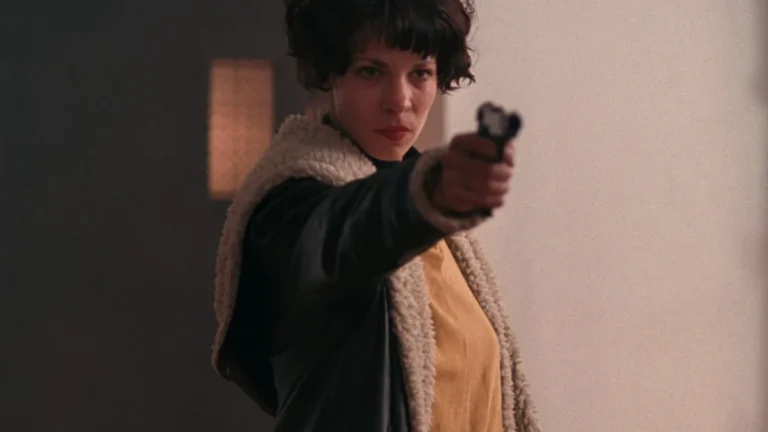
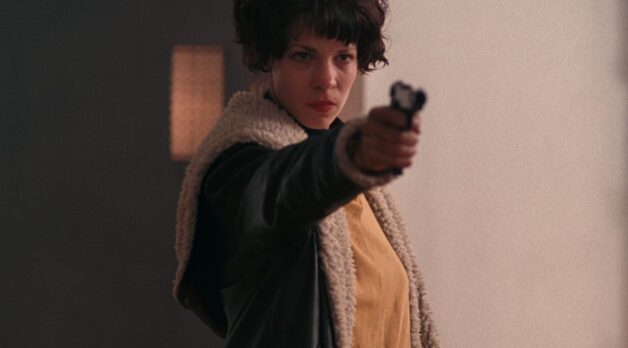
The restoration, supervised by the film’s original cinematographer Ellen Kuras, highlights the deliberate visual dichotomy Harron employed to tell Solanas’s story. By utilizing a naturalistic, gritty palette for the streets of New York and a more stylized, almost "dream-like" illumination for Warhol’s Factory, Harron and Kuras captured the psychological distance between Solanas—an outsider struggling for agency—and the elite, elusive world of the avant-garde. The 4K version emphasizes these textures, bringing a heightened clarity to the "grunge" aesthetic that defined the mid-90s indie cinema movement while preserving the period-accurate documentary feel that Harron prioritized during production.
Historical Context: Valerie Solanas and the SCUM Manifesto
To understand the weight of Harron’s film, one must look at the historical reality of its subject. Valerie Solanas arrived in New York City in the mid-1960s, a brilliant but deeply marginalized figure who survived through panhandling and sex work while developing a radical political philosophy. In 1967, she self-published the SCUM Manifesto (Society for Cutting Up Men), a text that begins with the incendiary line: "Life in this society being, at best, an utter bore and no aspect of society being at all relevant to women, there remains to civic-minded, responsible, thrill-seeking females only to overthrow the government, eliminate the money system, institute complete automation and destroy the male sex."
While the manifesto was initially viewed as a fringe curiosity or a work of dark satire akin to Jonathan Swift’s A Modest Proposal, it took on a more ominous tone following the events of June 3, 1968. On that day, Solanas entered the Factory and shot Andy Warhol and art critic Mario Amaya. Warhol narrowly survived the attack, but the event permanently altered his life and the security of his inner circle. Harron’s film avoids the tropes of a traditional biopic by refusing to frame Solanas as a mere villain or a tragic martyr. Instead, it presents her as a sophisticated writer and a victim of systemic condescension, whose descent into violence was fueled by a desperate desire for intellectual recognition in a world controlled by men.
The Chronology of I Shot Andy Warhol
The journey of the film from conception to its current restoration spans over thirty years, reflecting the evolving cultural reception of its themes.
- Late 1980s – Early 1990s: Mary Harron, then a researcher for documentaries and a director for the BBC, becomes obsessed with the Factory era. She discovers a copy of the SCUM Manifesto in a left-wing bookstore and recognizes Solanas’s "stylish and sophisticated" irony.
- 1991–1995: Harron spends five years developing the script and securing funding. She faces resistance due to the explicitly feminist and radical nature of the subject. Eventually, she connects with producers Christine Vachon and Tom Kalin, key figures in the "New Queer Cinema" movement.
- 1995: Production begins in New York. Harron enlists Ellen Kuras for cinematography and casts Lili Taylor as Solanas. After Lou Reed refuses permission for Velvet Underground tracks, Harron recruits John Cale to compose the score, lending the film a distinct, somber atmosphere.
- January 1996: The film premieres at the Sundance Film Festival to critical acclaim. Lili Taylor receives a Special Jury Recognition for her performance.
- May 1996: The film is released theatrically, grossing approximately $1.9 million at the domestic box office—a significant success for a niche independent feature at the time.
- 2024: A 4K restoration is completed, supervised by Kuras, intended to preserve the film’s "poetic realism" for a new generation of viewers.
Supporting Data and Production Analysis
The production of I Shot Andy Warhol was an exercise in period accuracy achieved through non-traditional means. Rather than looking at other dramatic films, Harron and her team studied primary documentary sources. The hotel sequences were inspired by the photography of Diane Arbus, utilizing negative space and sparse furniture to evoke Solanas’s isolation. The costume and set design relied on Magnum photos and 1960s magazines to avoid the "over-stylized" look common in Hollywood period pieces.
The casting was equally critical to the film’s authenticity. Lili Taylor’s portrayal of Solanas was lauded for its "deadpan swagger," avoiding the caricature of "madness" that often plagues portrayals of historical figures with mental health struggles. Jared Harris’s Warhol was noted for capturing the artist’s "fragility and elusiveness," moving away from the "pop art robot" persona to show a man who was both a visionary and a flawed human being capable of coldness.
Financially, the film was a cornerstone for its production company, Killer Films. It proved that there was a viable market for challenging, female-led narratives that explored the darker intersections of art and politics. This success paved the way for Harron’s next project, the 2000 adaptation of American Psycho, which further cemented her reputation for dissecting the pathologies of American culture.
Official Responses and Creative Reflections
In recent reflections on the film’s restoration, Mary Harron has emphasized that the goal was never to provide a moralizing narrative. "I never wanted heroes and villains," Harron stated during a recent interview regarding the 4K release. She noted that while she was focused on Valerie’s story, she refused to assign definitive blame, preferring to let the audience’s sympathies "ping-pong" between the characters. This ambiguity was a point of contention for some critics in 1996, but Harron maintains that it is essential for creating something that feels "real."
Ellen Kuras, discussing the visual restoration, highlighted the importance of maintaining the film’s "grittiness." The 4K process allowed for a better representation of the colored lights used in the Factory scenes, which were meant to contrast with the "naturalistic" lighting of the rest of the film. Kuras’s work ensures that the film does not look "too beautiful," a deliberate choice to honor the "magical but grungy" reality of the 1960s downtown scene.
Harron also touched upon the film’s reception by her own family, noting that her daughters, now in their late teens and early twenties, felt the gender politics were handled with a sophistication that remains relevant. This cross-generational appeal suggests that the film’s exploration of female rage and the longing for creative expression continues to resonate with contemporary audiences.
Broader Impact and Modern Implications
The rerelease of I Shot Andy Warhol coincides with a period of intense cultural debate regarding feminist history and the "backlash" against radical ideologies. In the 1990s, the film was released in a climate where "feminism" was often a contested label; today, it arrives in an era of digital activism where Solanas’s manifesto has been reclaimed by various radical circles.
Harron observes that Solanas might have found a more direct audience in the age of the internet. The ability to "make your own fame" through social media mirrors Solanas’s efforts to hawk her manifesto on street corners, though the modern landscape offers a reach she could never have imagined. Furthermore, the film’s exploration of the "specifically gendered economy" of the Factory—where women like Edie Sedgwick were celebrated and then discarded—serves as a precursor to modern discussions about the extraction of labor and identity in the creative industries.
The film’s conclusion, which notes that the SCUM Manifesto has become a classic radical feminist text, was once viewed as a stretch by some historians. However, as Harron notes, that statement has "become true in a way it wasn’t 30 years ago." The restoration of I Shot Andy Warhol ensures that this complex intersection of art, violence, and gender remains a "living document," challenging viewers to confront the uncomfortable brilliance of a woman who refused to be ignored. By preserving the film’s uncompromising tone and gritty aesthetic, the 4K restoration reaffirms Mary Harron’s debut as a vital piece of independent cinema that refuses to settle the questions it raises.