



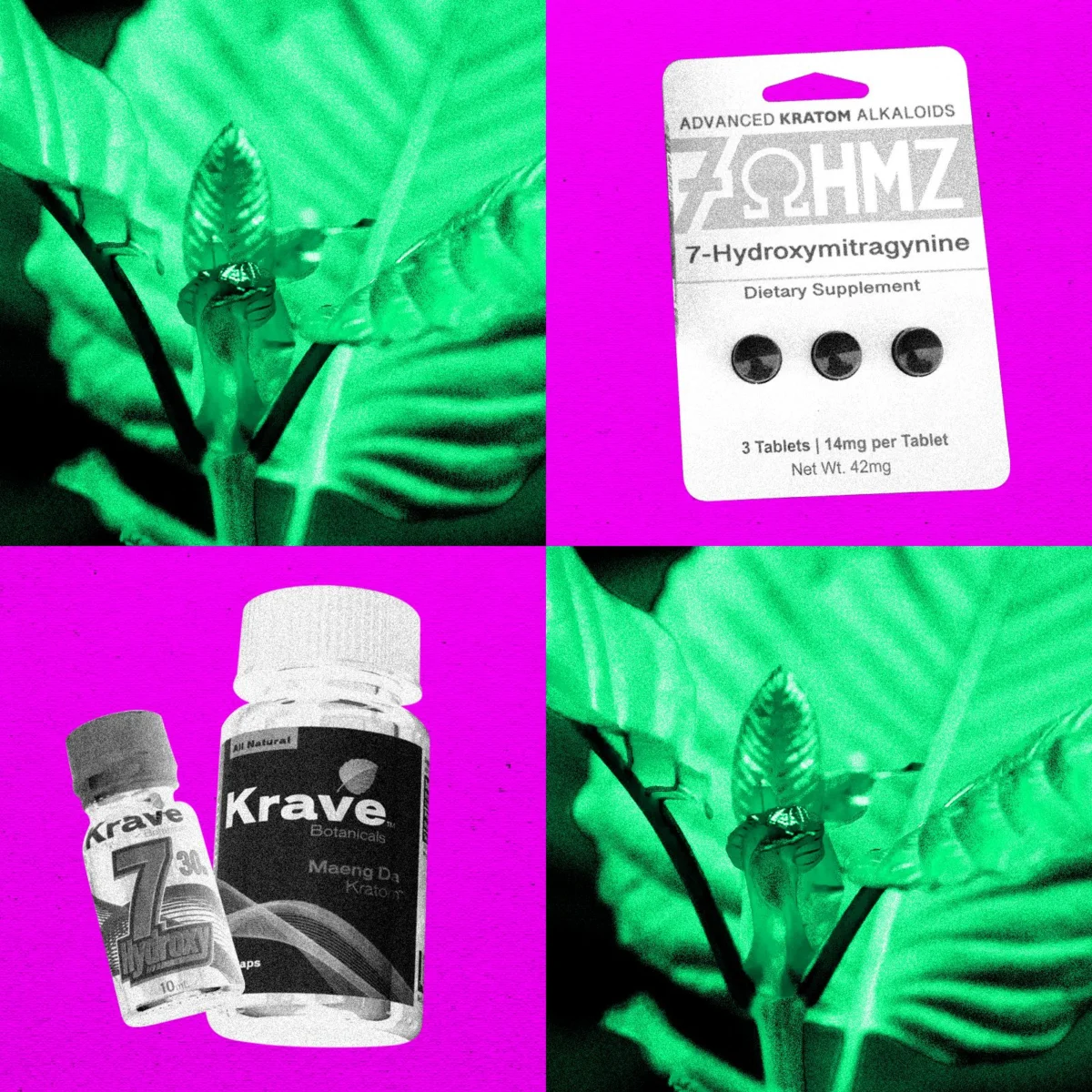
The United States Drug Enforcement Administration (DEA) has announced its intention to temporarily place 7-hydroxymitragynine, a highly potent alkaloid derived from the kratom plant, into Schedule I of the Controlled Substances Act. This classification, which is reserved for substances with a high potential for abuse and no currently accepted medical use, would place the compound in the same legal category as heroin, LSD, and ecstasy. According to a draft notice of intent scheduled for publication in the Federal Register, the federal agency aims to curb the rapid proliferation of 7-hydroxymitragynine (commonly referred to as 7-OH) products, which have become a staple in convenience stores, smoke shops, and gas stations across the country.
The proposed ban targets products that exceed a specific concentration threshold of 7-OH, including gummies, tablets, tinctures, and capsules that have gained notoriety for their opioid-like effects. The temporary scheduling would remain in effect for two years, with a provision allowing for a one-year extension while federal health and law enforcement agencies conduct further scientific and medical evaluations. The DEA’s justification for this emergency move rests on the assertion that 7-OH "presents severe risks to public health, including tolerance, dependence, and addiction," particularly as it is increasingly marketed as a legal alternative to traditional opioids.
The Pharmacology of 7-Hydroxymitragynine and the Rise of Concentrates
Kratom (Mitragyna speciosa), a tropical evergreen tree native to Southeast Asia, has been used for centuries in traditional medicine for its stimulant and analgesic properties. The plant contains more than 40 different alkaloids, with mitragynine being the most abundant. In its natural leaf form, 7-hydroxymitragynine occurs only in trace amounts, often representing less than 2% of the total alkaloid content. However, 7-OH is a significantly more potent mu-opioid receptor agonist than mitragynine.
In recent years, the botanical market has seen a shift from traditional powdered leaf products toward highly concentrated extracts. Scientific literature suggests that 7-OH may be up to 13 to 30 times more potent than morphine in certain animal models. While mitragynine itself is considered a "partial agonist" with a ceiling effect on respiratory depression, the concentrated 7-OH products currently entering the market are often chemically manipulated or synthesized to achieve concentrations far beyond what is found in nature. This "chemical manipulation" is the primary driver of the DEA’s current intervention, as regulators argue these products bypass the inherent safety profile of the raw plant.
A Chronology of Federal Oversight and the 2016 Precedent
The DEA’s move against 7-OH is the latest chapter in a decade-long struggle to regulate the kratom industry. To understand the significance of the current proposal, one must look at the timeline of federal intervention:
- August 2016: The DEA first announced its intent to place the entire kratom plant (both mitragynine and 7-OH) into Schedule I. This led to an unprecedented public backlash, including protests at the White House and a bipartisan letter from 51 members of the House of Representatives and 11 Senators urging the DEA to reconsider.
- October 2016: In a rare reversal, the DEA withdrew its notice of intent, opting instead to open a public comment period and request a scientific evaluation from the Food and Drug Administration (FDA).
- 2017–2021: The FDA issued several public health advisories, linking kratom to dozens of deaths (though many involved polydrug use) and characterizing the plant as an unapproved opioid. In 2021, the World Health Organization’s Expert Committee on Drug Dependence reviewed kratom and declined to recommend an international ban, citing insufficient evidence of a significant public health threat.
- 2023–2024: The market saw the emergence of "pure" 7-OH tablets and "shots," often branded with names that imply pharmaceutical-grade strength. This led to a resurgence of local and state-level bans, culminating in the current DEA draft notice.
Political Implications and the "MAHA" Influence
The proposed ban on 7-OH has created an unusual political landscape where the mainstream kratom industry finds itself aligned with federal regulators and high-profile political figures. During his 2024 campaign, Donald Trump signaled support for "natural 7-OH," a phrasing that industry insiders interpret as a distinction between raw kratom leaf and synthetic concentrates.
Furthermore, the involvement of prominent figures in the "Make America Healthy Again" (MAHA) movement has added a layer of complexity to the regulatory debate. Robert F. Kennedy Jr., the Secretary of Health and Human Services, and Markwayne Mullin, the Secretary of the Department of Homeland Security, have both been linked to the kratom sector. Senator Mullin has reportedly held investments of up to $1 million in Botanic Tonics, the manufacturer of "Feel Free," a kratom-based tonic that has been the subject of significant controversy.
Despite these ties, the administration appears to be drawing a hard line between the "traditional" kratom industry and the "7-OH extract" market. A DHS spokesperson clarified that Mullin has followed all ethics standards and has actively fought to regulate 7-OH, describing it as a "synthetic drug marketed to kids at convenience stores via deceptive packaging." This indicates a strategic move to sacrifice 7-OH products to protect the legality of the broader kratom market.
The Industry Civil War: AKA vs. HART
The DEA’s proposal has effectively split the botanical industry into two warring factions. On one side is the American Kratom Association (AKA), the primary lobbying group for kratom consumers and vendors. The AKA has spent years advocating for the "Kratom Consumer Protection Act" (KCPA) at the state level, which seeks to regulate purity and labeling while keeping the plant legal.
Mac Haddow, the AKA’s senior fellow on public policy, hailed the DEA’s decision as a necessary step to protect the plant’s reputation. "Chemically manipulated 7-OH opioids are not kratom," Haddow stated. "They are dangerous products that exploited the reputation of natural kratom leaf, misled consumers, and created a public health threat." The AKA’s stance is that by banning the high-potency 7-OH extracts, the DEA is acknowledging that natural kratom leaf is distinct and potentially safe for adult use.
On the opposing side is the Holistic Alternative Recovery Trust (HART), an advocacy group representing 7-OH manufacturers. Jeff Smith, the executive director of HART, argues that the DEA is acting without sufficient clinical data. "Hundreds of thousands of consumers are eager to share how 7-OH has helped them manage pain, return to work, care for their families, and reclaim their life," Smith said. HART contends that 7-OH provides a vital lifeline for individuals struggling with chronic pain who wish to avoid traditional prescription opioids or illicit substances like fentanyl.
Public Health Data and Safety Concerns
The DEA’s draft notice cites several data points to justify the emergency scheduling. Federal authorities point to an increase in calls to poison control centers involving kratom extracts, with symptoms ranging from seizures and tachycardia to respiratory depression. Unlike raw leaf kratom, which often induces nausea and vomiting if consumed in excessive quantities (acting as a natural deterrent to overdose), concentrated 7-OH can be consumed in much higher doses without the same immediate emetic response.
The term "gas station heroin" has been increasingly used by medical professionals and law enforcement to describe 7-OH. This label stems from the substance’s ability to bind tightly to mu-opioid receptors, producing a euphoria and physical dependence profile similar to traditional narcotics. Users on recovery forums, such as "Quitting Feel Free," have documented harrowing accounts of withdrawal, describing symptoms that mirror those of opioid cessation, including intense cravings, insomnia, and severe anxiety.
Economic and Regulatory Impact
If the ban takes effect, it will result in an immediate purge of 7-OH products from thousands of retail locations across the United States. This will likely have a significant economic impact on the "alternative wellness" retail sector, where kratom products are estimated to be a billion-dollar industry.
The regulatory impact extends to the state level as well. Currently, several states have passed versions of the KCPA that include limits on 7-OH concentrations (usually capping it at 2% of the total alkaloid content). A federal Schedule I designation for 7-OH would override these state-level regulations, making any product exceeding the federal threshold a controlled substance nationwide.
The DEA’s move also signals a shift in the agency’s strategy. By targeting a specific alkaloid rather than the whole plant, the DEA is attempting a more surgical approach to drug control. This could set a precedent for how other botanical substances, such as hemp-derived cannabinoids (Delta-8 THC, HHC), are handled in the future.
Conclusion and Next Steps
The publication of the notice of intent in the Federal Register will trigger a 30-day public comment period. During this time, scientists, industry stakeholders, and the general public can submit data and testimonials for the DEA to consider. Following the comment period, the DEA can issue a final order, at which point 7-hydroxymitragynine will officially become a Schedule I substance.
The outcome of this regulatory action will likely define the future of the kratom industry in America. For proponents of the ban, it is a necessary intervention to prevent a new wave of the opioid crisis fueled by "legal" synthetics. For opponents, it represents federal overreach that removes a beneficial tool for pain management. As the 30-day clock begins, the debate over 7-OH will serve as a critical test case for the balance between botanical access and public safety in the modern era of drug regulation.