

The All England Lawn Tennis and Croquet Club, nestled in one of London’s verdant southern suburbs, transforms annually into a global nexus where the quintessence of British tradition meets the cutting edge of contemporary celebrity and athletic prowess. For nearly a century and a half, the Wimbledon Championships have transcended their origins as a mere sporting event, evolving into a two-week spectacle that encapsulates royalty, sunshine, the iconic strawberries and cream, and, of course, the pinnacle of grass-court tennis. Held at the cusp of July, this historic tournament, one of the four revered Grand Slams on the ATP and WTA Tours, consistently delivers some of the most electrifying and unpredictable tennis encounters imaginable, drawing the world’s gaze to its hallowed grounds.
A Legacy Forged on Grass: The Enduring Prestige of Wimbledon
Established in 1877, Wimbledon holds the distinction of being the oldest tennis tournament in the world. Its rich heritage is palpable, from the meticulously maintained grass courts—the only Grand Slam still played on this surface—to the strict all-white dress code for players, a tradition upheld with unwavering commitment. The very act of winning a gentlemen’s or ladies’ singles title at Wimbledon is widely considered the sport’s highest achievement, a coveted honour that transcends prize money or ranking points. Even the most decorated players, from contemporary titans like Jannik Sinner and Carlos Alcaraz to legends such as Serena Williams, openly express a unique thirst for a Wimbledon victory above any other major. This deep-seated desire is rooted not just in the trophy, but in the indelible mark it leaves on a player’s legacy, placing them among an elite pantheon of champions.
The quality of competition at Wimbledon appears to intensify with each passing year. Both seeded powerhouses and unseeded hopefuls approach every knock-out match with an almost existential determination, battling as if their entire career hinges on the outcome. This relentless pursuit of excellence is fuelled, in part, by the astronomical financial rewards on offer. The total prize money pool for the tournament has reached an eye-watering £64,200,000 (approximately $85.8 million), with the singles champions each taking home a staggering £3.6 million ($4.8 million). This monumental sum stands in stark contrast to the tournament’s financial landscape in 1968, the dawn of the Open Era, when the men’s winner received a mere £2,000 ($2,600) and the women’s champion just £500 ($670). This exponential increase over six decades vividly illustrates the transformation of professional tennis into a global, multi-million dollar industry, where talent and triumph are handsomely rewarded.
The Theatre of the Unexpected: Underdogs and King-Makers
Beyond its predictable grandeur and celebrated champions, Wimbledon’s true beauty often lies in its inherent uncertainty and capacity for the unexpected. The immense pressure and unparalleled prestige push athletes to their absolute limits, frequently producing results that elicit gasps of astonishment even from the most composed members of the Royal Box. The 2026 championships offered a compelling example in the form of 23-year-old Arthur Fery. Ranked 114th in the world prior to the event, Fery entered as a wildcard, embarking on a fairytale run that saw him battle his way to a semi-final berth against Alexander Zverev, the formidable 3rd-ranked player in men’s singles. This remarkable journey transformed the young Briton into the tournament’s poster boy for underdogs, a testament to Wimbledon’s unique ability to elevate lesser-known talents. His projected world ranking post-tournament, an astonishing 36th, underscores the event’s "king-maker" potential, demonstrating how a single fortnight can fundamentally alter a player’s career trajectory and public profile.
Wimbledon’s Royal and Celebrity Magnetism: A Historical Overview
Wimbledon’s allure extends far beyond the athletic feats on Centre Court. The event has long been a magnet for global luminaries, an illustrious gathering place where sport, society, and celebrity converge. The British Royal Family’s connection to Wimbledon is deeply entrenched, with the Prince and Princess of Wales consistently gracing the event. For the Princess, this attendance is more than a tradition; it is an official obligation, as she serves as the patron of the All England Lawn Tennis Club. This royal imprimatur bestows an unparalleled level of distinction upon the championships, reinforcing its status as a cornerstone of the British social calendar.
Historically, the event has attracted titans from various fields, from political figures and literary giants to film stars and musicians. The elegance of the setting, the global spotlight, and the inherent drama of the matches have always combined to create an irresistible draw. However, recent years have witnessed an acceleration of this trend, with Wimbledon increasingly rivaling the glitz and glamour of major film festivals or high-fashion weeks. The sheer volume of high-profile personalities, including Bad Bunny, Maude Apatow, Cynthia Erivo, David Beckham, Joe Jonas, Elle Fanning, Rami Malek, Dustin Hoffman, and Benedict Cumberbatch, prominently featured across Wimbledon’s social media hashtags this year, signifies a distinct shift. The Hollywood Reporter posits several compelling reasons why a trip to Wimbledon Village has never been more chic or culturally resonant.
The New Era of Glamour: Why Wimbledon is "Chicer Than Ever"

-
A Public Stage for Private Lives: The "Hard Launch" Phenomenon
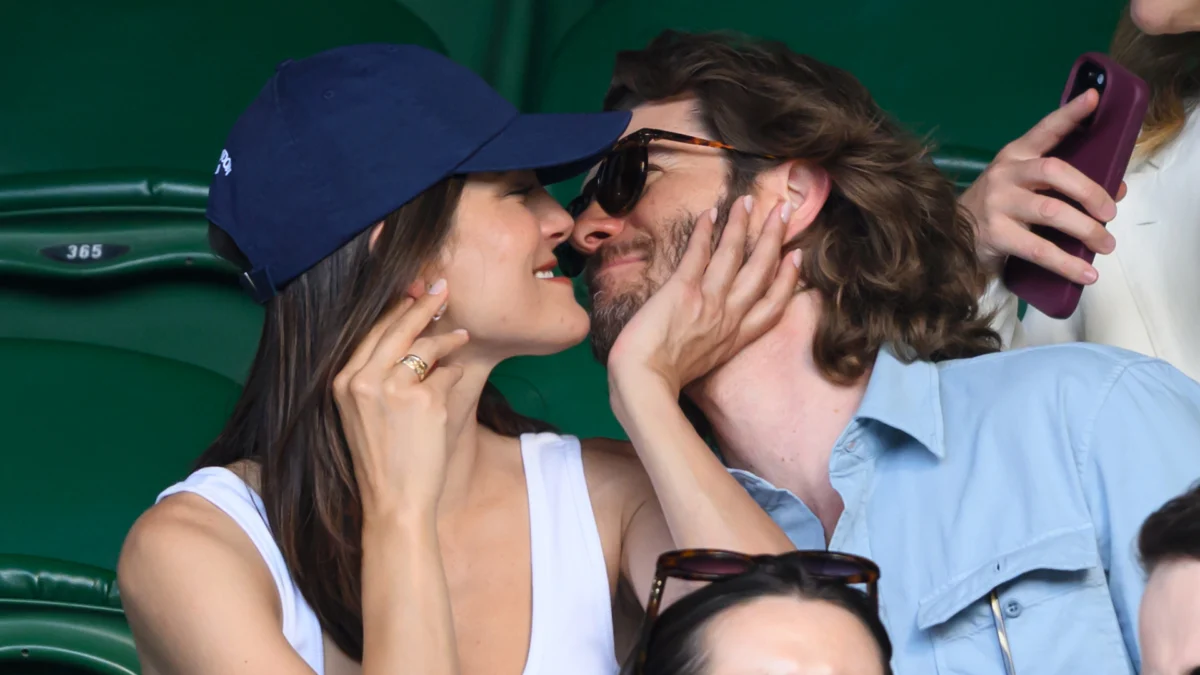
Wimbledon has emerged as a preferred venue for celebrities seeking to "hard-launch" new relationships into the public eye, often making their debut as a couple. The highly curated and sophisticated environment offers an ideal backdrop for these initial public appearances. This year, actors Andrew Garfield and Monica Barbaro made headlines with their coordinated Ralph Lauren outfits, signalling their new romance. Similarly, in 2023, Ferrari’s F1 star Charles Leclerc and his now-wife Alexandra chose Wimbledon for one of their first public outings. The previous year saw Olivia Rodrigo and Louis Partridge famously sharing tea, scones, and jam, marking only their second or third public appearance together. The phenomenon isn’t limited to romantic pairings; platonic celebrity friendships also gain significant traction, as evidenced by Wicked co-stars Jonathan Bailey and Ariana Grande, whose candid giggling over Pimm’s in the stands two years prior ignited social media.The appeal of Wimbledon for these "Getty official" moments is multifaceted. The implicit dress code, leaning towards sleek, preppy elegance, guarantees flattering photographs. Furthermore, attending Wimbledon confers a veneer of sophistication and cultural capital, enhancing a celebrity’s public image. While mainstream media outlets like the BBC and ESPN (which hold exclusive broadcasting rights in the U.K. and U.S., respectively) ensure significant airtime, the environment offers a degree of controlled exposure. Celebrities can arrive and depart with security escorts, largely unburdened by press interviews or extensive public interaction, allowing them to project an image of being dedicated spectators without the full demands of a typical red-carpet event. It’s a strategic blend of high visibility and managed privacy, located conveniently close to central London.
-
Brand Synergy and Elite Hospitality: The Corporate Embrace
A significant driver of Wimbledon’s heightened celebrity presence is the strategic involvement of its official tournament partners. Global brands such as IBM, Ralph Lauren, American Express, and Rolex leverage their associations by hosting exclusive hospitality suites. These luxurious pavilions offer an unparalleled experience, featuring gourmet hot food, free-flowing champagne, traditional afternoon tea, and prime viewing positions for the external courts. Access to these top-tier packages, including Centre Court suites, can cost upwards of £3,000 ($4,000) per person, making them an exclusive privilege.Most A-list celebrities attending Wimbledon are guests of these influential brands. A prime example is the annual Wimbledon luncheon co-hosted by British Vogue, British GQ, and Ralph Lauren, orchestrated by fashion titan Anna Wintour. This event consistently draws a constellation of stars, who are invariably impeccably dressed by Ralph Lauren, ensuring a stream of flawless, high-fashion imagery. This year, Garfield and Barbaro attended, alongside Tom Hiddleston, Emma Corrin, Michaela Coel, Naomi Ackie, and Simone Ashley. Even those not within a brand’s suite often showcase designer attire, with Elle Fanning in Dior, David Jonsson in LOEWE, and Maura Higgins in Chanel. Evian, the tournament’s official water partner, further amplifies this brand-celebrity synergy by inviting prominent U.S. influencers like Alix Earle and Anastasia Karanikolaou, extending its reach into digital spheres. This symbiotic relationship between brands and celebrities transforms Wimbledon into a powerful platform for luxury marketing and lifestyle branding.
-
The Ultimate Status Symbol: Exclusivity and Aspiration
Wimbledon stands as arguably the most luxurious sporting event globally. While the Monaco Grand Prix offers a certain kind of glamour, the refined atmosphere of Wimbledon, with its scent of freshly cut grass, strawberries, and cream, provides a distinctly different, perhaps more serene, appeal. Wimbledon Village itself exudes an air of understated elegance, offering amenities ranging from an onsite pharmacy and medical centre to upscale shops, phone charger dispensers, and a diverse array of culinary options, including gourmet crayfish and lobster portions priced at £28.50 ($38.22).Attending Wimbledon is, for many, a significant flex. Tickets are notoriously difficult to acquire, ranging from an accessible £30 ($40) for ground passes to an astronomical £10,000 ($13,400) for a men’s singles final ticket. The majority are allocated through a public ballot, making attendance often dependent on sheer luck. Alternatively, the infamous Wimbledon Queue, a rite of passage for many avid fans, can involve wait times of up to seven hours, with some enthusiasts camping overnight, even in uncharacteristically scorching London weather. Consequently, receiving a coveted invitation, particularly to the Royal Box alongside dignitaries like Queen Camilla, or cultural icons such as Paul McCartney or Hugh Laurie, represents a true "made it" moment for many stars. This exclusivity, combined with the unparalleled standard of tennis, is as alluring as the sport itself. Yet, the democratic spirit of Wimbledon endures, with palpable feel-good vibes shared by thousands watching matches on the enormous screen from Henman Hill (or Murray Mound, as it’s often affectionately known), proving that the magic extends beyond the most elite enclosures.
-
The Social Media Catalyst: Engaging a New Generation
The "Zendaya effect," a term often used to describe the phenomenon of celebrities driving youth engagement in sports, is profoundly evident at Wimbledon. Social media buzz around the tournament has reached an unprecedented frenzy, particularly on platforms like Instagram and TikTok. Users are generating thousands of views through "Day at Wimbledon" vlogs and offering tips for navigating the legendary queue. Observations from attendees indicate a noticeably younger demographic gracing the matches in recent years. The Guardian has reported that Wimbledon organizers have actively and purposefully courted influencers to connect the sport with a new generation.Usama Al-Qassab, Wimbledon’s Director of Marketing, confirms the success of this strategy, noting a consistent trend of attendees skewing younger over the last decade. While ticket holders via the ballot average in their mid-40s, those in the queue average around 35 years old. Al-Qassab also highlighted a surge in demand from international visitors, making the ballot more competitive than ever. The first week of this year’s championships alone saw a record-breaking attendance of approximately 300,000 people, underscoring the event’s burgeoning global appeal.
This localized surge aligns with a broader, global growth in tennis. A 2024 study by the International Tennis Federation (ITF), the sport’s global governing body, revealed that 106 million people worldwide now regularly pick up a racket, marking a significant 25.6 percent increase in just five years. This renaissance is largely attributed to several factors: the intense rivalries at Grand Slams (with Jannik Sinner and Carlos Alcaraz now providing a modern-day equivalent to the Nadal-Federer era), the sport’s commendable gender equity, and the "Hollywood treatment" it has received through productions like the Zendaya-starring film Challengers and the Netflix docuseries Break Point. Even TikTok, which had a brand presence at Wimbledon this year, has played a direct role in elevating tennis personalities, exemplified by Morgan Riddle. The ex-girlfriend of U.S. tennis star Taylor Fritz, Riddle leveraged her social media savvy and over 600,000 followers to earn the title of "the most famous woman in men’s tennis," illustrating the profound influence of digital platforms on the sport’s cultural footprint.
Broader Implications: The Future of Sports Entertainment
Wimbledon’s evolution reflects a broader trend in the entertainment landscape: the increasing convergence of sport, fashion, and pop culture. By strategically embracing celebrity engagement, leveraging brand partnerships, and mastering social media outreach, Wimbledon has successfully broadened its appeal beyond traditional tennis enthusiasts. It has cultivated an identity that is simultaneously deeply traditional and refreshingly contemporary, attracting a diverse audience that ranges from royalty to Gen Z influencers. This strategic adaptation ensures its continued relevance and iconic status in a rapidly changing global media environment. As the lines between athletic competition and lifestyle entertainment continue to blur, Wimbledon stands as a preeminent example of how a venerable institution can not only preserve its heritage but also innovate to secure its place as a perennial cultural phenomenon for decades to come.