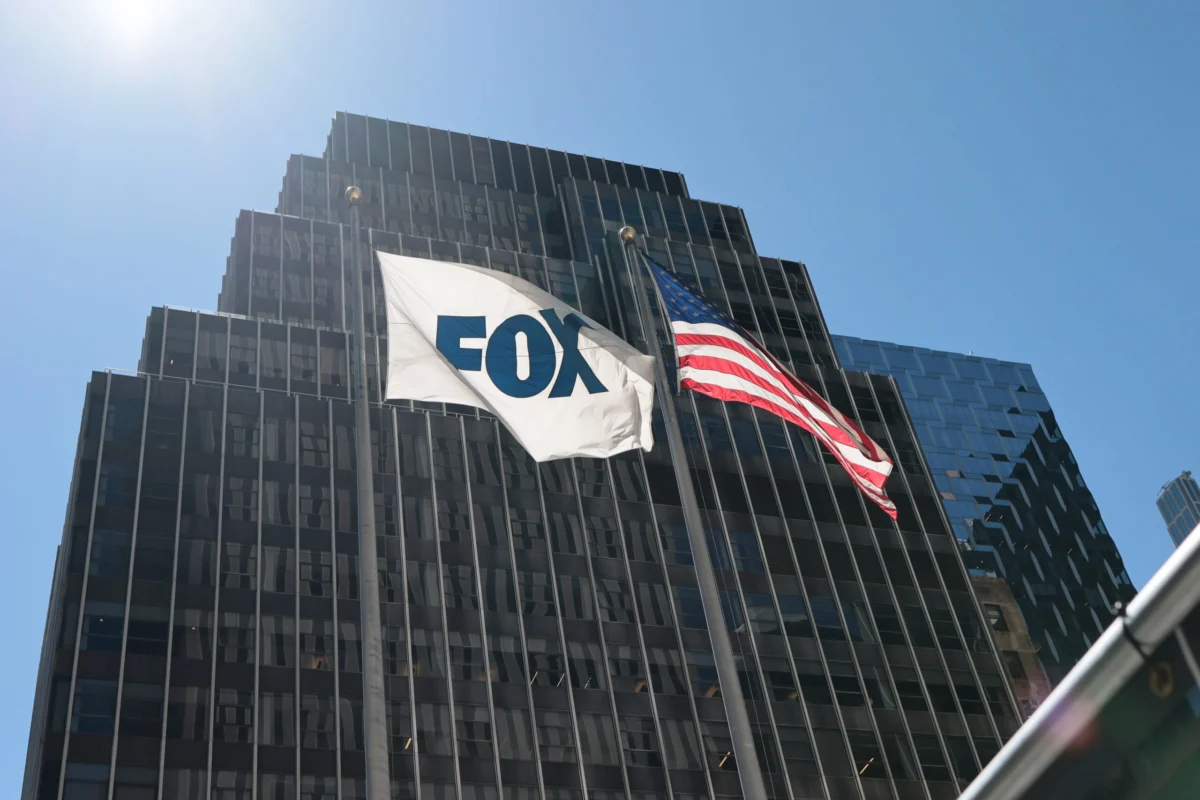
Fox Corp. officially announced on Monday, June 15, 2026, that it has entered into a definitive agreement to acquire Roku Inc. for $22 billion, a move that represents the most significant structural shift for the media giant since its massive asset sale to Disney in 2019. The acquisition, which seeks to integrate Roku’s industry-leading streaming hardware and operating system with Fox’s portfolio of live sports, news, and ad-supported streaming assets, took Wall Street by surprise and sent Fox shares tumbling to a 52-week low. While leadership at Fox frames the deal as a necessary "future-proofing" of the company’s business model, investors reacted with immediate skepticism, driving Fox’s stock down 16% on the day of the announcement, followed by an additional 4% decline on Tuesday.
The transaction marks a definitive end to Fox’s period of relative sideline observation during the height of the "streaming wars." While competitors like Disney, Warner Bros. Discovery, and Paramount spent billions attempting to build subscription-based rivals to Netflix, Fox focused primarily on its "skinny" portfolio of the Fox News Channel, Fox Sports, and the broadcast network. By acquiring Roku, Fox is no longer merely a content provider but becomes the owner of the gateway through which millions of Americans access digital entertainment.
The Mechanics of the Deal and Market Reaction
Under the terms of the agreement, Fox will pay $22 billion to bring Roku’s technology platform, its hardware business, and The Roku Channel—a major player in the free, ad-supported streaming television (FAST) space—under its corporate umbrella. The deal is expected to close in the first half of 2027, pending customary regulatory approvals and closing conditions.
Despite the strategic logic cited by executives, the financial markets responded with a sharp sell-off. The 16% drop in Fox’s share price reflects investor anxiety regarding the debt load required to finance a $22 billion purchase. Analysts pointed out that while Fox has maintained a relatively conservative balance sheet compared to its peers, the sheer scale of the Roku acquisition—significantly larger than many anticipated—introduces a level of financial leverage that the company has avoided for years.
Furthermore, the timing of the deal coincides with a period of renewed volatility in the media sector. As the NFL reopens media rights negotiations, Fox is expected to face escalating costs to maintain its marquee football packages. Investors appear to be weighing the $22 billion price tag for Roku against the impending multi-billion dollar commitments required to keep professional sports on the Fox broadcast network.
A Chronology of Fox’s Strategic Evolution
To understand the magnitude of the Roku acquisition, it is necessary to trace Fox’s trajectory over the last seven years. In 2019, Rupert Murdoch oversaw the $71.3 billion sale of 21st Century Fox’s entertainment assets to The Walt Disney Company. This left "New Fox" as a streamlined entity focused on live, unscripted content—specifically news and sports—which were deemed more resilient to the cord-cutting trends hollowing out the cable bundle.
In 2020, Fox made its first significant foray into streaming by acquiring Tubi for $440 million. At the time, Tubi was a nascent player in the FAST market. Under Fox’s ownership, Tubi flourished, becoming a central pillar of the company’s digital strategy and proving that an ad-supported model could generate substantial revenue without the high churn rates associated with subscription services.
By 2024, Fox launched "Fox One," a direct-to-consumer platform designed to consolidate its news and sports offerings. However, despite the success of Tubi and the launch of Fox One, the company remained a "tenant" on platforms owned by others, such as Apple, Google, and Roku itself. The June 2026 acquisition of Roku effectively turns Fox into the "landlord," giving it control over the operating system, the home screen real estate, and the valuable viewer data that comes with it.
Strategic Rationale: Data, Ad Stacks, and Distribution
Industry analysts who view the deal favorably argue that the market is overlooking the long-term defensive and offensive advantages of owning a platform. Mike Proulx, Forrester’s vice president and research director, noted that big media deals are frequently punished in the short term due to uncertainty, but emphasized that this move is a "must" for Fox.
The acquisition provides three primary strategic benefits:
- First-Party Data: Roku possesses granular data on the viewing habits of tens of millions of households. By combining this with Fox’s premium advertising inventory in news and sports, the company can offer advertisers highly targeted, "closed-loop" marketing opportunities that were previously impossible in the linear television era.
- The Ad Stack: Roku has spent years developing a sophisticated advertising technology stack. Fox can now migrate Tubi and its other digital properties onto this infrastructure, capturing a larger share of the programmatic advertising market.
- Carriage Leverage: As a platform owner, Fox gains significant leverage in negotiations with other media companies. Roku negotiates the placement of apps like Disney+, Netflix, and Max on its home screen. By owning the platform, Fox can potentially secure better terms for its own content or demand a higher share of advertising revenue from third-party apps viewed through the Roku OS.
The Competitive Landscape and the Walmart-Vizio Factor
The acquisition is also a response to shifting dynamics in the hardware and retail sectors. In 2024, Walmart acquired smart TV manufacturer Vizio, a move that threatened Roku’s dominance in the low-to-mid-range television market. Walmart’s ability to use its retail footprint to push Vizio’s SmartCast operating system created a potential bottleneck for streaming services.
By bringing Roku into the Fox fold, the platform gains the financial backing of a major media conglomerate to fend off challenges from retail giants like Walmart and tech behemoths like Amazon (Fire TV) and Google (Google TV). Analysts from MoffettNathanson noted that the deal puts Fox in the "upper end of streaming viewership." When Tubi’s audience is combined with The Roku Channel’s audience, the combined entity’s share of U.S. viewing time is estimated to surpass that of Disney+, Hulu, and ESPN combined.
Implications for the Future of Sports Rights
Perhaps the most significant long-term impact of the deal lies in the realm of sports broadcasting. As the NFL, NBA, and FIFA World Cup rights continue to migrate toward digital platforms, the ability to control the distribution method becomes paramount.
Fox’s acquisition of Roku ensures that when the company bids on future sports packages, it can guarantee leagues a massive, built-in distribution network that spans both traditional broadcast and a dominant streaming OS. This "hybrid" approach—maintaining the reach of the Fox broadcast network while owning the digital platform—makes Fox a more formidable competitor against deep-pocketed tech rivals like Apple and Amazon, who lack a traditional terrestrial broadcast component.
Official Responses and Insider Perspectives
While Fox executives have remained vocal about their intention to use their "financial firepower" for opportunistic acquisitions, the choice of Roku signals a pivot toward technology over traditional content libraries. In previous years, Fox was rumored to be interested in re-acquiring some of the assets it sold to Disney or bidding for Warner Bros. Discovery’s linear networks. Instead, the company has chosen to invest in the "pipes" rather than more "water."
LightShed Partners characterized the move as "bold," noting that legacy media has often suffered from the "innovator’s dilemma," where companies are too afraid of cannibalizing their existing business to invest in the future. Fox, by contrast, appears willing to embrace the debt and the short-term stock volatility to secure a dominant position in the next era of television.
However, the path to integration is not without hurdles. Fox must now manage a hardware business—manufacturing and distributing streaming sticks and branded TVs—which is a low-margin enterprise far removed from the high-margin world of cable news. Furthermore, the company must ensure that other media giants do not feel threatened by Fox’s ownership of the Roku platform, which could lead to legal challenges or efforts by competitors to steer users toward rival operating systems.
Conclusion: A High-Stakes Gamble on the Future of TV
The $22 billion acquisition of Roku by Fox Corp. represents a watershed moment in the consolidation of the American media industry. It is a transition from a company defined by its content to one defined by its ecosystem. While the immediate market reaction has been negative, the long-term success of the deal will be measured by Fox’s ability to convert Roku’s massive user base into a coordinated advertising powerhouse and a fortress for its sports and news properties.
As the media landscape continues to fracture, Fox’s bet is clear: in the future of television, it is not enough to have the best show on the screen; you must also own the screen itself. The coming months of regulatory scrutiny and the eventual integration of these two giants will determine whether this was a masterstroke of "future-proofing" or an over-leveraged gamble in an increasingly precarious industry.