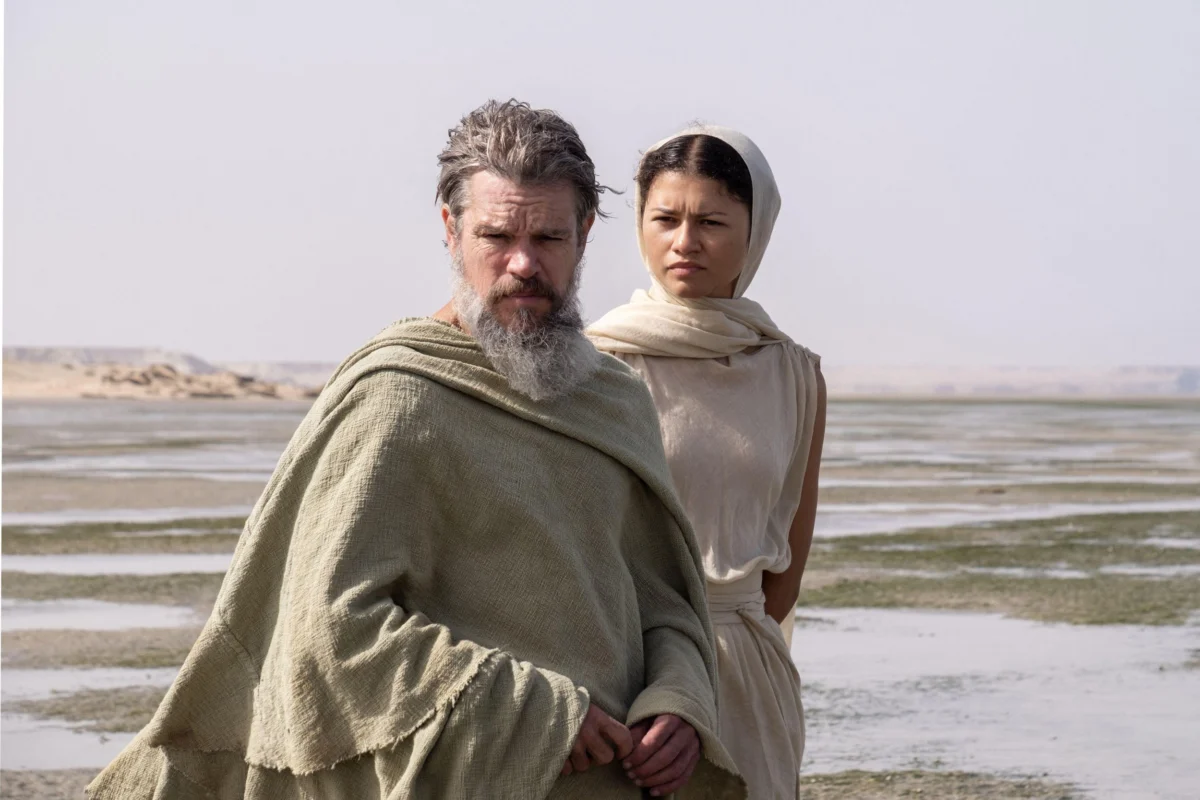
Universal Studios has officially confirmed a significant departure from contemporary marketing trends by opting to skip the standard "influencer" previews for Christopher Nolan’s highly anticipated adaptation of Homer’s The Odyssey. The decision, first reported by The Hollywood Reporter, marks a pivot back toward traditional film criticism and suggests a high level of confidence in the production’s quality. While many major studios have come to rely on the effusive, social-media-friendly reactions of content creators to build early momentum and mitigate potential critical pushback, Universal and Nolan appear to be doubling down on the film’s prestige status. This move comes as the film prepares for its global premiere in London on July 7, 2026, amid a backdrop of intense public interest, technical ambition, and a fractured online discourse regarding the modernization of classical literature.
The Evolution of the Project and Initial Public Discourse
The journey of Christopher Nolan’s The Odyssey began in late 2024 when the project was first announced as the director’s follow-up to his Academy Award-winning Oppenheimer. From its inception, the film has been the subject of rigorous debate across social media platforms and film forums. The discourse has largely split into two distinct camps: academic-style debates over the feasibility of adapting Homer’s dactylic hexameter into a cinematic narrative and a more contentious "culture war" centered on the film’s casting choices.
Nolan, known for his commitment to practical effects and historical texture, has reportedly sought to balance the mythological grandeur of the source material with a grounded, visceral realism. However, the announcement of a diverse cast led to immediate friction among certain online demographics. Critics of the casting have labeled the film as having a "woke" slant, while scholars and supporters of the production argue that the Mediterranean world of the Bronze Age was a crossroads of various cultures and that Nolan’s interpretation is consistent with the universal themes of the epic. This friction has created a volatile environment for the film’s pre-release marketing, making the decision to bypass influencer screenings particularly notable.
Understanding the Influencer Screening Model
In the current Hollywood ecosystem, influencer screenings have become a staple of the "hype machine." These events typically involve inviting TikTok creators, YouTubers, and social media personalities to early screenings, often weeks before the general public or professional critics see the film. The resulting "first reactions"—usually delivered in short, enthusiastic posts—are frequently used in promotional materials to suggest a consensus of high quality.
Industry analysts note that these reactions are often more positive than traditional reviews. Because influencers rely on studio access for their content, there is an inherent pressure to remain favorable. Tim Grierson, senior US critic for Screen International, observes that these screenings are often used to "soften the blow" of mixed reviews from professional critics. By skipping this phase, Universal is effectively removing a layer of manufactured buzz, choosing instead to let the film stand on its own merits before the eyes of the established press.
Reaction from the Professional Critical Community
The decision to prioritize professional critics over social media influencers has been met with widespread approval from the traditional film press. For many critics, the move is seen as a restoration of the "embargo" system, where a film is evaluated as a complete work of art rather than a series of soundbites.
Scott Mantz, a cofounder of the Hollywood Critics Association, expressed his support via X (formerly Twitter), stating, "GOOD!! Because EVERYONE knows those so-called ‘influencer’ social media reactions are TOTAL BULLSHIT." Similarly, IndieWire’s chief film critic David Ehrlich quipped that the move was "what Homer would have wanted," referencing the oral tradition’s emphasis on weight and narrative integrity.
Kristen Lopez, editor-in-chief of The Film Maven, suggested that this could signal a shift in how prestige films are marketed, though she remained skeptical that other studios would follow suit for their more commercial "tentpole" releases. The general sentiment among the press is that Nolan is signaling his respect for the craft of film criticism, a gesture that may foster a more thoughtful reception when the reviews are finally published.
A Timeline of Anticipation and Commercial Projections
The build-up to the July 7 premiere has been characterized by a series of record-breaking milestones. Following the initial 2024 announcement, production spanned throughout 2025, utilizing specialized IMAX and 70mm film formats—a hallmark of Nolan’s directorial style.
In June 2026, when tickets finally went on sale, the demand was unprecedented. Major theater chains, including AMC and Fandango, reported website outages and technical disruptions as fans scrambled to secure seats. In the United Kingdom, the BFI IMAX—the country’s largest screen—reported that The Odyssey shattered the record for the most seats sold in a 24-hour period.
In the United States, the demand for premium formats has created a secondary market. Tickets for 70mm IMAX screenings, particularly in major hubs like New York City, Los Angeles, and Chicago, have appeared on eBay for as much as $1,000. Current box office projections suggest an opening weekend between $80 million and $100 million, a figure that would place it among the most successful R-rated (or high-prestige) openings in recent history.
Technical Ambition and the Nolan Brand
Christopher Nolan’s insistence on the theatrical experience is a central component of the film’s identity. The Odyssey was filmed entirely on IMAX film cameras, and Universal has leaned into this technical prowess as a primary selling point. By focusing on the "event" nature of the film, the studio is targeting an audience that values the cinematic medium over the convenience of streaming or the transience of social media trends.
This strategy aligns with Nolan’s previous successes, such as Interstellar and Dunkirk, where the director’s name functioned as a seal of quality that transcended traditional marketing. Analysts suggest that for a filmmaker of Nolan’s stature, influencer buzz is not only unnecessary but potentially detrimental to the "prestige" brand he has cultivated over two decades.
Navigating the "Woke" Backlash and Cultural Sensitivity
The decision to avoid influencer screenings has also been interpreted by some as a defensive maneuver against the "anti-woke" movement. Certain internet personalities have claimed that by elevating establishment critics, Universal is attempting to hide the film from "the fans" who might object to its creative choices.
However, industry experts dismiss these claims as speculative. The sheer volume of ticket sales suggests that the "backlash" is largely confined to a vocal minority of online commenters. Furthermore, by including influencers in the standard press screenings rather than excluding them entirely, Universal is ensuring that all voices are heard simultaneously, rather than giving any one group a head start in defining the narrative.
The adaptation of a 3,000-year-old text inherently involves modern interpretation. Scholars have pointed out that The Odyssey itself is a story of homecoming, identity, and the "other," themes that are highly relevant in a globalized society. Nolan’s approach appears to be one of expansion rather than revision, seeking to capture the scale of the Mediterranean journey through a lens that reflects a contemporary understanding of the world.
Broader Implications for the Film Industry
Universal’s "bold" gamble could have lasting effects on how major studios approach the release of high-budget dramas. For years, the industry has moved toward a "democratized" screening process, often at the expense of professional journalism. If The Odyssey proves to be both a critical and commercial juggernaut without the help of early influencer reactions, it may embolden other directors—such as Denis Villeneuve or Greta Gerwig—to demand similar treatment for their projects.
The move also highlights the growing divide between "content" and "cinema." By treating The Odyssey as a piece of art that requires professional evaluation rather than a product that requires social media "unboxing," Universal is reinforcing the idea that some films are meant to be experienced as a whole.
Conclusion: The Road to Ithaca
As the July 7 premiere approaches, the eyes of the film world remain fixed on Christopher Nolan. Whether his adaptation of Homer’s epic will live up to the monumental expectations remains to be seen, but the strategy surrounding its release has already made a significant impact. By rejecting the shortcuts of modern digital marketing, Nolan and Universal have framed The Odyssey not just as a movie, but as a cultural event that demands undivided attention.
The success of this strategy will ultimately be measured at the box office and in the longevity of the film’s critical legacy. For now, the decision to trust in traditional criticism and the power of the source material serves as a reminder of an era when the quality of the work was the primary driver of the conversation. In the journey from the ancient shores of Ithaca to the modern silver screen, Christopher Nolan has once again proven that he is unafraid to sail against the prevailing winds of the industry.