
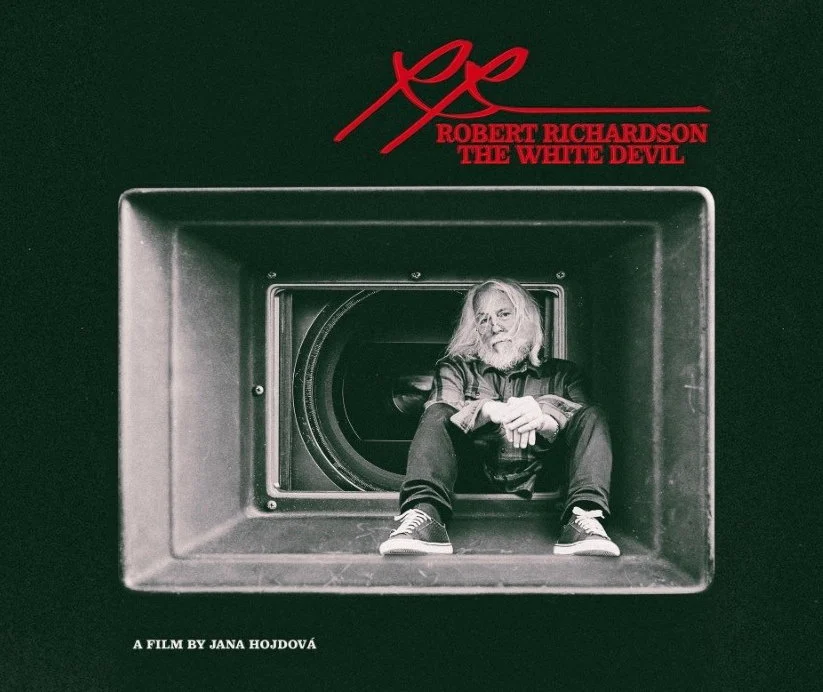
Barletta Productions has officially released the first trailer for Robert Richardson: The White Devil, a highly anticipated documentary offering an intimate portrait of the three-time Academy Award-winning cinematographer Robert Richardson. The film is slated for its world premiere next month at the prestigious 2026 Karlovy Vary International Film Festival (KVIFF) in Czechia, marking a significant debut for a project that promises to delve deep into the life and unparalleled career of one of cinema’s most influential visual artists. Directed by Czech filmmaker and cinematographer Jana Hojdova, the documentary traces an extraordinary journey from an audacious fan inquiry to a profound creative partnership and personal friendship.
The trailer, which debuted on June 26, 2026, quickly captured the attention of film enthusiasts and industry professionals, showcasing a narrative that explores not only Richardson’s technical prowess and artistic vision but also the profound personal sacrifices inherent in his relentless pursuit of cinematic excellence. A striking quote from Richardson himself, featured prominently in the trailer, encapsulates this theme: "I’m deeply addicted to work. Because I choose the work over family." This statement sets the tone for a film that promises an unflinching look at the complexities of a life dedicated to art, revealing the man behind some of the most iconic images in modern film history.
A Glimpse into a Legend’s Life
Robert Richardson’s career spans decades, marked by an unparalleled ability to craft visually stunning and emotionally resonant narratives. Born in 1955, his ascent in the film industry began in the early 1980s, quickly establishing a reputation for innovation and an uncompromising vision. He is celebrated for his distinctive high-contrast, often gritty, and visually arresting style, frequently employing strong shadows, natural light, and dynamic camera movements to imbue scenes with profound depth and atmosphere. His work has not only defined the aesthetic of numerous films but has also significantly influenced generations of cinematographers.

Richardson’s trophy cabinet includes three Academy Awards for Best Cinematography, a testament to his consistent groundbreaking work. His first Oscar came in 1992 for Oliver Stone’s JFK, a film renowned for its complex visual language, blending various film stocks, aspect ratios, and archival footage to create a mosaic of memory and conspiracy. This collaboration with Stone, which began with Salvador (1986) and continued through films like Platoon (1986), Born on the Fourth of July (1989), and Natural Born Killers (1994), solidified Richardson’s reputation as a master of visual storytelling capable of adapting his style to complement Stone’s often intense and politically charged narratives.
His second Oscar arrived in 2005 for Martin Scorsese’s The Aviator, a lavish biopic that transported audiences to the golden age of Hollywood with breathtaking period accuracy and a meticulous reconstruction of historical film aesthetics. Richardson’s collaboration with Scorsese also yielded visually memorable results in Shutter Island (2010), Hugo (2011), and The Wolf of Wall Street (2013). Hugo, a visually spectacular 3D adventure, earned Richardson his third Academy Award in 2012, demonstrating his versatility and willingness to embrace new technologies while maintaining his signature artistic integrity.
Beyond Stone and Scorsese, Richardson has forged one of cinema’s most celebrated partnerships with Quentin Tarantino. Their collaboration began with Kill Bill: Vol. 1 (2003) and Vol. 2 (2004), where Richardson masterfully navigated Tarantino’s genre-bending vision, from stylized martial arts sequences to intimate dramatic moments. This fruitful alliance continued with Inglourious Basterds (2009), Django Unchained (2012), The Hateful Eight (2015), and most recently, Once Upon a Time in Hollywood (2019), for which he received yet another Oscar nomination. Across these films, Richardson has been instrumental in shaping Tarantino’s unique visual grammar, blending homage with contemporary flair. His ability to craft striking visuals that serve a director’s distinctive voice, rather than merely imposing his own, is a hallmark of his enduring legacy.
The Unconventional Genesis of a Documentary
The genesis of Robert Richardson: The White Devil is as compelling as its subject. Director Jana Hojdova, a former cinematography student at Prague’s FAMU (Film and TV School of the Academy of Performing Arts), embarked on this project through an act of sheer audacity. While living in Prague several years ago, Hojdova sent an email to Robert Richardson, whom she regarded as "one of the greatest cinematographers of all time," with "almost no expectation of ever getting a reply." Her initial goal was modest: to secure a contact for a student exercise or a master’s degree project.

To her astonishment, Richardson replied. That single message, as Hojdova recounts, "unexpectedly became the beginning of a years-long journey that took me from Los Angeles and London to New Zealand and Sofia as I followed Richardson during the making of several major films." This unprecedented access allowed Hojdova to document Richardson’s process firsthand, observing his interactions with directors, actors, and crew, and capturing the intense environment of film production from a uniquely privileged vantage point. What began as a student’s ambitious outreach evolved into a creative partnership and a personal friendship, transforming a simple academic pursuit into a comprehensive documentary feature.
The KVIFF programme notes further elaborate on this improbable premise, highlighting how the film "fascinated" them with its "portrait of a distinctive & uncompromising artist." Hojdova, herself a cinematographer with experience on several indie films and one short film, brings an insider’s perspective to the subject, allowing her to understand and articulate the nuances of Richardson’s craft with an authentic voice. This shared professional background likely fostered a deeper connection and trust between director and subject, enabling a level of intimacy rarely achieved in biographical documentaries.
The title The White Devil itself sparks curiosity. While its precise meaning within the film’s context remains to be fully revealed, it likely alludes to Richardson’s intense, often demanding persona on set, his relentless drive, or perhaps a self-deprecating nod to the uncompromising nature of his artistic pursuits, tying back to his quoted statement about prioritizing work over family. Such a provocative title suggests a documentary that does not shy away from exploring the challenging aspects of genius and the personal toll it can exact.
Documentary’s Content and Approach
The trailer for Robert Richardson: The White Devil offers tantalizing glimpses into the film’s rich content. It promises a comprehensive and multi-faceted exploration of Richardson’s life and work, utilizing a blend of exclusive, candid interviews with Richardson himself, extensive archival materials (potentially including behind-the-scenes footage from his iconic films), and invaluable insights from his many renowned collaborators. The roster of directors he has worked with — Oliver Stone, Martin Scorsese, Quentin Tarantino — suggests that the documentary could feature testimonials from these cinematic titans, offering unparalleled perspectives on Richardson’s contribution to their masterpieces.

The film is poised to reveal the meticulous planning, technical innovation, and artistic intuition that go into creating Richardson’s signature visuals. Viewers can anticipate discussions on his lighting techniques, his approach to camera movement, his choice of film stocks or digital formats, and his philosophical outlook on cinematography. Beyond the technicalities, the documentary appears to delve into the psychological and emotional landscape of a life lived through the lens, exploring the motivations, inspirations, and internal conflicts of an artist who openly admits to a "deep addiction to work."
The documentary’s format, combining personal narrative with professional analysis, aims to paint a holistic picture of Richardson. It will likely trace key moments in his career, from early influences and formative experiences to his breakthrough successes and sustained eminence. By following him during the production of "several major films," Hojdova’s camera likely captured not just the grand scale of Hollywood filmmaking but also the quiet moments of reflection, frustration, and triumph that define an artist’s journey.
Karlovy Vary: A Fitting Global Stage
The selection of Robert Richardson: The White Devil for its world premiere at the 2026 Karlovy Vary International Film Festival underscores the film’s perceived quality and significance. KVIFF is one of the oldest and most respected film festivals in Central and Eastern Europe, celebrated for its discerning programming that champions independent, art-house, and documentary cinema from around the globe. Its position as a Category A festival, alongside events like Cannes, Berlin, and Venice, ensures significant international press coverage and industry attendance.
For a documentary directed by a Czech filmmaker about a towering figure in American cinema, a premiere in Czechia holds particular resonance. It bridges continents and cultures, highlighting the universal appeal of cinematic artistry and the interconnectedness of the global film community. The festival’s reputation for showcasing thoughtful and critically engaging works makes it an ideal platform for a documentary of this nature, where in-depth analysis and artistic exploration are highly valued. The premiere at KVIFF will undoubtedly set the stage for the film’s future distribution, attracting potential buyers and generating early critical buzz.

Anticipated Impact and Critical Reception
The unveiling of the trailer for Robert Richardson: The White Devil has already ignited considerable excitement within the film community. Its premiere at KVIFF is expected to attract significant attention from film critics, industry journalists, and cinephiles eager for new insights into the craft of cinematography and the life of one of its undisputed masters. The documentary holds the potential to be more than just a biographical account; it could serve as an invaluable educational tool for aspiring cinematographers, offering a rare glimpse into the mind and methods of a living legend.
The film’s exploration of Richardson’s dedication and the personal sacrifices he has made is likely to resonate with many artists and professionals who grapple with the demands of their craft. It prompts a broader discussion about the balance between artistic ambition and personal life, a theme that remains universally relevant. Furthermore, by shining a spotlight on the cinematographer – often the unsung hero of film production – the documentary contributes to a greater appreciation for this vital role in storytelling.
Following its KVIFF debut, Robert Richardson: The White Devil is expected to embark on a festival circuit, garnering further acclaim and building momentum for a wider release. While specific distribution dates beyond the festival premiere have not yet been announced, the strong early reception and the undeniable stature of its subject suggest a promising future for this compelling cinematic portrait. The film promises to be an essential viewing for anyone interested in the art of filmmaking, offering an unprecedented look at the creative force behind some of cinema’s most unforgettable images.