


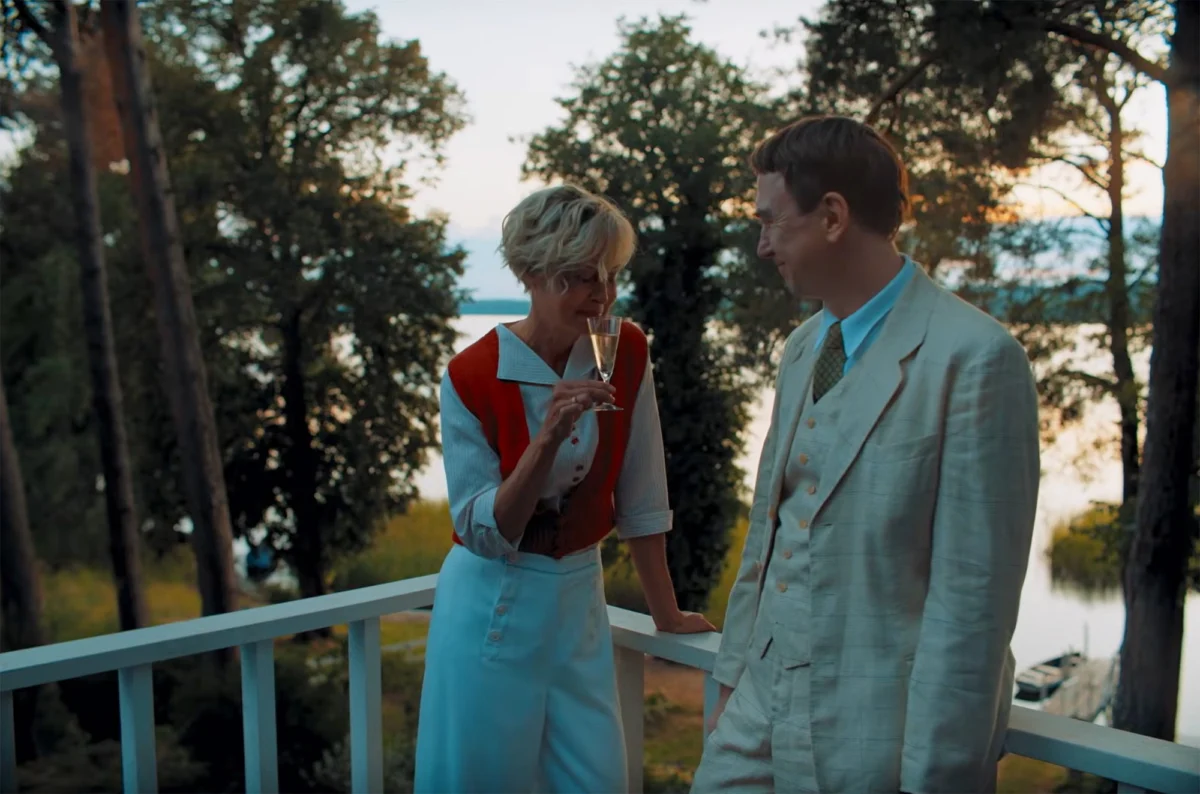
The cinematic landscape is poised to welcome a profound meditation on history, memory, and the enduring spirit of place with the official trailer release for Visitation, the latest film from legendary German director Volker Schlöndorff. Premiering at the prestigious 2026 Cannes Film Festival and set for a German theatrical release on October 15th, 2026, via Studiocanal, this film, originally titled Heimsuchung, promises an intimate yet expansive journey through a century of German upheaval as seen through the unchanging gaze of a single house by a lake near Berlin. The release of the trailer, first made public on YouTube, has sparked considerable interest, highlighting Schlöndorff’s continued mastery in crafting narratives that are both deeply personal and universally resonant.
Volker Schlöndorff: A Master Craftsman Returns to German History
Volker Schlöndorff, an undisputed titan of German cinema, brings his unparalleled vision to Visitation. Born in 1939, Schlöndorff’s career spans over six decades, marked by a consistent dedication to exploring complex moral and historical themes, often with a keen focus on Germany’s past. His filmography is a testament to his versatility and intellectual rigor, encompassing adaptations of literary masterpieces and original screenplays that delve into the human condition amidst political and social turmoil.
Schlöndorff rose to international prominence in the 1970s as a key figure of the New German Cinema movement, alongside contemporaries like Werner Herzog and Rainer Werner Fassbinder. His 1979 adaptation of Günter Grass’s seminal novel, The Tin Drum (Die Blechtrommel), not only earned him the coveted Palme d’Or at the Cannes Film Festival but also the Academy Award for Best Foreign Language Film. This dual triumph cemented his status on the global stage, showcasing his ability to translate intricate literary narratives into compelling cinematic experiences. Other notable works include The Lost Honor of Katharina Blum (1975), a trenchant critique of journalistic ethics and political paranoia, and The Handmaid’s Tale (1990), a powerful adaptation of Margaret Atwood’s dystopian novel.
Given his extensive body of work, much of which grapples with the aftermath of World War II, the Cold War, and the nuances of German identity, Visitation appears to be a natural, perhaps even culmination, point in Schlöndorff’s artistic journey. His choice to adapt Jenny Erpenbeck’s acclaimed novel, which centers on a single house enduring the ebb and flow of history, underscores his enduring fascination with how grand historical narratives imprint themselves on individual lives and specific places. This film is not merely a historical drama; it is an existential inquiry, filtered through the lens of a director who has spent a lifetime dissecting the soul of his nation.
The House as Protagonist: A Century of German Turmoil

At the heart of Visitation lies a concept that is both simple and profoundly ambitious: a house on a tranquil lakeshore near Berlin as the silent witness to a century of tumultuous German history. This narrative device immediately brings to mind films like Robert Zemeckis’ upcoming Here, which also explores the passage of time in a single location. However, Visitation distinguishes itself through its specific historical and geographical context, offering a uniquely German perspective on the enduring nature of place against the backdrop of human transience and societal upheaval.
The film’s trailer hints at the chronological sweep, beginning in the 1930s and extending through to modern times. This period encompasses some of the most dramatic and transformative events in 20th-century German history:
- The Rise of Nazism and World War II (1930s-1945): The early decades of the house’s story are steeped in the ominous shadow of Nazism. The narrative explicitly mentions a Jewish family being "forced to sell their house," a poignant and stark reminder of the systematic persecution and dispossession that defined this era. The house, initially a symbol of peace and stability, becomes a silent observer of profound injustice and the unraveling of societal norms.
- Soviet Occupation and Post-War Division (1945-1989): Following the devastation of the war, the region around Berlin fell under Soviet occupation, leading to the eventual division of Germany. The house continues to bear witness, its ownership and purpose shifting with the geopolitical currents. The film hints at an "opportunistic architect and his wife" who move in, perhaps representing those who sought to rebuild or capitalize on the new order. Later, an "idealistic writer" and her granddaughter inhabit the space, potentially embodying the intellectual and artistic responses to a divided nation, or even those returning from Soviet exile, as detailed in the expanded synopsis.
- The German Democratic Republic (GDR): The narrative further specifies an architect trying to realize his Bauhaus-style vision in East Berlin, only to be denied under the Nazis. After the war, he attempts to build on the GDR’s major construction projects. This detail is crucial, highlighting the ideological and architectural ambitions of the socialist state, and the personal compromises or aspirations individuals harbored within its system. The house, in this context, might become a refuge for those navigating the complexities of life behind the Iron Curtain, or perhaps a symbol of aspirations unfulfilled.
- Reunification and the Dawn of a New Era (1990s-Present): The fall of the Berlin Wall and the subsequent reunification of Germany mark another monumental shift. The house, having seen regimes rise and fall, now stands in a unified nation, grappling with the legacies of its divided past. The "12 destinies searching for peace and belonging" underscore the film’s focus on individual struggles within these larger historical currents. The house itself, nearly untouched by the passions and fates of its inhabitants, becomes a metaphor for the enduring landscape, a constant against the transient human drama.
Literary Foundation: Jenny Erpenbeck’s "Heimsuchung"
Visitation is an adaptation of the acclaimed novel Heimsuchung (published in English as Visitation) by Jenny Erpenbeck, a prominent contemporary German writer known for her deeply reflective and often melancholic explorations of German history and memory. Erpenbeck’s work frequently examines themes of displacement, loss, and the silent narratives embedded in places and objects. Her novel, upon which the film is based, meticulously chronicles the lives of various inhabitants of a single house in Brandenburg through the 20th century.
Erpenbeck’s narrative style is often characterized by its lyrical precision and its ability to evoke a powerful sense of atmosphere and historical weight. She constructs a mosaic of individual stories, each deeply rooted in the political and social transformations of Germany. The novel does not follow a traditional plot but rather shifts perspective and time, allowing the house itself to become the central, unifying element. This structure poses a unique challenge for cinematic adaptation, requiring Schlöndorff to find visual and narrative equivalents for Erpenbeck’s evocative prose and non-linear storytelling.
The decision to adapt Erpenbeck’s work is a significant one, demonstrating Schlöndorff’s commitment to engaging with contemporary German literature that grapples with national identity and historical trauma. Erpenbeck’s Visitation has been lauded for its poetic beauty and its profound insights into how historical events shape private lives, making it a rich source material for a filmmaker of Schlöndorff’s caliber. The film’s success will undoubtedly be measured by its ability to capture the novel’s intricate emotional tapestry and its subtle yet powerful commentary on the weight of the past.
A Stellar Ensemble Cast: Bringing Destinies to Life

To embody the "12 destinies" that pass through the lake house, Schlöndorff has assembled an impressive ensemble of German acting talent, signaling the film’s ambition and commitment to nuanced performances. The cast includes:
- Martina Gedeck: A highly respected actress known for her powerful and subtle performances in films like The Lives of Others and Mostly Martha. Her presence suggests a character of considerable depth and emotional complexity, likely central to one of the house’s narrative threads.
- Lars Eidinger: One of Germany’s most sought-after actors, equally at home on stage and screen, with credits including Personal Shopper and Babylon Berlin. Eidinger often portrays characters with intense psychological complexity, making him an intriguing choice for a role that spans different historical contexts.
- Susanne Wolff: An acclaimed actress known for her work in films such as Styx and Return to Montauk (also directed by Schlöndorff). Her ability to convey resilience and inner strength will likely be crucial to her character’s journey.
- Ulrich Matthes: Widely recognized for his chilling portrayal of Joseph Goebbels in Downfall, Matthes brings a gravitas and intensity that can anchor any historical narrative. His involvement hints at the film’s serious engagement with the darker periods of German history.
- Detlev Buck: A versatile actor and director, Buck’s presence often adds a distinctive flavor to his roles, potentially bringing a grounded or even sardonic quality to the ensemble.
- Michael Maertens: A distinguished stage and screen actor, whose performances are often marked by their precision and depth.
- Wigand Witting and Stella Denis-Winkler: Representing potentially newer or younger talent, their inclusion suggests the film’s scope will encompass different generations and perspectives.
The collective strength of this cast promises a rich tapestry of human experience, with each actor tasked with breathing life into characters who are both products of their time and universal in their search for peace and belonging. The interplay between these actors, as they inhabit the same space across different eras, will be crucial to conveying the film’s overarching themes of continuity and change.
Cinematic Craft and Visual Storytelling
The trailer for Visitation offers glimpses of what the original article describes as "bright & vibrant cinematography." This aesthetic choice is particularly interesting for a film that grapples with such heavy historical subject matter. Rather than opting for a somber, muted palette often associated with historical dramas, the vibrant visuals could serve several purposes:
- Highlighting the enduring beauty of the landscape: The lake and surrounding nature remain constant, perhaps symbolizing hope or the resilience of life itself, even as human events unfold dramatically.
- Creating a contrast with the human drama: The "bright" cinematography might juxtapose the natural beauty with the often dark and challenging human experiences, making the emotional impact even more pronounced.
- Emphasizing the passage of time: Different lighting and color schemes could subtly mark the transition between decades, reflecting the changing moods and eras without relying solely on overt historical markers.
- Reflecting the novel’s lyrical quality: Erpenbeck’s prose, while often melancholic, also possesses a poetic beauty that vibrant cinematography could effectively translate to the screen.
Schlöndorff’s long-standing collaboration with various cinematographers throughout his career indicates a director who deeply understands the power of visual storytelling. For Visitation, the choice of a particular visual style will be integral to conveying the film’s nuanced message: that even amidst profound historical turmoil, life continues, and the search for home and belonging remains a fundamental human drive.
Cannes Premiere and Anticipated Reception
The world premiere of Visitation at the 2026 Cannes Film Festival, even if "out of competition," is a significant endorsement. Cannes is a premier platform for global cinema, and Schlöndorff’s return to the festival underscores his continued relevance and the anticipated artistic merit of his latest work. A Cannes premiere generates substantial international buzz, setting the stage for global distribution and critical discourse.

Given the film’s pedigree—a legendary director, a celebrated literary source, and an acclaimed cast—Visitation is expected to garner considerable attention from critics and cinephiles alike. Early reactions from Cannes, though not yet public, are likely to focus on:
- Schlöndorff’s directorial prowess: How he handles the multi-generational narrative and the challenging adaptation of Erpenbeck’s novel.
- The performances of the ensemble cast: Particularly how they embody characters across different historical periods.
- The film’s thematic depth: Its exploration of memory, history, national identity, and the enduring human search for "home."
- Its relevance to contemporary discussions: How the film’s historical lens informs current understandings of displacement, belonging, and the legacy of political decisions.
The film’s German release on October 15th, 2026, through Studiocanal, positions it as a major autumn release, often a prime slot for prestigious, awards-contending films. Studiocanal, a key player in European film distribution, will undoubtedly leverage the Cannes premiere and Schlöndorff’s reputation to ensure a wide audience in Germany and facilitate subsequent international distribution. The anticipation is that Visitation will not only resonate deeply with German audiences, who are acutely aware of the historical context, but also find a global audience interested in compelling historical dramas and profound human stories.
Broader Implications and Enduring Legacy
Visitation stands to be more than just another historical drama; it is poised to be a significant contribution to the ongoing cinematic and literary dialogue about Germany’s complex 20th century. By focusing on a single house, Schlöndorff offers a microcosmic view of macro-historical forces, humanizing the often-abstract concepts of war, political division, and reunification. The film’s narrative, spanning from the rise of Nazism to modern times, serves as a powerful reminder of how the past continues to shape the present, and how individual lives are inextricably linked to the grand currents of history.
For Volker Schlöndorff, Visitation reaffirms his status as a cinematic elder statesman, a director who, even in his later career, continues to tackle ambitious projects with intellectual rigor and artistic integrity. It is a film that speaks to his enduring concerns and artistic preoccupations, offering a contemplative and emotionally rich exploration of themes that have defined much of his oeuvre. The film’s focus on the search for "peace and belonging" in a world marked by turmoil resonates universally, making it a potentially impactful work for audiences far beyond Germany.
In an era where discussions about national identity, historical memory, and the impact of geopolitical shifts remain highly relevant, Visitation offers a timely and poignant reflection. It invites viewers to consider the layers of history embedded in the places we inhabit, and the resilience of the human spirit in the face of relentless change. As the trailer promises, this "lovely little house on the lake" will serve as a powerful metaphor for the enduring landscape of human experience, a haven witnessing decades of turmoil, yet always holding the promise of a future. The film is set to be a significant cultural event, enriching our understanding of history, memory, and the unbreakable bond between people and the places they call home.