



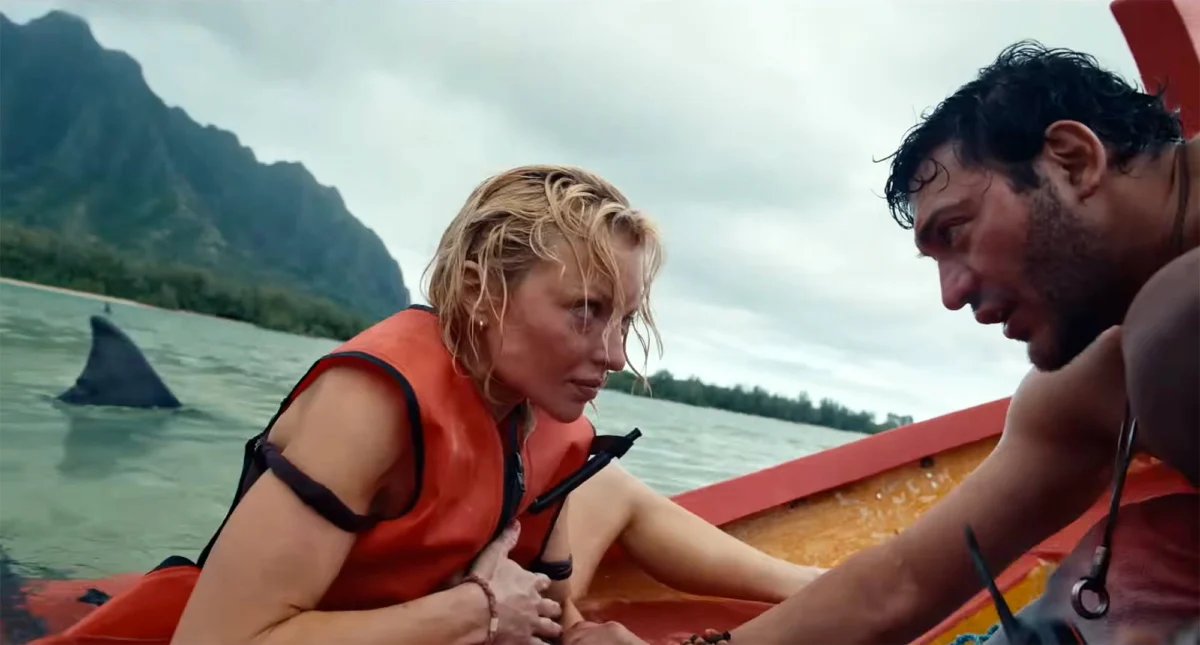
Brainstorm Media has officially unveiled the full trailer for The Bay, an independent horror film from director Phil Volken, positioning it as a chilling summer escape for audiences worldwide. The movie is slated for release on July 17, 2026, and will be available immediately on VOD platforms, alongside a limited theatrical run in select US locations. The trailer, first distributed on June 23, 2026, via YouTube, promises a harrowing aquatic nightmare encapsulated by its stark tagline: "When you enter the water, you enter the food chain." This release strategy capitalizes on the growing trend of direct-to-home viewing for genre films, offering a convenient way for audiences to experience the terror from their living rooms, particularly as summer temperatures rise.
The Immediate Threat: A New Shark Horror Emerges
The Bay plunges viewers into a perilous scenario where two best friends, Emma and Lani, find their destination wedding celebration in Thailand abruptly interrupted by a deadly shark-feeding tour. The film’s premise quickly escalates when an aggressive tiger shark critically damages their tour boat, leaving them stranded in a remote bay designated as a tiger shark breeding ground. The narrative pivots from a scenic vacation to a desperate fight for survival, forcing the protagonists to confront not only the relentless apex predators but also their own fraying nerves and emerging primal instincts. The initial footage suggests a high-stakes, claustrophobic thriller where rescue is out of reach and the only escape route lies through shark-infested waters. This core concept, while familiar within the shark horror genre, aims to intensify the terror by isolating the characters in a location teeming with the very creatures that threaten their existence, promising a unique blend of environmental and psychological horror.
Phil Volken’s Vision: Crafting Oceanic Terror
At the helm of The Bay is indie genre filmmaker Phil Volken, a director with a demonstrated affinity for high-tension narratives and challenging environments. Volken’s previous works, including Garbage, Extortion, and Dead Sea, suggest a directorial style honed in crafting suspenseful, often grim, survival scenarios. Garbage, for instance, explored themes of desperation and moral compromise in a gritty urban setting, while Extortion delved into a family’s fight for survival against kidnappers in a remote locale, establishing Volken’s proficiency in orchestrating human conflict under duress. His 2014 thriller Dead Sea further showcased his ability to integrate environmental threats with human drama, featuring a group of friends encountering a deadly entity in the titular body of water, albeit with a supernatural twist. These experiences, particularly those set on the open sea or in isolated natural environments, appear to have culminated in The Bay.

Volken himself articulated his intentions for the film, stating, "I’ve made several films set on the open sea, and The Bay is the culmination of my experiences to date – with my crack team of regular collaborators, the movie is finely and expertly honed to maximize the combined fears of the ocean, the unknown, the sharks, and ultimately, just how cold-blooded nature can be – specifically human nature." This declaration highlights his deliberate approach to amplifying terror, not just through the direct threat of the sharks, but also by tapping into primal human anxieties related to vast, uncontrollable natural forces and the darker aspects of human behavior when survival is paramount. His emphasis on his "crack team of regular collaborators" underscores the efficiency and cohesion often found in independent filmmaking, where established working relationships can optimize limited resources to achieve ambitious cinematic goals. Volken also expressed delight with "the scale and performances we’ve delivered onscreen," suggesting that despite its indie origins, The Bay aims to deliver a visually impactful and emotionally resonant experience.
The Cast Navigating Perilous Waters
The ensemble cast of The Bay features Francesca Eastwood in a prominent role, alongside Alexander Wraith, Dani Oliveros, Ta’imua, and Calan Scherer. Francesca Eastwood, daughter of legendary actor and director Clint Eastwood, brings a recognizable name and a growing filmography to the project. Having appeared in a variety of television series and films, including Heroes Reborn, Fargo, and M.F.A., Eastwood has demonstrated versatility across genres, often gravitating towards roles that require intensity and emotional depth. Her involvement suggests a commitment to strong performances within the high-stakes narrative of The Bay. While specific character details for the other cast members remain under wraps, Alexander Wraith has a background in action and thriller projects, and Dani Oliveros is known for her work in independent cinema, indicating a cast capable of handling the physical and emotional demands of a survival horror film. The collective talent assembled is tasked with bringing to life the raw fear and desperate struggle for survival that defines the film’s premise, portraying the descent from vacationing friends to desperate individuals fighting for their lives against an indifferent and deadly natural world.
Genre Context: The Enduring Allure of Shark Cinema
The shark horror genre holds a unique and enduring appeal in cinematic history, largely thanks to Steven Spielberg’s seminal 1975 masterpiece, Jaws. That film not only defined the creature feature but also established a template for generating suspense through unseen threats, escalating danger, and the vulnerability of humanity against nature’s might. Since Jaws, the genre has evolved, oscillating between creature-centric monster movies and more human-focused survival thrillers. Films like Deep Blue Sea (1999) introduced genetically enhanced sharks, while Open Water (2003) brought a stark, minimalist realism to the fear of being stranded. More recently, films such as The Shallows (2016) and 47 Meters Down (2017) have revitalized the subgenre by focusing on isolated individuals or small groups battling intelligent and relentless predators in confined or inescapable aquatic environments. The Meg (2018), conversely, leaned into large-scale, blockbuster spectacle.
The Bay appears to align more closely with the survival thriller sub-category, emphasizing the psychological toll of being trapped and the breakdown of social order under extreme pressure. The premise of being stuck in a "tiger shark sanctuary" directly taps into a primal fear of being in a predator’s domain, a concept that resonates deeply with audiences. The tagline, "When you enter the water, you enter the food chain," succinctly captures this existential threat, positioning humans not as masters of their environment but as vulnerable trespassers in a world governed by ancient, brutal laws. This narrative approach aims to differentiate The Bay by grounding the horror in a plausible, albeit terrifying, natural setting, enhancing the film’s visceral impact.

Tiger Sharks: Nature’s Potent Threat in a Sanctuary Setting
The choice of the tiger shark as the primary antagonist in The Bay is particularly strategic, given its reputation as one of the ocean’s most formidable and indiscriminate predators. Scientifically known as Galeocerdo cuvier, tiger sharks are large requiem sharks found in tropical and temperate waters globally. They are named for the dark, vertical stripes found on their bodies, which fade as they mature. Renowned for their broad diet, which includes fish, seals, birds, sea snakes, and even other sharks, tiger sharks are often referred to as "the wastebaskets of the sea" due to their tendency to consume almost anything, including non-food items. This opportunistic feeding behavior, combined with their large size (often exceeding 16 feet in length) and powerful jaws, makes them exceptionally dangerous. They are known to frequent shallow coastal waters, estuaries, and even river mouths, bringing them into closer proximity with human activity than many other large shark species.
The film’s setting in a "tiger shark sanctuary" and "breeding grounds" amplifies the threat considerably. A sanctuary implies an area where these animals are protected, potentially leading to higher population densities and a diminished fear of humans. Breeding grounds suggest a concentration of sharks, possibly including aggressive females protecting their young or males exhibiting territorial behaviors. This scientific grounding enhances the film’s realism and the palpable danger faced by the protagonists. The notion of being trapped in an environment where the apex predators are not just present but are actively thriving and reproducing adds a layer of inescapable dread, making every attempt at escape fraught with extreme peril. This detailed understanding of the antagonist’s nature contributes significantly to the film’s horror, moving beyond mere monster movie tropes to a more ecologically informed terror.
Independent Cinema and Strategic Distribution
The Bay‘s status as an indie film tackling a genre often associated with large studio budgets highlights both the challenges and opportunities within contemporary independent cinema. Producing a convincing shark horror film typically requires significant resources for visual effects, practical creature work, and complex water stunts. For an independent production like The Bay, this necessitates creative problem-solving and a focus on maximizing impact with constrained budgets. Volken’s mention of his "crack team" suggests an efficient production process, leveraging experienced collaborators to achieve high production values.
Brainstorm Media’s distribution strategy for The Bay further exemplifies the evolving landscape of film releases. Opting for a simultaneous VOD and limited theatrical release on July 17, 2026, is a common approach for independent genre films, particularly horror. This model allows for broad accessibility to a global audience via digital platforms while still offering a traditional cinematic experience in select markets. For an indie film, bypassing a traditional, lengthy festival circuit—as confirmed by the lack of known festival premieres—can streamline the path to market, reducing marketing costs and allowing for a quicker recoupment of investment. This direct-to-market strategy is often favored for genre films with clear audience appeal, where critical acclaim from festivals is less crucial than immediate accessibility for their target demographic. The summer release date is also strategically chosen, as horror films, especially those involving water and natural threats, often perform well during months when audiences seek thrilling indoor entertainment.

Anticipation and Thematic Depth
The initial trailer for The Bay has effectively generated buzz, showcasing the "freaky" and frightening thrills promised by the filmmakers. The imagery of a crippled boat, desperate characters, and the lurking presence of tiger sharks creates an immediate sense of dread. The stark tagline, "When you enter the water, you enter the food chain," serves as a powerful thematic anchor, immediately establishing the film’s brutal worldview. This narrative premise, combined with Volken’s expressed intent to explore "just how cold-blooded nature can be – specifically human nature," suggests a film that aims for more than just jump scares. It implies a deeper exploration of human psychology under extreme duress.
The concept of panic spiraling into violence as "survival instincts take over" hints at internal conflicts among the stranded friends, adding a layer of psychological horror to the external threat. This internal dynamic can often be as terrifying as the external one, as characters are forced to make impossible choices, betray trust, or confront their own darkest impulses in the desperate fight for survival. Such character-driven horror, where the human element is as volatile as the environmental one, can elevate a genre film beyond simple creature feature territory. Audiences are likely to be drawn to the promise of intense action, genuine scares, and a compelling examination of human resilience—or fragility—when confronted with insurmountable odds.
Conclusion: A Summer Release Daring Viewers to Dive In
As The Bay prepares for its July 17, 2026, release, it positions itself as a notable entry in the shark horror genre, offering a chilling experience just in time for the summer season. Under Phil Volken’s direction and with a dedicated cast led by Francesca Eastwood, the film aims to deliver a potent blend of environmental terror and psychological drama. Its strategic VOD and limited theatrical release through Brainstorm Media ensures broad accessibility for horror enthusiasts eager to immerse themselves in a high-stakes survival story. By leveraging the inherent terror of tiger sharks and the primal fears associated with being stranded in their domain, The Bay endeavors to provide a terrifying cinematic journey. The question for potential viewers is not just whether they can survive the sharks, but how they will endure the cold-blooded reality of nature and, perhaps, human nature itself. The film dares audiences to dive into its treacherous waters, promising a thrilling and potentially thought-provoking exploration of survival against overwhelming odds.