

The 79th edition of the Cannes Film Festival concluded its twelve-day run on the French Riviera, leaving behind a complex legacy that challenged initial critical assessments. While early reports from the Croisette suggested a "ho-hum" year lacking in traditional masterpieces, the final slate of films revealed a sophisticated, quiet revolution in cinematic language. The 2026 selection was defined not by sudden shocks or aggressive pacing, but by "gradualist" storytelling—works that built emotional resonance through accumulation and reflection. Films such as Ryusuke Hamaguchi’s All of a Sudden, Valeska Grisebach’s The Dreamed Adventure, and Marine Atlan’s La Gradiva exemplified this shift, prioritizing internal character development and rhythmic patience over the high-octane tension seen in previous festival cycles.
The Palme d’Or and the Politics of the State
The festival’s highest honor, the Palme d’Or, was awarded to Romanian director Cristian Mungiu for his multilingual drama Fjord. The win marked Mungiu’s second top prize at Cannes, following his 2007 victory for 4 Months, 3 Weeks and 2 Days. Fjord serves as a sprawling, clinical exposé of the Norwegian child protective services, presented as a case-study-gone-wrong that interrogates the boundaries of state intervention in family life.
The jury’s decision to award Mungiu was met with a mix of acclaim and debate. While some critics praised the film’s rigorous execution, others argued that its portrayal of the Scandinavian "nanny state" bordered on a reactionary outlook. The film’s focus on intense, "ride-or-die" bonds mirrored themes from Mungiu’s earlier work but applied them to a modern bureaucratic nightmare. Despite the controversy, the win solidified Mungiu’s status as one of the most formidable voices in contemporary European cinema, joining an elite group of two-time Palme d’Or winners.
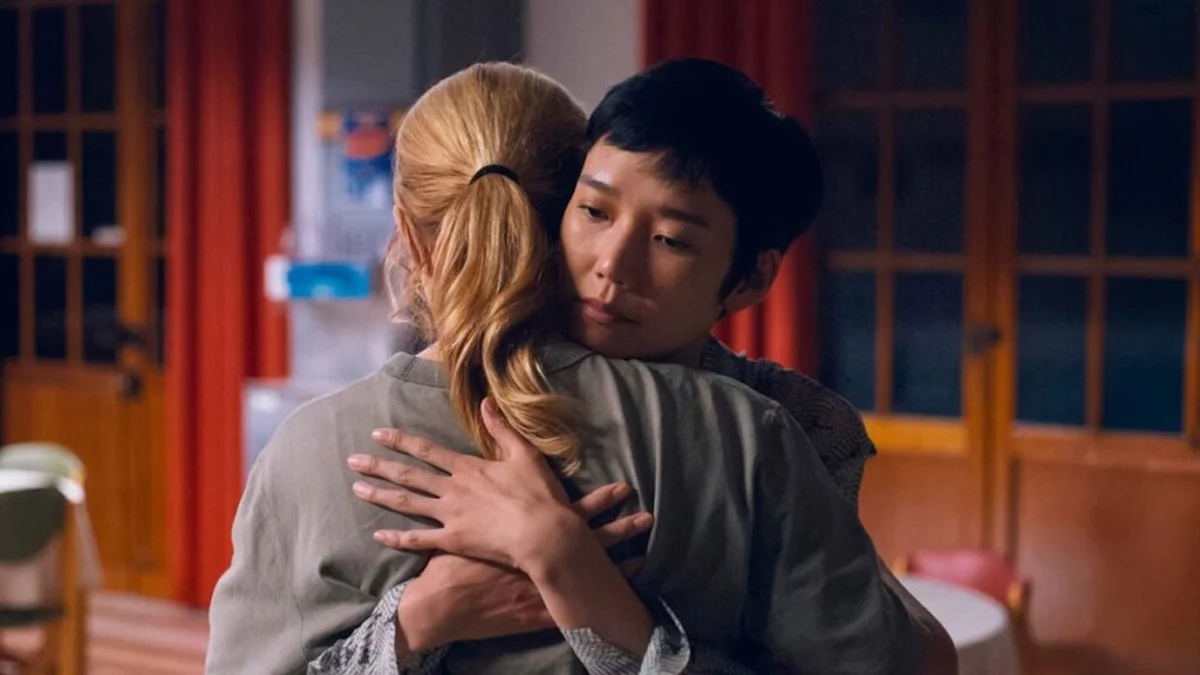
In a contrasting approach to human care and connection, Ryusuke Hamaguchi’s All of a Sudden emerged as a critical favorite, though it bypassed the top prize. The film centers on an extended heart-to-heart between Mari (Tao Okamoto), a Japanese playwright, and Marie-Lou (Virginie Efira), a French eldercare manager. The narrative follows their chance meeting and the organic growth of a friendship that addresses both personal grief and a shared sense of global decline. While Hamaguchi was not awarded the Palme, the film’s lead actresses, Efira and Okamoto, shared the Best Actress award, a testament to the film’s focus on the "muscle memory" of human connection.
Chronology of the Competition: From Post-War Ruins to Modern Borders
The festival’s timeline was marked by a series of period dramas that utilized historical settings to reflect modern anxieties. In the first week, Pawel Pawlikowski’s Fatherland set a high bar for technical precision. Shot with the director’s signature aesthetic elegance, the film follows Thomas Mann (Hanns Zischler) and his daughter Erika (Sandra Hüller) during a 1949 speaking tour across a divided Germany. The film explores the disconnect between 19th-century intellectualism and the physical and moral ruins of the post-war era, a theme that many attendees noted felt strikingly relevant to the geopolitical climate of 2026.
Following Fatherland, Emmanuel Marre’s A Man of His Time provided a darker look at historical complicity. By tracking the moral decay of a bureaucrat in Vichy France—played by Swann Arlaud—Marre used a hard-lit 16mm aesthetic to create a "you-are-there" atmosphere. The film, based on letters from Marre’s own great-grandfather, served as a chilling study of how administrative indifference can lead to participation in genocide.
In the final days of the competition, Valeska Grisebach’s The Dreamed Adventure shifted the focus to the Eastern European borderlands. The three-hour-plus saga follows Veska (Yana Radeva), an archaeologist navigating the remnants of Soviet-era gangsterism. Grisebach, known for her deep research and use of non-professional actors, spent years in the region to capture the authentic dynamics of power and gender. The film was quickly acquired for US distribution following its premiere, signaling strong market confidence in Grisebach’s "bluff treatment" of traditional genre tropes.
Sidebars and Breakthrough Debuts
The 2026 festival was particularly strong in its parallel sections, where new directorial voices often overshadowed the main competition. The Critics’ Week section produced what many considered the "find" of the festival: La Gradiva, the debut feature from Marine Atlan. Filmed on location in Naples, the movie follows a group of French students on a school trip to Pompeii. Atlan, who also served as co-cinematographer, was praised for her sensitive portrayal of adolescent autonomy and the "whisker-sensitive" angst of youth. The film secured US distribution through 1-2 Special and received immediate critical comparisons to the works of Eric Rohmer for its intellectual and emotional clarity.

The Camera d’Or, awarded to the best first feature across all sections, went to Clarissa, directed by the Nigerian duo Arie and Chuko Esiri. A reimagining of Virginia Woolf’s Mrs. Dalloway, the film integrated a sharp colonialist critique influenced by the writings of Chinua Achebe. The win highlighted the festival’s ongoing commitment to diversifying its aesthetic and geographical reach.
In the Un Certain Regard sidebar, the top prize was awarded to Sandra Wollner’s Everytime. Shot by Gregory Oke, the cinematographer behind the acclaimed Aftersun, the film was described as a shattering study of grief. Its use of intimate sound design and a "heady" visual proximity to its subjects allowed it to stand out in a section that opened with Jane Schoenbrun’s meta-horror Teenage Sex and Death at Camp Miasma.
Distribution Trends and Market Analysis
The 2026 market saw a significant consolidation of power among independent distributors, with NEON emerging as a dominant force. The company arrived at the festival with a diverse slate of titles, including:
- Hope: A South Korean monster movie directed by Na Hong-jin, featuring a "stretchy hominid alien" inspired by Goya’s artwork.
- Paper Tiger: A classical Queens-set family tragedy from James Gray.
- The Man I Love: An 1880s-set, AIDS-inflected drama from Ira Sachs, focusing on identity and memory.
Industry analysts noted that while the "star power" on the red carpet was perceived as muted compared to the 75th or 77th editions, the commercial viability of the films remained high. The rapid acquisition of titles like The Dreamed Adventure and La Gradiva suggests that distributors are increasingly looking for "accumulative" dramas that offer long-term prestige value rather than immediate box-office explosions.
Official Responses and Political Statements
The closing ceremony of the 79th Cannes Film Festival was marked by a significant political gesture from Russian director Andrei Zvyagintsev. Zvyagintsev, who won the Grand Prix for his film Minotaur, used his acceptance speech to address the ongoing conflict in Ukraine. Filmed in Latvia to avoid state censorship, Minotaur is a reimagining of Claude Chabrol’s The Unfaithful Wife, adapted to the context of Russian industrial corruption. Zvyagintsev’s plea for an end to the war and his critique of authoritarian isolationism provided a somber bookend to the festivities.
The festival also operated under the shadow of the ongoing imprisonment of Iranian filmmaker Jafar Panahi. Panahi, whose film It Was Just an Accident won the Palme d’Or in 2025, was unable to attend due to a recent resentencing by the Iranian government. Several directors used their press conferences to call for Panahi’s release, emphasizing the festival’s role as a platform for persecuted artists.
Broader Impact and Cinematic Implications
As the curtains closed at the Lumière Theater, the consensus among film historians began to shift. The "quiet revolution" of 2026 may be remembered as the year Cannes moved away from the "white-knuckle" intensity of the early 2020s toward a more contemplative and bodily form of cinema. The success of films like All of a Sudden and The Unknown—Arthur Harari’s polarizing body-displacement drama starring Léa Seydoux—suggests a growing interest in using the cinematic medium to explore trauma, displacement, and the "queasy solidarity" of the modern human condition.
Ultimately, Cannes 2026 proved that a "muted" year in terms of spectacle does not equate to a lack of substance. By championing works that require patience and instill a "dramatic muscle memory," the festival reaffirmed its commitment to the evolution of film as an art form capable of navigating the complexities of the present moment through the lens of the past and the possibilities of the future.