


The intersection of decentralized finance and real-world performance art has reached a contentious new milestone with the launch of Pump.Fun GO, a feature that incentivizes individuals to perform various stunts in exchange for cryptocurrency rewards. Among the more unconventional tasks currently advertised is a bounty offering approximately $1,000 to any individual who documents themselves entering a crowded university lecture hall and shouting "fartcoin" into a megaphone. The reward for this specific stunt is denominated in "fartcoin," a memecoin that, at the time of publication, maintains a market capitalization of approximately $130 million and trades at just over 10 cents per unit. This development marks a significant pivot for Pump.Fun, a platform that has already established itself as one of the fastest-growing and most controversial entities in the cryptocurrency sector.
The Operational Mechanics of Pump.Fun GO
Pump.Fun GO operates on a bounty-based model that the platform describes as a way to "pay anyone to do anything." The system utilizes a smart contract-based escrow mechanism where individuals or groups can pool funds to create a challenge. These funds are held by the platform until a countdown timer expires. If a participant completes the task and provides video evidence that meets the unspecified criteria of the platform’s moderators, the prize is dispensed. Conversely, if no one successfully completes the mission within the allotted timeframe, the creators of the bounty receive a refund.
While the concept of a digital bounty is not new to the blockchain space—traditionally used for "bug bounties" to find vulnerabilities in code—Pump.Fun GO shifts the focus toward social engineering and physical stunts. The platform’s legal department has remained silent regarding the specifics of its moderation process, though the company has publicly stated that it reviews and approves both the initial bounties and the subsequent claims for payment. However, the lack of transparency regarding how a "winner" is selected among multiple valid entries has raised concerns about the fairness and legitimacy of the payouts.
A Chronology of the Memecoin Factory
To understand the emergence of the GO feature, one must look at the rapid rise and recent volatility of the parent platform. Pump.Fun launched in early 2024 as a simplified factory for memecoins on the Solana blockchain. By removing the technical barriers to token creation, the platform allowed users to launch a cryptocurrency in seconds for a nominal fee.
Between January and mid-2024, Pump.Fun experienced exponential growth, generating over $100 million in fees and facilitating the launch of hundreds of thousands of tokens. However, the market for memecoins is notoriously fickle. By late 2024, data indicated that user engagement on the platform had plummeted by approximately 80% from its peak. Analysts suggest that the launch of Pump.Fun GO is a strategic attempt to re-inject "viral" energy into a stagnating ecosystem by bridging the gap between digital speculation and real-world chaos.
Cataloging the Controversial Bounties
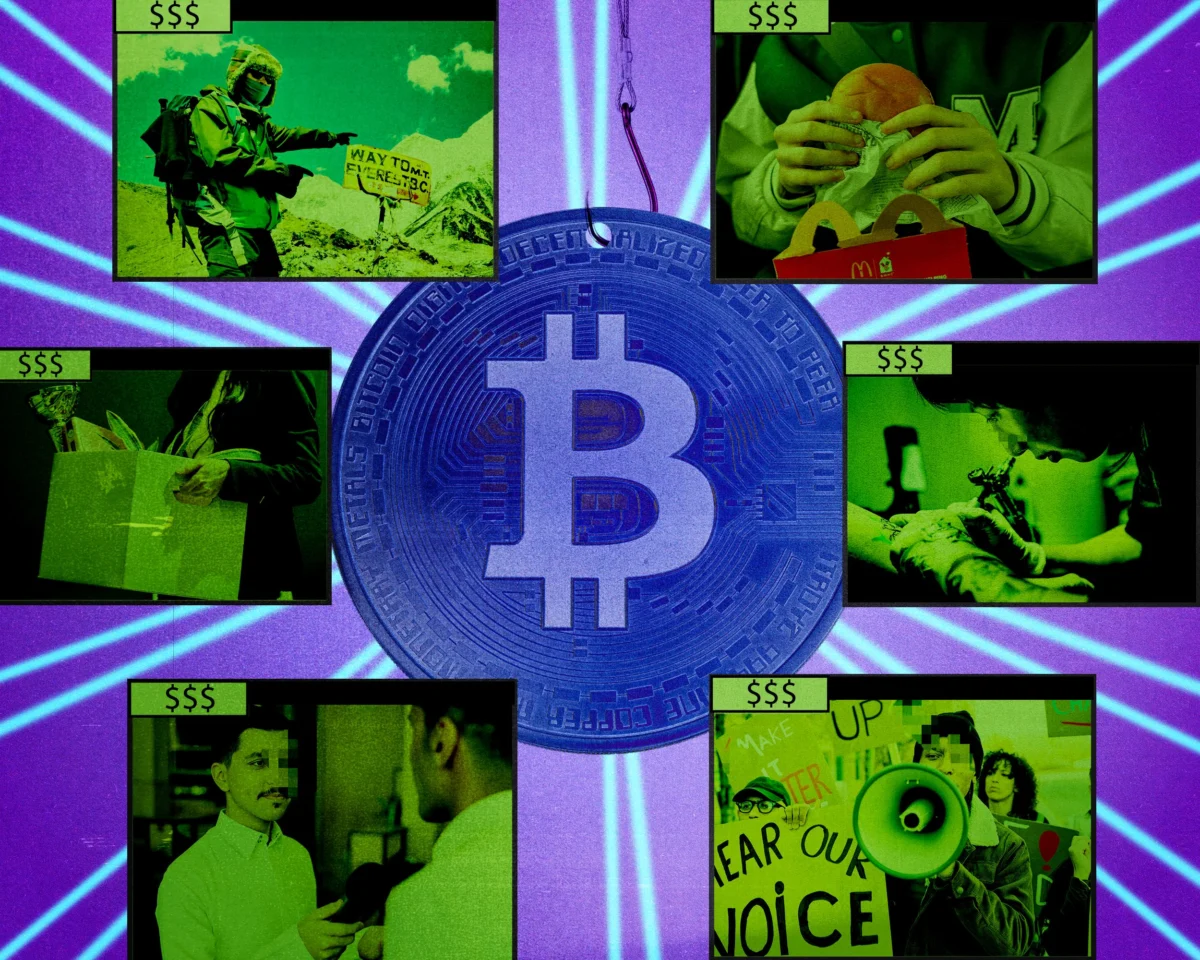
The initial wave of bounties on the GO platform has ranged from the mundane to the deeply disturbing. In the "mundane" category, a $215 bounty titled "Go to McDonalds and get a burger" appeared to offer a simple reward. However, the fine print revealed that the payout would be split among the first 20 valid entries, resulting in a reward of roughly $10.75 per person—a sum that often fails to cover the cost of the meal and the effort of recording the task.
Far more concerning are the tasks that border on exploitation or self-harm. There are numerous open requests for users to get permanent tattoos of various cryptocurrency logos or names on their bodies. In one documented case, a man in India reportedly had a memecoin name tattooed on his forehead for a reward equivalent to $3,000. Other tasks include:
- Recording a request to a gas station attendant for sexual performance enhancement medication for $100.
- Interviewing homeless individuals about their political affiliations for a $700 pool.
- Quitting a primary place of employment on camera for a $3,000 "severance package."
- Parachuting into a high-profile sporting event, such as a World Cup game, wearing memecoin-themed apparel.
One of the most criticized bounties involved a prompt for a Black person to cover themselves in watermelon and repeat a specific phrase for a crypto reward. Such tasks have drawn accusations of racism and the exploitation of systemic inequality, as many of the participants filming these videos appear to be located in developing nations where a few hundred dollars in cryptocurrency represents a significant financial windfall.
Legal Framework and Risk Management
The Pump.Fun GO terms of service place the entirety of the legal and physical risk on the participants. The documentation explicitly states that users are responsible for their own "actions, decisions, wallet security, submissions, communications, and compliance with law." Furthermore, the platform warns that rewards are "not guaranteed," providing a significant loophole that leaves participants with little recourse if a bounty is not paid out.
Despite these disclaimers, the platform claims it will cooperate with third-party authorities in cases of "fraud, scams, market manipulation, or illegal content." However, the line between "chaos"—which the platform explicitly encourages—and "illegal conduct" remains blurred. Stunts involving trespassing in university halls, disrupting international sporting events, or engaging in public indecency carry real-world legal consequences that far outweigh the value of the cryptocurrency offered.
The Problem of AI and Fraudulent Submissions
As the platform struggles with moderation, a new technical challenge has emerged: the use of generative artificial intelligence. Many of the high-value bounties, such as one requesting footage of a memecoin-themed car exploding, have been flooded with AI-generated videos. These "deepfakes" are often presented as legitimate evidence of a completed task.
Because the selection process is opaque, participants who actually perform dangerous or degrading stunts in the physical world may find themselves losing the bounty to a user who generated a convincing video using an AI tool. This creates a perverse incentive structure where the "proof-of-work" required by the platform is increasingly detached from reality, even as it continues to encourage real-world risks.
Expert Analysis and Societal Impact
Technologists and human rights advocates have expressed alarm at the precedent set by Pump.Fun GO. Andrew Ford Lyons, a digital security expert for various human rights organizations, suggests that the platform is "leveraging inequality" for the sake of online entertainment. Lyons notes that the digital economy is increasingly trending toward the gamification of poverty, where individuals in precarious financial positions are coerced into degrading acts for the amusement of wealthy speculators in the global north.
From a journalistic perspective, the platform represents the logical extreme of the "attention economy." In a market where the value of a cryptocurrency is tied solely to its visibility and "meme" status, the pressure to create increasingly shocking real-world content becomes an economic necessity. This creates a feedback loop where the stability of a $130 million asset like "fartcoin" depends on the willingness of individuals to engage in public disruption.
Regulatory Outlook and Future Implications
The rise of platforms like Pump.Fun GO is likely to attract the attention of regulatory bodies such as the Securities and Exchange Commission (SEC) and the Commodity Futures Trading Commission (CFTC) in the United States, as well as similar agencies internationally. While the platform operates in a decentralized manner, the centralized moderation and escrow services provided by Pump.Fun may provide a "hook" for regulators seeking to curb what they perceive as predatory or illegal financial activity.
Furthermore, the potential for these bounties to escalate into more dangerous territory remains high. If the platform continues to reward "chaos" and "creativity," the transition from harmless pranks to criminal activity is a matter of when, not if. The "severance package" bounty, which encourages people to quit their jobs, highlights a disregard for the long-term social stability of participants in favor of short-term viral engagement.
As the cryptocurrency market continues to evolve, the case of Pump.Fun GO serves as a stark reminder of the ethical vacuum that can exist within unregulated financial frontiers. While the technology of the blockchain offers the promise of decentralization and financial sovereignty, its application in the form of "stunt bounties" suggests a darker trajectory—one where human dignity and physical safety are traded as liquid assets in a high-stakes digital game. Whether the platform will survive the inevitable legal challenges or the eventual exhaustion of its user base remains to be seen, but the precedent it has set will likely influence the digital economy for years to come.