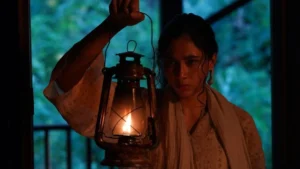




Curzon Films in the United Kingdom has unveiled the full official trailer for Pedro Almodóvar’s latest cinematic offering, Bitter Christmas, a film that has already stirred considerable discussion and received a spectrum of critical responses since its initial premiere. The Spanish auteur’s new work, known as Amarga Navidad in its original Spanish, first debuted in Spain in March 2026, followed by a high-profile premiere at the 2026 Cannes Film Festival. Both engagements yielded mixed reviews, setting a complex trajectory for its upcoming August release in the UK. As of mid-June, a confirmed release date for the United States remains unannounced, fueling anticipation and speculation among cinephiles and industry observers alike.
The film’s narrative centers on a woman grappling with recent loss and an overwhelming work ethic as a coping mechanism. During a protracted December holiday, the protagonist, whose mother has recently passed away, immerses herself in professional commitments as a means of emotional escape. This relentless pace is abruptly interrupted by a panic attack, compelling her to seek respite. She subsequently travels to Lanzarote with her friend Patricia, while her partner Bonifacio remains in Madrid. The storyline takes a meta-textual turn, introducing a filmmaker in 2026 who transforms her experiences into a screenplay, thereby deliberately blurring the boundaries between reality, fiction, and the intimate relationships that shape human lives. This self-referential approach, often a hallmark of Almodóvar’s later work, positions Bitter Christmas not merely as a narrative film but as a commentary on the artistic process itself.
The Thematic Core: Grief, Art, and Reality’s Fluidity
At its heart, Bitter Christmas delves into profound themes of grief, emotional resilience, and the therapeutic, yet often consuming, nature of artistic creation. The opening quote, "You need to enjoy things more. Go out, live! Not everything is about writing and making films," immediately establishes a central tension within the film: the struggle between lived experience and its artistic representation. This internal conflict is personified by the protagonist, whose journey to Lanzarote signifies a physical and psychological break from her metropolitan existence and professional obligations. Lanzarote, with its stark, volcanic landscapes, often serves in cinema as a backdrop for introspection and emotional desolation, providing a stark contrast to the bustling, creative world of Madrid.
Almodóvar has frequently explored the intricacies of human emotion, particularly the female psyche, and the profound impact of loss in his extensive filmography. From the poignant exploration of motherhood in All About My Mother to the raw portrayal of physical and emotional pain in Pain and Glory, his films consistently delve into the complexities of coping with adversity. Bitter Christmas appears to continue this tradition, but with an added layer of meta-commentary, suggesting that the act of creation itself can be both an escape and a confrontation with one’s own reality. The blurring of lines between the woman’s story and the filmmaker’s screenplay challenges viewers to consider the veracity and interpretation of narratives, a recurrent philosophical thread in post-modern cinema. This meta-narrative structure invites audiences to question the authenticity of the story presented, reflecting Almodóvar’s own engagement with the autobiographical and the fictional throughout his career.

A Distinguished Ensemble Cast
The film boasts a formidable ensemble cast, a characteristic feature of Almodóvar’s productions, which often showcase the crème de la crème of Spanish and Latin American acting talent. Leading the cast is Bárbara Lennie, an acclaimed Spanish actress known for her compelling performances in films such as Magical Girl and The Invisible Guest. Her presence suggests a central role requiring significant emotional depth and nuance. Alongside her, Leonardo Sbaraglia, an Argentinian actor who has previously collaborated with Almodóvar in Pain and Glory, brings his considerable experience to the project.
The cast further includes Aitana Sánchez-Gijón, a veteran of Spanish stage and screen, and Victoria Luengo, who has been gaining significant recognition, notably for her role in The Beloved alongside Javier Bardem. Their participation underscores the film’s potential for powerful dramatic performances. Other notable names rounding out the cast include Patrick Criado, Milena Smit (who previously starred in Almodóvar’s Parallel Mothers), Quim Gutiérrez, and Almodóvar regulars such as Rossy de Palma and Carmen Machi. The inclusion of de Palma and Machi, known for their distinct comedic timing and dramatic prowess, often signals a blend of humor and pathos that is characteristic of Almodóvar’s unique cinematic voice. Gloria Muñoz completes this impressive roster, contributing to what is clearly a rich tapestry of acting talent. The assembly of such a distinguished cast, many of whom are familiar faces in Almodóvar’s cinematic universe, typically guarantees a high caliber of performance and a deep understanding of the director’s unique vision and stylistic demands.
The Almodóvar Legacy and the Meta-Narrative Evolution
Pedro Almodóvar, born in Calzada de Calatrava, Spain, is one of the most celebrated and influential filmmakers of his generation. His filmography spans over four decades, marked by a distinctive style that blends melodrama, vibrant aesthetics, complex characters, and often transgressive themes. From early works like Pepi, Luci, Bom and Other Girls on the Heap to internationally acclaimed masterpieces such as Women on the Verge of a Nervous Breakdown, All About My Mother, and Talk to Her, Almodóvar has consistently pushed boundaries and redefined Spanish cinema on the global stage. His films frequently explore themes of desire, identity, memory, family, and the fluidity of gender and sexuality, often through the lens of strong, resilient female protagonists.
In recent years, Almodóvar has increasingly incorporated meta-narrative elements and autobiographical reflections into his work. Films like Broken Embraces (a film about filmmaking and memory) and Pain and Glory (a deeply personal and semi-autobiographical account of an aging film director) exemplify this trend. Bitter Christmas, with its explicit premise of a filmmaker turning a real-life story into a screenplay, appears to be a direct continuation of this self-referential phase. This approach allows Almodóvar to reflect on his own creative process, the challenges of artistic inspiration, and the ethical implications of transforming personal experiences into public art. Such meta-commentary adds layers of intellectual engagement for audiences familiar with his oeuvre, inviting them to consider the director’s own relationship with his characters and narratives. This evolution demonstrates a mature artist reflecting on his craft and legacy, a common trajectory for established auteurs.

A Chronology of Release and Critical Scrutiny
The journey of Bitter Christmas to international screens has followed a typical, yet telling, trajectory for a European arthouse film by a major director. The first look teaser for Amarga Navidad was released in late 2025, generating initial buzz. This was followed by the full Spanish trailer, further building anticipation for its domestic debut.
- March 2026: Spanish Premiere. The film first opened in Spanish cinemas in March 2026, distributed by Warner Bros. (WB). The initial critical reception from Spanish outlets was, as noted, mixed. This domestic debut often serves as an early indicator of a film’s broader appeal and critical standing.
- May 2026: Cannes Film Festival. The film then premiered at the prestigious 2026 Cannes Film Festival. Cannes is a crucial platform for international arthouse cinema, often dictating a film’s global visibility and critical trajectory. While a premiere at Cannes is a mark of prestige, the "mixed reviews" at such a high-profile event can significantly influence subsequent international distribution and awards potential. Critics at Cannes often scrutinize Almodóvar’s work with particular intensity, given his status as a festival darling and multiple award winner. The mixed reception here suggests a divergence of opinions, perhaps regarding the film’s narrative coherence, thematic execution, or emotional impact compared to his most celebrated works.
- August 28, 2026: UK Release. Curzon Films, a prominent distributor of independent and international cinema in the UK, is set to release Bitter Christmas in British cinemas. Curzon’s acquisition underscores the film’s cultural significance and Almodóvar’s enduring appeal to the UK arthouse market. The August release positions it outside the crowded summer blockbuster season, allowing it to appeal to a more discerning audience.
- Late 2026: Anticipated US Release. While no firm date has been announced, the expectation is for a US release later in the year. The delay might be strategic, allowing distributors to gauge international performance and critical consensus, or to secure optimal positioning for the awards season. Historically, Almodóvar’s films have found a dedicated audience in the US, particularly among independent film enthusiasts and Spanish-language cinema aficionados.
The Nuance of "Mixed Reviews"
The phrase "mixed reviews" often signifies a film that polarizes critics, rather than being universally panned or universally praised. For an auteur of Almodóvar’s stature, "mixed" can be particularly telling. It suggests that while some critics may laud the film’s bold narrative choices, visual flair, or powerful performances, others might find elements such as its meta-narrative structure overly self-indulgent, its emotional beats less resonant than previous works, or its thematic ambitions not fully realized.
In the context of Almodóvar’s filmography, critical expectations are exceptionally high. Reviewers often compare his new works to his established masterpieces, searching for the same emotional intensity, stylistic originality, and narrative impact. A "mixed" reception could imply that Bitter Christmas, despite its creative ambition, might not consistently reach the same universally acclaimed heights as films like Talk to Her or Pain and Glory. However, even a polarizing Almodóvar film typically sparks fervent discussion and analysis, which in itself contributes to its cultural footprint. It prompts questions about artistic evolution, the challenges of maintaining creative vitality, and the subjective nature of cinematic appreciation.
Distribution Strategies and Market Implications

The distribution strategy for Bitter Christmas reflects the intricate ecosystem of international film releases. Warner Bros. handling the Spanish release indicates a certain commercial backing within its home market, leveraging Almodóvar’s domestic appeal. Curzon’s acquisition for the UK market highlights the film’s arthouse potential and Almodóvar’s consistent draw for European independent cinema audiences. Curzon is renowned for curating a selection of critically acclaimed international films, and an Almodóvar title is a significant addition to their roster, often leading to strong box office performance within its niche.
The absence of a confirmed US distributor and release date suggests ongoing negotiations or a strategic wait-and-see approach. For a director of Almodóvar’s calibre, securing a US distributor that can effectively market and position the film for both critical acclaim and audience engagement is crucial. Companies specializing in arthouse distribution, such as Sony Pictures Classics (which has distributed many of his previous films), Focus Features, or Neon, would likely be contenders. The eventual US release will be pivotal in shaping the film’s global reception and potential for awards recognition, particularly given the historical success of Almodóvar’s films in the Academy Awards’ International Feature Film category.
Broader Impact and Implications for Contemporary European Cinema
Bitter Christmas contributes to a wider discourse on the role of the auteur in contemporary cinema. In an era increasingly dominated by franchise films and streaming content, films by established directors like Almodóvar continue to command attention, offering unique artistic visions and challenging narratives. Even with mixed reviews, his films stimulate intellectual debate and maintain the vitality of international arthouse cinema.
The meta-narrative approach of Bitter Christmas also speaks to a growing trend in filmmaking where creators explore the very nature of storytelling and the blurred lines between art and life. This self-reflexivity can be a powerful tool for engaging audiences on a deeper, more intellectual level, prompting them to consider the creative process and the impact of narrative on human understanding. The film, therefore, is not just another entry in Almodóvar’s filmography but a significant work that reflects on the challenges and triumphs of artistic creation in the 21st century. Its reception, both positive and negative, will undoubtedly fuel further discussions about the evolution of a master filmmaker and the enduring power of personal storytelling.
As Bitter Christmas prepares for its UK debut and eventual US release, it remains a focal point of cinematic discussion. The film encapsulates Almodóvar’s continued exploration of complex human emotions and his daring willingness to experiment with narrative forms. Despite the varied critical responses, the sheer presence of a new Almodóvar film is an event in itself, promising a rich, thought-provoking, and visually distinctive cinematic experience that will undoubtedly resonate with his loyal fanbase and draw in new admirers. The ongoing conversation surrounding Bitter Christmas underscores the enduring power of Pedro Almodóvar’s vision and his unwavering commitment to challenging and enriching the landscape of global cinema.