

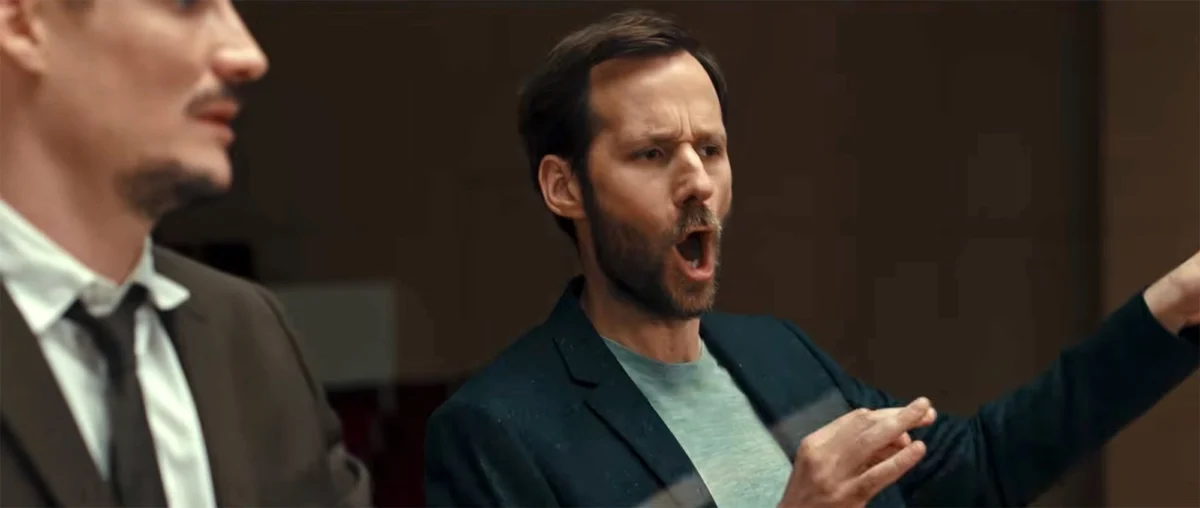
Greenwich Entertainment has officially unveiled the US trailer for the critically acclaimed French comedy film, The Marching Band, known in its native France as En Fanfare, confirming its theatrical debut across the United States later this summer. The film, which first garnered significant attention at the 2024 Cannes Film Festival, arrives on American screens following a remarkable trajectory of critical praise and commercial success in Europe, notably achieving an impressive €18 million at the French box office and securing seven César Award nominations, including nods for Best Film and Best Actor. This long-awaited US release, scheduled for August 21st, 2026, marks a pivotal moment for a film celebrated for its heartwarming narrative, exceptional performances, and universal themes of family, music, and reconciliation.
A Narrative of Unexpected Kinship and Musical Harmony
At its core, The Marching Band weaves a compelling story of two estranged brothers brought together by a twist of fate and the unifying power of music. The plot centers on Thibaut, an internationally renowned conductor whose life takes an unforeseen turn when he is diagnosed with leukemia and requires a bone marrow donor. This medical crisis unearths a long-held family secret: Thibaut was adopted. His search for a biological match leads him to discover Jimmy, an older brother he never knew existed. Jimmy’s life stands in stark contrast to Thibaut’s glamorous existence; he is a factory worker in a small town, diligently serving in a school cafeteria while nurturing his passion as a trombone musician in a local marching band.
Their initial reunion, marked by a clash of worlds and personalities, slowly blossoms into a fraternal bond forged through their shared love for music. As Thibaut recognizes Jimmy’s raw, exceptional musical talent, he feels compelled to address the "injustice of fate" that has kept his brother from realizing his full potential. This familial and musical journey unfolds against the poignant backdrop of their small town facing the imminent closure of its local factory, adding a layer of social commentary to the personal drama. The film’s tagline, "Run a school? A dunce like me?", uttered by Jimmy, encapsulates the humility and endearing self-doubt that defines his character, setting the stage for a narrative rich in humor, emotion, and growth. The ensemble cast, featuring Benjamin Lavernhe as Thibaut, Pierre Lottin as Jimmy, Sarah Suco, and Jacques Bonnaffé, has been lauded for delivering performances that imbue the story with authenticity and depth, making it, as early reviews suggest, "a completely worthwhile watch."
Chronology of Acclaim: From Cannes to Global Screens
The journey of The Marching Band to American theaters has been a testament to its enduring appeal and critical resonance across continents.
May 2024: Cannes Film Festival Premiere. The film first captivated audiences and critics during its premiere in the prestigious Cannes Premiere section of the 2024 Cannes Film Festival. This selection is often reserved for films by established directors that offer a unique cinematic vision, signaling early on that The Marching Band was a significant work. Its reception at Cannes generated considerable buzz, laying the groundwork for its subsequent success.
Mid-2024: French Theatrical Release and Box Office Phenomenon. Following its Cannes debut, En Fanfare quickly became a breakout hit in France. It resonated deeply with domestic audiences, leading to an extraordinary box office performance of €18 million. This figure positions it as one of the most successful French films of 2024, demonstrating its widespread appeal within its home market. Such financial success is often a strong indicator of a film’s potential to travel internationally.

Early 2025: César Award Nominations. The film’s critical acclaim in France was further solidified by its impressive seven nominations at the César Awards, the national film awards of France. These nominations, including highly coveted categories such as Best Film and Best Actor, underscore its artistic merit and the recognition it received from the French film industry. While the article does not specify wins, the nominations themselves are a significant honor and boost a film’s international profile.
Late 2025: UK Theatrical Release. The Marching Band continued its international rollout with a release in UK cinemas. This further expanded its reach and allowed English-speaking audiences in Europe to experience the film, often serving as a precursor to a wider Anglophone market distribution.
June 2026: US Trailer Debut and August 2026 Release Announcement. Nearly two years after its initial premiere, Greenwich Entertainment officially released the US trailer, confirming the film’s highly anticipated American theatrical run beginning August 21st, 2026. This timeline is not uncommon for foreign-language films, which often require extensive distribution negotiations, subtitling, and marketing strategies tailored to different markets.
The Visionary Behind the Lens: Emmanuel Courcol
The Marching Band is the latest offering from French actor, writer, and filmmaker Emmanuel Courcol. Courcol’s directorial career has been marked by a thoughtful approach to storytelling, often exploring themes of humanity, resilience, and the complexities of social structures. His previous directorial efforts, Ceasefire (2016) and The Big Hit (2020), provide valuable context for understanding his artistic sensibilities in The Marching Band.
Ceasefire (original title Cessez-le-feu), starring Romain Duris, was a historical drama set in the aftermath of World War I, examining the psychological scars of war and the challenges of reintegration into civilian life. The film was praised for its poignant performances and sensitive handling of its weighty subject matter, showcasing Courcol’s ability to elicit strong emotional responses from his audience.
The Big Hit (original title Un triomphe) further solidified Courcol’s reputation. This comedy-drama, inspired by a true story, followed an actor who runs a theater workshop in a prison, staging Samuel Beckett’s Waiting for Godot with inmates. The film was a critical success, winning the European Comedy Award at the 2020 European Film Awards and receiving a positive reception at Cannes (though it was part of the 2020 official selection which was cancelled due to the pandemic, it still screened at various festivals). The Big Hit demonstrated Courcol’s knack for blending humor with profound social commentary, exploring themes of second chances, the transformative power of art, and the dignity of individuals often overlooked by society.
These prior works illuminate Courcol’s consistent interest in human connection, the underdog narrative, and the exploration of societal fringes. In The Marching Band, he continues this thematic thread, using music as a catalyst for personal and communal transformation, while subtly addressing the socio-economic challenges faced by small towns. The screenplay, co-written by Emmanuel Courcol and Irène Muscari, in collaboration with Oriane Bonduel and Marianne Tomersy, suggests a collaborative and refined approach to character development and plot construction, building on Courcol’s established strengths.

Performances That Resonate: The Cast of The Marching Band
The success of The Marching Band is inextricably linked to the compelling performances of its lead actors. Benjamin Lavernhe and Pierre Lottin, as the estranged brothers Thibaut and Jimmy, form the emotional core of the film.
Benjamin Lavernhe, known for his work with the Comédie-Française and roles in films like Le Sens de la fête (C’est la vie!) and Antoinette dans les Cévennes (My Donkey, My Lover & I), brings a nuanced portrayal to Thibaut. As an acclaimed conductor, Lavernhe likely conveys the precision, intensity, and perhaps the subtle arrogance that comes with such a demanding profession, only to reveal vulnerability and a yearning for familial connection as his character’s past unravels. His ability to blend comedic timing with dramatic depth makes him an ideal choice for the complex character of Thibaut.
Pierre Lottin, portraying Jimmy, provides a striking contrast. Lottin has made a name for himself in French cinema with roles that often showcase his grounded, authentic presence. His character, Jimmy, a factory worker and a member of a local marching band, embodies the heart and soul of the film’s working-class setting. Lottin’s performance is expected to highlight Jimmy’s unassuming nature, his latent musical talent, and the emotional journey he undertakes as he connects with his long-lost brother. The "dunce like me" line from the trailer suggests a character who is humble, perhaps underestimated, but possesses an innate wisdom and warmth. The dynamic between Lavernhe’s refined conductor and Lottin’s earthy musician is crucial to the film’s comedic and dramatic success.
Supporting roles by Sarah Suco and Jacques Bonnaffé further enrich the narrative tapestry, providing additional layers of character interaction and emotional resonance within the small-town setting. The collective strength of the cast is frequently cited as a major factor in the film’s critical reception.
Thematic Depth: Music, Family, and Community Resilience
Beyond its comedic elements, The Marching Band delves into universal themes that resonate far beyond its French origins.
The Power of Music: Music is not merely a backdrop but a central character in the film. It acts as the primary conduit for connection between Thibaut and Jimmy, bridging their disparate lives and personalities. The contrast between Thibaut’s world of classical orchestras and Jimmy’s local marching band highlights the diverse forms of musical expression, yet both ultimately serve to unite and inspire. The film suggests that music transcends social barriers, offering a common language for emotional expression and reconciliation.
Family and Identity: The discovery of adoption and the search for a biological brother form the emotional core of the story. The film explores what constitutes family – is it blood, shared experience, or a combination? It delves into questions of identity, especially for Thibaut, who must reconcile his established life with a newly revealed past. The narrative celebrates the unexpected bonds that can form and the healing power of familial connection.

Community and Social Change: The backdrop of the factory closure adds a significant layer of social commentary. This economic hardship faced by the small town mirrors the personal struggles of its inhabitants, particularly Jimmy. The marching band, in this context, becomes a symbol of community resilience, collective spirit, and a source of pride and continuity in the face of uncertainty. The film implicitly critiques the impact of industrial decline on local communities while celebrating the human spirit’s ability to find joy and solidarity. This blend of personal drama with social relevance is a hallmark of thoughtful European cinema.
Navigating the Global Stage: Distribution and Anticipation
The journey of The Marching Band from a French box office triumph to an eagerly anticipated US release highlights the complex dynamics of international film distribution. Greenwich Entertainment, known for bringing acclaimed independent and foreign films to American audiences, has taken on the mantle for The Marching Band. Their decision to acquire and distribute the film underscores its perceived quality and potential to appeal to a wider audience.
Distributing a foreign-language film in the US market presents unique challenges. Cultural nuances, language barriers (despite subtitles), and competition from domestic blockbusters require a targeted marketing approach. However, films like The Marching Band, with their universal themes and feel-good nature, often find a dedicated audience among cinephiles and those seeking diverse cinematic experiences. The delay between its European success and US release is typical, allowing distributors to craft a tailored campaign and build anticipation based on its established reputation.
The film’s impressive €18 million French box office performance is a significant indicator of its commercial viability. In comparison, successful French films that cross over to the US market often leverage such prior success. For instance, films like The Intouchables (2011), which grossed over $426 million worldwide, or Amélie (2001), which earned over $33 million in the US alone, demonstrate the potential for French cinema to captivate American audiences when the narrative and performances transcend cultural boundaries. While The Marching Band operates on a different scale, its domestic triumph signals a strong foundation for international appeal.
The Enduring Appeal of "Feel-Good" Cinema
In an era often dominated by high-octane action, complex dramas, or speculative fiction, The Marching Band stands out as a quintessential "feel-good" film. This genre, characterized by optimistic narratives, heartwarming moments, and ultimately uplifting resolutions, serves a vital role in the cinematic landscape. It offers audiences an escape, a sense of hope, and a reaffirmation of positive human values.
The Marching Band‘s blend of comedy, music, and emotional depth perfectly fits this mold. Its story of reconciliation, the pursuit of passion, and community spirit provides a much-needed antidote to cynicism. The film’s critical reception and popular success in France suggest a strong appetite for such narratives, particularly ones executed with charm, wit, and genuine emotion. Emmanuel Courcol’s previous film, The Big Hit, also embraced this spirit, finding joy and triumph in unexpected places. This consistency in tone and theme suggests that Courcol has found a resonant voice in crafting stories that uplift and inspire.
As The Marching Band prepares for its US debut on August 21st, 2026, it carries with it the weight of critical acclaim and the warmth of audience adoration from across Europe. With its compelling story of brotherhood, the universal language of music, and stellar performances, it is poised to offer American audiences a cinematic experience that is both profoundly moving and genuinely entertaining. The film serves as a vibrant reminder of the power of storytelling to connect, inspire, and celebrate the human spirit.