

The global streaming landscape has faced significant scrutiny over the past several years, characterized by a period of aggressive expansion followed by a sharp pivot toward cost-cutting and content consolidation. Amidst these industry-wide shifts, a recurring pattern has emerged within major Hollywood studios: the propensity to recycle successful formulas until market saturation occurs. This strategy is currently manifesting in a surge of hockey-themed romance adaptations, a trend catalyzed by the breakout success of the queer-themed series Heated Rivalry. However, as Prime Video and Netflix debut their own entries into the subgenre—Off Campus and Icebreaker, respectively—industry analysts and cultural critics are questioning whether executives have fundamentally misunderstood the source of the audience’s enthusiasm.
The Catalyst: The Heated Rivalry Phenomenon
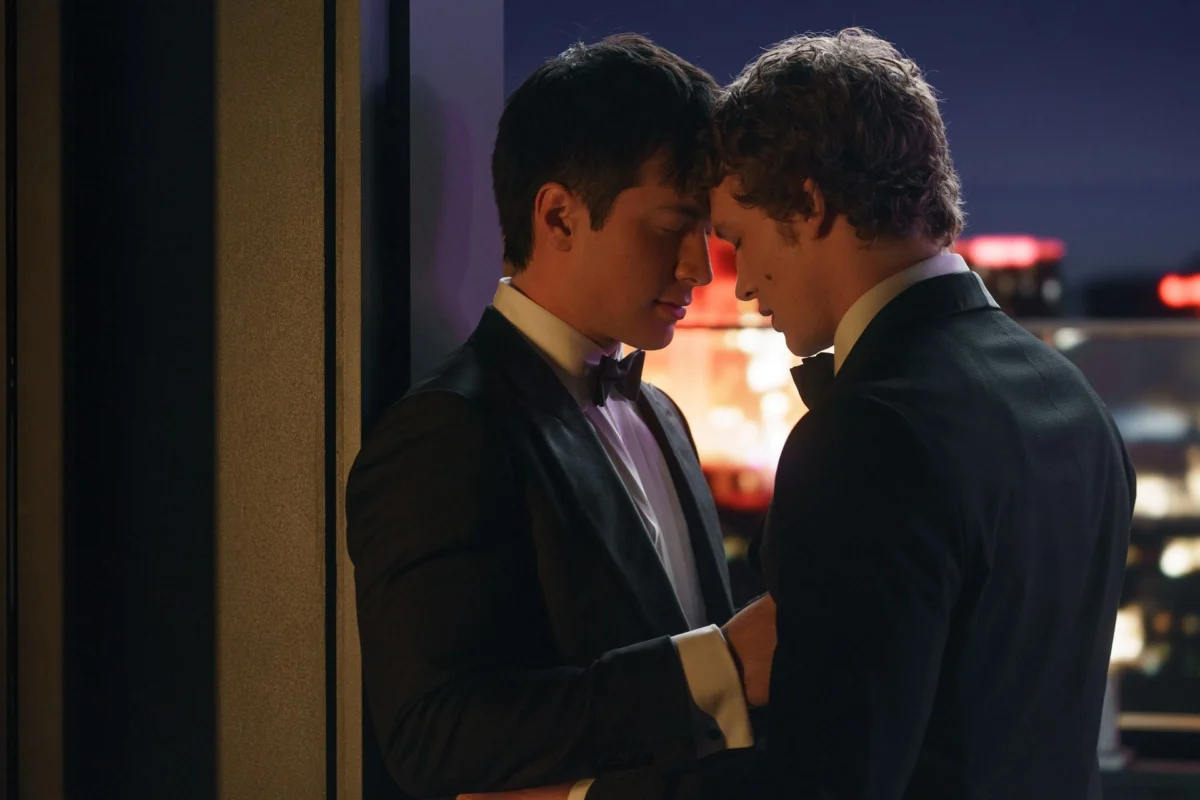
The current fascination with the ice rink can be traced back to the debut of Heated Rivalry on Crave and HBO Max last winter. Based on the popular novel by Canadian author Rachel Reid, the series follows the decade-long secret relationship between two professional hockey superstars: the stoic, disciplined American Shane Hollander (played by Hudson Williams) and the mercurial, provocative Russian Ilya Rozanov (played by Connor Storrie).
The series achieved critical and commercial acclaim not merely for its sports-centric setting, but for its nuanced exploration of a high-stakes queer relationship within the hyper-masculine, often heteronormative environment of professional sports. The chemistry between Williams and Storrie, combined with explicit depictions of intimacy and a tender portrayal of LGBTQ-specific emotional labor, garnered a massive following. Notably, the show’s popularity extended beyond LGBTQ audiences, finding a significant foothold among straight women—a demographic often associated with the fujoshi fandom, which centers on the consumption of male-male romantic narratives by female audiences.
The success of Heated Rivalry was immediate and measurable. In the weeks following its launch, reports indicated a surge in National Hockey League (NHL) ticket sales and social media engagement, a phenomenon dubbed "the Heated Rivalry effect." However, the industry’s response to this success suggests a strategic miscalculation: rather than investing in more diverse or queer-led sports narratives, studios have pivoted toward traditional, heterosexual adaptations of the same tropes.
A New Wave of Collegiate Hockey Romances
In the wake of Heated Rivalry, two major streaming platforms have fast-tracked adaptations of popular "hockey romance" novels that follow a more conventional romantic structure.
Prime Video recently debuted Off Campus, an adaptation of the bestselling series by Elle Kennedy. The first installment focuses on Hannah Wells, a reserved and talented musician, and Garrett Graham, the quintessential college hockey captain. The plot utilizes the "fake dating" trope, where the two protagonists enter a mutually beneficial arrangement: Hannah helps Garrett improve his grades in a philosophy class, while Garrett helps Hannah gain the attention of another romantic interest by pretending to be her boyfriend.
Following closely behind is Netflix’s upcoming series Icebreaker, based on the young adult novel by British author Hannah Grace. Announced this week, Icebreaker centers on Anastasia Allen, a competitive figure skater, and Nathan Hawkins, the captain of the university hockey team. When a logistical mishap forces both the figure skating and hockey teams to share a single rink, the initial friction between Anastasia and Nathan evolves into a romantic entanglement.
While Off Campus and Icebreaker share the "enemies-to-lovers" and "opposites attract" tropes that fueled Heated Rivalry, they diverge significantly in their demographic focus. Both upcoming series center on heterosexual couples, leading critics to argue that Hollywood is attempting to capitalize on the "hockey" element while stripping away the "queerness" that made the predecessor a cultural talking point.
Chronology of the Hockey Romance Trend
The rise of the hockey romance subgenre is not an isolated television event but the culmination of a decade-long shift in the publishing industry, specifically within digital and "BookTok" circles.
- 2010–2015: The Digital Boom: Platforms like Wattpad and Archive of Our Own (AO3) saw a massive influx of sports-themed fan fiction. Authors like Elle Kennedy began publishing original novels that utilized these tropes, finding a massive audience in the nascent "New Adult" category.
- 2019: The Publication of Heated Rivalry: Rachel Reid’s novel was released, quickly becoming a cornerstone of the M/M (male/male) romance genre due to its realistic portrayal of the NHL.
- 2021–2022: The BookTok Effect: The COVID-19 pandemic led to a surge in reading, with TikTok’s "BookTok" community propelling titles like Icebreaker and the Off Campus series to the top of the New York Times Bestseller list years after their initial release.
- Winter 2023: The Television Debut: Heated Rivalry premiered on HBO Max, proving that the niche audience for hockey romance could translate into mainstream streaming numbers.
- 2024–2025: The Studio Pivot: Following the data from Heated Rivalry, Prime Video and Netflix greenlit high-budget adaptations of heterosexual hockey romances, seeking to replicate the ratings without the perceived "risk" of queer-led narratives.
Data Analysis: Diversity as a Market Driver
The decision to favor heterosexual narratives over queer ones appears to contradict current market data regarding audience preferences. According to UCLA’s 2024 "Hollywood Diversity Report," which analyzes the performance of films and television shows across various demographics, audiences are increasingly gravitating toward stories that feature underrepresented communities.
The report found that shows featuring diverse casts and LGBTQ-themed narratives often achieve higher median ratings and generate significantly more social media discourse than their more traditional counterparts. "The evidence is clear that audiences today are hungry for both diverse stories and diverse storytellers," stated Ana-Christina Ramón and Michael Tran, coauthors of the report, in a statement provided to WIRED.
Furthermore, data from S&P Global Market Intelligence suggests that general interest in the NHL, while growing, still trails significantly behind the NFL, NBA, and MLB in the United States. Historically, hockey has struggled to capture the same level of national attention as other major sports. This suggests that the success of Heated Rivalry was likely driven by its narrative stakes and representation rather than a sudden, organic interest in the mechanics of professional hockey.
Matt Puretz, a senior researcher for UCLA’s Center for Storytellers and Scholars, noted that the "taboo" nature of the relationship in Heated Rivalry—set against the backdrop of a traditionally hyper-masculine and often homophobic sports culture—provided a level of tension that is absent in standard heterosexual romances. By moving toward conventional pairings, studios may be removing the very conflict that compelled viewers to watch in the first place.
Official Responses and Industry Implications
While studio executives at Netflix and Amazon have not commented directly on the comparison between their new projects and Heated Rivalry, their production choices reflect a broader industry trend known as "genre-mapping." This involves taking a successful niche product and broadening its appeal to reach the widest possible "four-quadrant" audience.
However, this approach risks alienating the core fanbase that popularized these stories in the first place. Fans of the Heated Rivalry series have been vocal on social media, expressing frustration that the "hockey romance" trend is being used to justify a return to heteronormative storytelling.
The implications for the streaming industry are twofold. First, there is the risk of market saturation. With multiple hockey-themed shows arriving in a short window, the novelty of the setting may quickly wear thin. Second, there is the issue of "straight-washing" a trend. If Off Campus and Icebreaker fail to achieve the same cultural impact as Heated Rivalry, it may signal to studios that tropes alone are not enough to sustain an audience; the specificities of identity and representation are often the true drivers of engagement.
The Broader Impact on Sports Media
The "hockey-fication" of streaming content also has potential long-term effects on the sports industry itself. The NHL has historically struggled with diversity and inclusion, and the surge of interest from female and LGBTQ audiences represents a major opportunity for the league to expand its fan base.
If streaming platforms continue to prioritize traditional narratives, they may miss the opportunity to foster a more inclusive sports culture. Conversely, the success of these shows—regardless of their romantic orientation—continues to prove that the "sports romance" genre is a viable and lucrative category for television, potentially opening the door for more diverse athletic stories in the future, ranging from women’s soccer to professional basketball.
As Off Campus continues its run and Icebreaker moves into production, the industry will be watching closely to see if the "ice" is truly what the audience wants, or if they are simply waiting for the next story that reflects the complexities of the modern world. For now, the disparity between what the data suggests and what the studios are producing remains a central point of contention in the evolution of digital entertainment.