


The American Cinematheque has officially launched the fifth and most ambitious iteration of its signature series, Bleak Week: Cinema of Despair, marking a significant transition from a localized Los Angeles event to a worldwide cinematic phenomenon. Beginning in June, the program will expand to 73 cities across the globe, involving nearly 100 theaters in a collective exploration of what organizers describe as the "cinema of despair." This expansion represents a pivotal moment for repertory programming, challenging the traditional summer blockbuster season with a curated selection of films that prioritize raw empathy, existential inquiry, and the often-unpleasant truths of the human condition.
Originally conceived in 2022 as a form of counter-programming to the standard high-octane summer releases, Bleak Week has evolved from a 33-film slate into a sophisticated, multi-venue festival that has garnered international attention. The 2026 season signifies the series’ most curatorially focused effort to date, inviting programmers from diverse geographic regions to interpret the theme of "bleakness" within their own cultural and social contexts. The festival’s growth highlights a burgeoning global appetite for communal cinematic experiences that transcend mere entertainment, offering instead a space for collective reflection on grief, labor, and history.
Historical Evolution and Curatorial Foundations
The origins of Bleak Week can be traced to the programming philosophy of Chris LeMaire, Director of Programming at the American Cinematheque, and Artistic Director Grant Moninger. Prior to the festival’s inception, LeMaire was noted for his dedication to challenging, durational cinema, having successfully organized retrospectives for Andrei Tarkovsky and enticing the acclaimed Filipino director Lav Diaz to make his first appearance in the United States. These efforts laid the groundwork for a series that would eventually embrace "heavy" or "depressing" films not as a gimmick, but as a vital component of humanistic art.
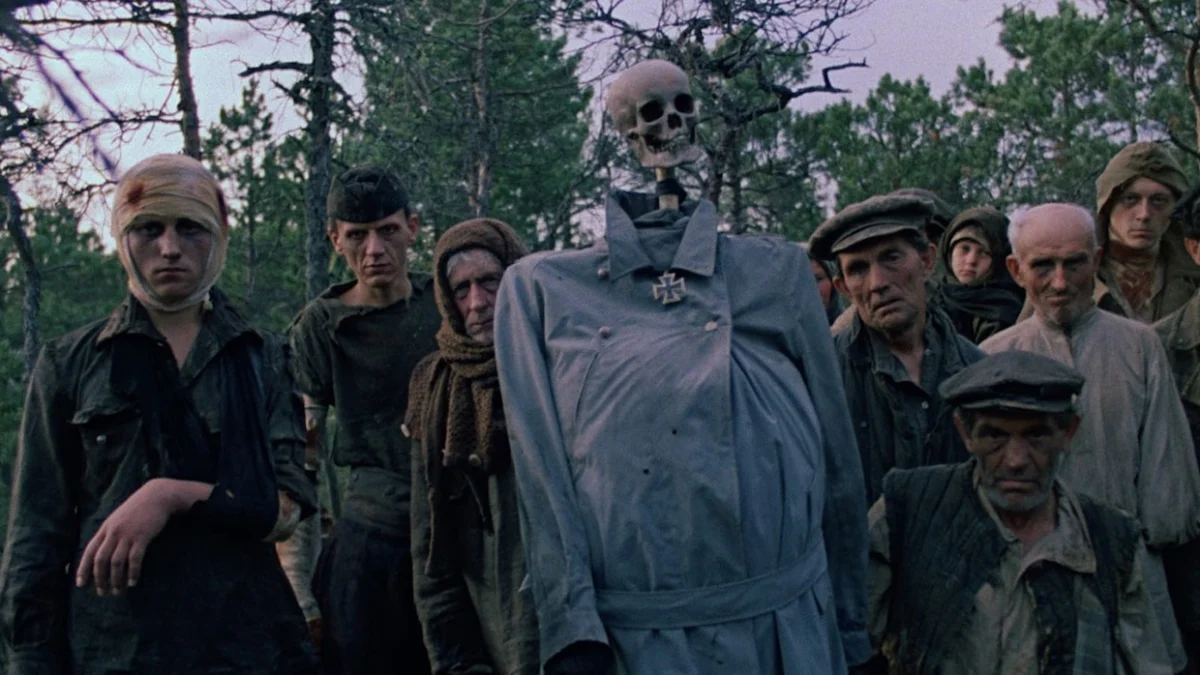
The inaugural 2022 season set a high bar for visceral, demanding cinema. The lineup included established masterpieces such as Pier Paolo Pasolini’s Salò, or the 120 Days of Sodom (1975), Elem Klimov’s harrowing World War II epic Come and See (1985), and Ingmar Bergman’s Winter Light (1963). By filling the schedules of all three of the Cinematheque’s Los Angeles-based venues—the Aero, the Egyptian, and the Los Feliz 3—the organizers forced a confrontation between the audience and the material. This "wall-to-wall despair" approach broke traditional programming rules, which typically favor a balanced variety of genres to ensure commercial viability.
As the series progressed, it began to incorporate a wider array of cinematic voices. In 2024, the program expanded its definition of bleakness to include genre-bending works like Richard Kelly’s Southland Tales (2006) and the devastating British nuclear war drama Threads (1984). By 2025, the festival had achieved a new level of prestige when legendary Hungarian filmmaker Béla Tarr, who had previously expressed a reluctance to return to the United States, agreed to attend the festival in person. This endorsement by one of cinema’s most significant figures transformed Bleak Week from a niche repertory series into a major fixture on the international film calendar.
The 2026 Global Expansion and Collaborative Model
The move to 73 cities in 2026 is the result of a deliberate, collaborative strategy designed to empower local programmers. Unlike traditional franchise festivals that impose a rigid lineup, the American Cinematheque has adopted an open-source approach. Participating theaters, such as the Oriental Theater in Milwaukee, are provided with resources—including extensive spreadsheets of past programs and upcoming restorations—but are encouraged to tailor their selections to their local audiences.
Kerstin Larson, Programming Director at the Oriental Theater, noted that her team chose to focus on the theme of labor and the bleakness of the modern workforce. This includes the screening of the 4K restoration of American Job (1996), a film with deep local resonance in Milwaukee due to its connection to the well-regarded American Movie (1999). This localized flexibility allows the "Bleak Week" brand to remain relevant across different demographics, proving that despair is a universal language that manifests in unique ways depending on regional history and economic conditions.

The geographic reach of the 2026 edition now spans major hubs including New York City, Chicago, Dallas, and London. This expansion is supported by key partnerships with major distributors like Janus Films and the American Genre Film Archive (AGFA). These organizations have begun strategically timing their film restorations to coincide with Bleak Week, ensuring that the festival serves as a premier platform for the world premieres of high-quality digital and celluloid prints.
Technical Milestones and Premieres
A cornerstone of the 2026 lineup is the inclusion of several high-profile restorations. Notably, the festival will host the world premiere of the Coen Brothers’ The Man Who Wasn’t There (2001) in a newly restored format. Additionally, Daniel Petrie’s 1974 cult classic Buster and Billie, which has long been difficult for audiences to access, will receive a spotlight screening. These technical achievements highlight the festival’s role not just in exhibition, but in the preservation of cinematic history.
The presence of modern auteurs such as Ari Aster, who participated in a sold-out retrospective of his work, further bridges the gap between classic repertory cinema and contemporary filmmaking. Organizers have noted that the inclusion of "star power"—such as French icon Isabelle Huppert—acts as a gateway for audiences. Once viewers are drawn in by a recognizable name, they are more likely to take a risk on rarer, more obscure titles within the program, such as the works of independent maverick Jon Jost.
Market Trends: Bleakness vs. Hopecore
The rise of Bleak Week occurs amidst a broader cultural debate regarding the tone of modern storytelling. Recent industry analysis has identified a trend known as "Hopecore"—a movement toward uncynical, optimistic narratives that celebrate human collaboration and resilience. Films like the sci-fi blockbuster Project Hail Mary are often cited as the vanguard of this shift, moving away from the "gritty and grounded" aesthetic that dominated Hollywood in the wake of Christopher Nolan’s Dark Knight trilogy.
However, the success of Bleak Week suggests that the "Hopecore" narrative may be an oversimplification of audience desires. The rapid sell-out of screenings for films that explore the darkest facets of existence indicates a powerful counter-trend. For many viewers, "bleak" cinema is not viewed as a source of misery, but as a source of profound honesty. Artistic Director Grant Moninger argues that there is an inherent hopefulness in the act of making and sharing art about the human condition, regardless of how difficult the subject matter may be. He suggests that the communal experience of sorrow and grief in a theater provides a level of catharsis that home streaming services cannot replicate.
Societal Implications and the Future of Repertory Cinema
The institutional success of Bleak Week points toward a robust future for repertory cinema. In an era where digital algorithms often prioritize "comfort viewing" and familiar intellectual properties, Bleak Week serves as a reminder of the importance of the "uncomfortable" in art. The festival’s refusal to include non-fiction or documentary filmmaking is a notable strategic choice; the organizers maintain that the series is a celebration of the artifice of film—how humans use narrative to process and transcend their own suffering.
As the series concludes its 2026 run, the implications for the global film industry are clear. There is a sustainable, international market for difficult, high-concept repertory programming. By moving beyond the borders of Los Angeles and fostering a global network of independent theaters, the American Cinematheque has created a new blueprint for how niche film festivals can scale without losing their curatorial integrity.
The "Cinema of Despair" has, paradoxically, become one of the most vibrant and unifying forces in contemporary film culture. As Moninger observed, bleakness is a constant global reality, and by acknowledging it through art, cinema provides a bridge between cultures. Whether it is a Father’s Day screening of Béla Tarr’s The Turin Horse (2011) in Milwaukee or a Tarkovsky retrospective in London, the 2026 expansion of Bleak Week confirms that audiences are more than willing to "come and see" the world as it truly is, provided they can do so together in the dark.