
Versant Media Group (NASDAQ: VSNT) delivered its first quarterly earnings report as an independent public company on Thursday, providing investors with a detailed look at the financial health of the cable network portfolio recently spun off from Comcast’s NBCUniversal. The report, which covers the period ending March 31, 2026, highlighted a complex transition period characterized by the ongoing decline of the traditional cable bundle, offset by aggressive growth in content licensing and digital platform revenue. Despite the structural challenges facing the linear television industry, Versant beat Wall Street’s revenue expectations, sending its stock price up nearly 10% by the close of Thursday’s trading session.
The results represent a critical milestone for the newly formed entity, which operates a suite of high-profile cable assets including CNBC, MSNBC (now branded as MS NOW), the Golf Channel, USA Network, E!, Syfy, and Oxygen. As a standalone company, Versant is tasked with managing the "cash cow" nature of legacy television while pivoting toward a digital-first future. CEO Mark Lazarus and CFO Anand Kini used the earnings call to articulate a strategy of revenue diversification, aiming to reduce the company’s heavy reliance on the shrinking pay TV ecosystem.
Financial Performance Overview and Revenue Mix
For the first quarter of 2026, Versant reported overall revenue of $1.69 billion, a slight 1% decrease compared to the same period in the prior year when the assets were still under the Comcast umbrella. However, this figure surpassed the $1.62 billion consensus estimate among analysts polled by LSEG. The revenue beat was primarily driven by a massive surge in content licensing and steady growth in the company’s "Platforms" division, which includes transactional and subscription-based digital services.
Net income attributable to Versant was $286 million, or $1.99 per share, representing a 22% decline year-over-year. Management attributed this drop to several factors associated with the spinoff, including higher interest expenses on debt, the costs of establishing independent corporate infrastructure, and general public company compliance costs. These headwinds were partially mitigated by a lower tax rate during the quarter.
A key metric for the company is Adjusted EBITDA (earnings before interest, taxes, depreciation, and amortization), which fell 7% to $704 million. However, when viewed through the lens of "standalone adjusted EBITDA"—a metric designed to compare current performance against the pre-spin portfolio on a like-for-like basis—the figure actually rose by approximately 5%. This improvement was credited to disciplined cost-cutting measures, including lower programming expenses for entertainment content and reduced selling, general, and administrative (SG&A) costs.
The Dual Reality of Linear Television
The earnings report underscored the "two-speed" reality of Versant’s current business model. Linear distribution revenue, which constitutes the bulk of the company’s income, fell 7% to $1.01 billion. This decline is a direct result of the industry-wide trend of cord-cutting, as consumers continue to migrate from traditional cable packages to streaming services. While Versant was able to negotiate higher carriage rates with some distributors, these increases were not enough to fully offset the loss of subscribers.
Advertising revenue also saw a decline, dropping 5% to $368 million. While a decrease is rarely celebrated, executives pointed out that this represents a significant stabilization compared to the first quarter of 2025, when advertising revenue plummeted by 12%. The relative improvement suggests that Versant’s focus on live news and sports is providing a more resilient floor for ad sales than general entertainment networks are experiencing elsewhere in the industry.
Digital Growth and the Kardashian Factor
The standout performer in the Q1 report was the content licensing segment. Revenue in this category skyrocketed by 113.5% to $121 million. The primary driver for this triple-digit growth was a major licensing agreement with Disney’s Hulu for the rights to the "Keeping Up With the Kardashians" library and related spin-off content. This deal highlights Versant’s strategy of monetizing its deep library of intellectual property by selling to third-party platforms, rather than keeping all content exclusive to its own ecosystem.
Furthermore, Versant’s "Platforms" business—which encompasses GolfNow, Fandango, and several nascent direct-to-consumer (DTC) units—saw a 9.5% increase in revenue to $192 million. This growth was described by CFO Anand Kini as "purely organic," reflecting increased consumer engagement with transactional digital services. Fandango, in particular, benefited from a robust domestic box office during the first quarter, while GolfNow continued to capitalize on the sustained popularity of recreational golf.
CEO Mark Lazarus emphasized that the company’s long-term goal is to rebalance its revenue mix. Currently, more than 80% of Versant’s income is derived from the legacy pay TV business. The executive team has set an ambitious target to shift this balance so that 50% of revenue comes from digital, platform, and transactional sources. "We are looking to grow revenue diversification within each of our verticals," Lazarus told investors, noting that the company is gauging success not just by subscriber counts, but by total revenue generated across all forms of distribution.

Strategic Context: The Road to Independence
The Q1 2026 report is the culmination of a process that began in November 2024, when Comcast Corporation first announced its intention to spin off its cable networks. The move was seen as a strategic pivot for Comcast, allowing the parent company to focus on its "Growth Six" businesses: broadband, wireless, the Peacock streaming service, theme parks, and film/television studios.
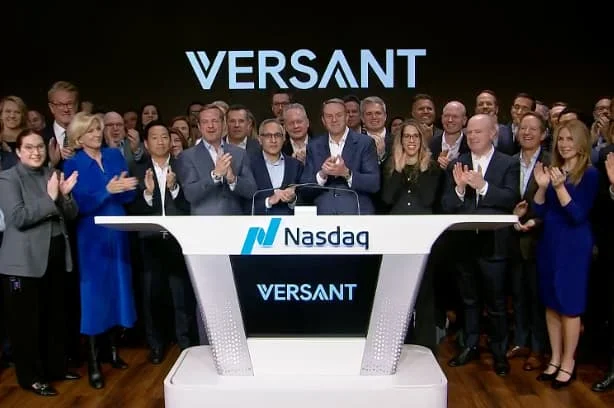
By spinning off these cable assets into Versant Media Group, Comcast effectively insulated its core growth engines from the secular decline of the linear television market. For Versant, the spinoff provided a dedicated management team and a clean balance sheet, allowing it to pursue its own mergers, acquisitions, and content strategies without competing for capital within the larger Comcast hierarchy. Versant officially began trading on the Nasdaq in early 2026, and this first earnings report serves as a "proof of concept" for the standalone entity.
Sports, News, and the M&A Outlook
Versant’s leadership continues to lean into the company’s perceived strengths: live sports and breaking news. On the earnings call, management highlighted viewership gains for CNBC and MS NOW, as well as the enduring value of the Golf Channel. These assets are viewed as "sticky" content that remains essential for the remaining cable subscriber base and attractive to advertisers seeking live audiences.
Beyond organic growth, Versant is actively exploring inorganic opportunities. Mark Lazarus confirmed that the company is "looking in a variety of areas" regarding potential mergers and acquisitions. In an era of rapid media consolidation—highlighted by recent shifts at Warner Bros. Discovery and Paramount Global—Versant is positioned as a potential consolidator. Its light debt load relative to its peers gives it the flexibility to acquire additional niche networks or digital platforms that align with its existing verticals.
However, CFO Anand Kini injected a note of caution, stating that while M&A is part of the strategy, the company maintains a "very high threshold" for deals. The focus remains on maintaining a healthy balance sheet and ensuring that any acquisition provides a clear path to the 50% digital revenue goal.
Shareholder Returns and Market Reaction
In a move designed to appeal to value-oriented investors, Versant reaffirmed its commitment to returning capital to shareholders. The company declared a quarterly cash dividend of 37.5 cents per share, payable on July 22. This marks the second consecutive quarter the dividend has been set at this level, establishing a predictable yield for investors.
Additionally, Versant announced a $100 million accelerated share repurchase agreement, set to begin immediately. This follows the repurchase of nearly 2.7 million shares during the first quarter. As of March 31, the company still has approximately $900 million remaining in its share repurchase authorization. These actions suggest that management believes the stock is currently undervalued and that the company’s cash flow is sufficient to support both operations and shareholder distributions.
The market’s reaction to the report was overwhelmingly positive. The nearly 10% jump in stock price reflects investor relief that the company was able to manage the costs of the spinoff while exceeding revenue targets. Analysts noted that the "standalone adjusted EBITDA" growth was a particularly encouraging sign, suggesting that the company is successfully trimming the fat from its legacy operations.
Industry Implications and Future Outlook
Versant’s performance is being closely watched by the broader media industry as a test case for the viability of standalone cable portfolios. If Versant can successfully navigate the transition from 80% linear reliance to a 50/50 split, it may provide a blueprint for other media conglomerates looking to offload or restructure their own declining cable assets.
The road ahead remains challenging. The 7% decline in linear distribution revenue is a reminder that the "cord-cutting" headwind is not slowing down. Versant must continue to find high-value licensing deals like the Kardashian/Hulu agreement to plug the holes left by shrinking affiliate fees. Furthermore, the company faces stiff competition in the DTC space, where it must balance the need for scale with the high costs of content production and marketing.
Nevertheless, with a successful first quarter in the books, Versant Media Group has demonstrated that it is more than just a collection of "legacy assets." By leveraging its strength in news and sports, aggressively pursuing licensing revenue, and maintaining a disciplined approach to capital allocation, the company has positioned itself as a resilient player in a volatile media landscape. As the company moves into the second half of 2026, the focus will remain on whether it can maintain this momentum and continue to prove the skeptics of the cable industry wrong.