
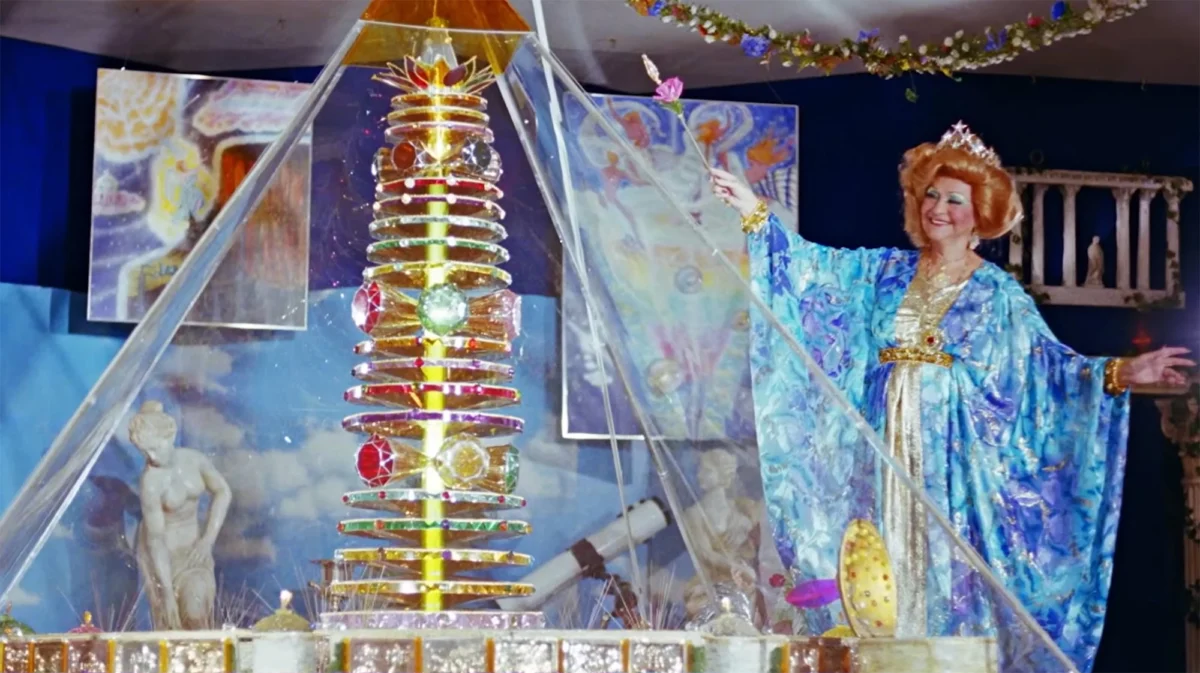
A captivating and long-anticipated documentary, Welcome Space Brothers, is set to make its public debut, offering audiences an unprecedented look into the extraordinary world of the Unarius Academy of Science. Directed by American indie filmmaker Jodi Wille, this feature-length film delves into the fascinating and often bewildering history of the Unarius Academy, an extraterrestrial-channeling spiritual school and self-healing community that became a prolific filmmaking collective and public access television phenomenon under the guidance of its charismatic leader, Ruth E. Norman, famously known as "Archangel Uriel." The film, which first premiered to critical acclaim at Beyond Fest in 2023, is strategically launching its theatrical roadshow across America this summer, commencing with a special event on June 13th, 2026, at the Alex Theater in Glendale, California. This release coincides with the theatrical debut of Steven Spielberg’s highly anticipated UFO-themed feature, Disclosure Day, creating a timely confluence of narratives exploring humanity’s enduring fascination with the unknown and potential extraterrestrial contact.
The documentary is co-presented by a consortium of notable entities including XTR, Diorama, SpectreVision, and A Museum & Crane, signaling significant industry backing for a project exploring such a unique subject matter. Executive producers for Welcome Space Brothers include acclaimed figures such as Elijah Wood, the directorial duo Lord & Miller, and the renowned musician Moby, whose involvement extends to performing live onstage with the Unarius choir at the Glendale premiere. This assembly of talent underscores the film’s potential to transcend niche interest and appeal to a broader audience intrigued by unconventional spiritual movements, the history of alternative media, and the cultural impact of UFO phenomena.
The Genesis of Unarius: A Visionary Foundation in Southern California
The Unarius Academy of Science was founded in the mid-1950s by Polish-born scientist Ernest L. Norman and his spiritual partner, Ruth E. Norman, in Southern California. Initially established in Glendale before relocating to El Cajon in the 1970s, Unarius presented itself as an educational institution dedicated to the "science of life" and interstellar communication. At its core, Unarius offered a unique cosmology that blended elements of spiritualism, parapsychology, and advanced science fiction. The Normans, particularly Ruth, claimed to channel messages from highly evolved beings from other planets, often referred to as "Space Brothers." These messages, they asserted, contained ancient wisdom and advanced scientific knowledge necessary for humanity’s spiritual evolution and eventual integration into an intergalactic federation.
Ernest L. Norman, who passed away in 1971, laid much of the intellectual groundwork for Unarius’s teachings, emphasizing the concept of "unarius" itself – an acronym for "Universal Articulate Interdimensional Understanding of Science." Following his death, Ruth E. Norman ascended to sole leadership, transforming the organization significantly. It was under her flamboyant and visionary direction that Unarius truly blossomed into the vibrant, visually distinctive movement captured in Wille’s documentary. She adopted the moniker "Archangel Uriel," positioning herself as a divine conduit and an emissary of the Space Brothers, entrusted with guiding humanity toward an enlightened future. Her persona became central to Unarius’s identity: a woman of advanced age, often adorned in elaborate, sparkling costumes, radiating an undeniable energy that captivated her followers. The documentary promises to explore this captivating personality, with one interviewee noting, "She radiates an energy that you have to be sensitive to to read it. And she read me." This sentiment highlights the profound personal connection and transformative experience many members reported within the Unarius community.
The Philosophy of Interdimensional Understanding and Self-Healing

Unarius’s teachings revolved around several core tenets, including reincarnation, karma, and the concept of "past-life therapy." Members were encouraged to delve into their past lives, believing that understanding previous incarnations – often on other planets or in ancient civilizations – could help them resolve current psychological and physical ailments. This process of self-healing was not merely therapeutic but also a pathway to higher consciousness and preparedness for the eventual arrival of the Space Brothers. The Academy taught that these benevolent extraterrestrials would one day descend to Earth, not to conquer, but to usher humanity into a new era of peace, enlightenment, and intergalactic cooperation. The anticipation of this "landing day" was a significant motivator for many Unarius members, fostering a sense of shared purpose and cosmic destiny.
The "Love is the greatest power in the universe" mantra, often repeated by Unarius, encapsulated their overarching message of universal harmony and positive transformation. While their methods and beliefs might appear unconventional to outsiders, the underlying principles were often rooted in a desire for personal growth, community, and a hopeful vision for humanity’s future. The documentary is expected to provide valuable insight into how these complex spiritual doctrines translated into the daily lives and creative endeavors of Unarius members.
From Spiritual School to Public Access Television Phenomenon: The 1970s and 80s Era
One of the most distinctive chapters in Unarius’s history was its transformation into a wildly prolific filmmaking collective and public access television phenomenon during the 1970s and 80s. Ruth E. Norman encouraged her followers to express their spiritual awakenings and past-life experiences through creative mediums, leading to the production of hundreds of homemade films and video programs. These productions, often characterized by their vibrant, psychedelic aesthetics, elaborate costumes designed by members, and earnest performances, became the cornerstone of Unarius’s outreach efforts.
The rise of public access television in the United States during this period provided an unprecedented platform for fringe groups and community organizations to broadcast their messages without the strictures of mainstream media. Unarius seized this opportunity with remarkable enthusiasm, creating a vast archive of content that aired regularly across Southern California and beyond. Their programs featured dramatizations of past-life regressions, lectures by Archangel Uriel, musical performances by the Unarius choir, and often surreal, visually arresting narratives depicting interstellar travel and interactions with extraterrestrial beings. These films were not merely entertainment; they were instructional tools, spiritual exercises, and a means for members to actively participate in the propagation of Unarius’s message. The act of filmmaking itself fostered a powerful sense of community and purpose, allowing members to collectively manifest their shared cosmic vision. The documentary promises to heavily feature this rich archival footage, offering a visually stunning and often surreal journey into Unarius’s unique media legacy.
Jodi Wille’s Vision: Chronicling American Alternative Spiritualities
Director Jodi Wille is no stranger to chronicling unique American spiritual movements. Her previous acclaimed work, The Source Family (2012), explored a utopian commune and vegetarian restaurant in 1970s Hollywood, demonstrating her nuanced approach to complex countercultural histories. With Welcome Space Brothers, Wille once again brings her distinctive lens to a subject that demands both wide-eyed fascination and careful contextualization. Her interest lies in understanding the human impulse towards collective belief, the formation of alternative communities, and the often-unseen creative expressions that emerge from such movements.

The production team behind Welcome Space Brothers further solidifies its journalistic and artistic integrity. Caryn Capotosto, known for producing critically acclaimed documentaries like Won’t You Be My Neighbor? (2018) and Little Richard: I Am Everything (2023), brings a wealth of experience in crafting compelling non-fiction narratives. The involvement of executive producers Elijah Wood and Lord & Miller (Phil Lord and Christopher Miller), known for their genre-bending creative endeavors, suggests an appreciation for the film’s unique narrative and visual style. Moby’s participation, both as an executive producer and a live performer, further highlights the intersection of music, spirituality, and artistic expression that defines the Unarius story.
The documentary’s long journey from its Beyond Fest 2023 premiere to its wider public release in 2026 underscores the meticulous effort involved in bringing such a complex story to fruition. Festival programmers and early viewers lauded the film for its respectful yet unflinching portrayal of Unarius, balancing the inherent "bonkers" quality of the subject with a genuine exploration of its members’ sincerity and spiritual quest.
Strategic Release and Modern Relevance: The UFO Discourse
The timing of Welcome Space Brothers‘ public release is particularly noteworthy, strategically aligning with a heightened public and governmental interest in unidentified aerial phenomena (UAP), commonly known as UFOs. Steven Spielberg’s new sci-fi thriller, Disclosure Day, also premiering this weekend, speaks to a broader cultural fascination with the idea of extraterrestrial contact and government transparency. This parallel release creates a unique cultural moment where a fictional narrative about UFO disclosure runs alongside a real-life historical account of a community built around the belief in benevolent Space Brothers.
In recent years, government reports, declassified documents, and testimonies from former military personnel have brought the topic of UAPs from the fringes into mainstream discussion, prompting serious inquiry from institutions previously dismissive of such phenomena. This renewed "disclosure" narrative, whether fictional or factual, provides a fertile ground for the Welcome Space Brothers documentary to resonate with audiences grappling with questions of belief, scientific evidence, and the potential for life beyond Earth. The film offers a historical perspective on how some individuals and communities have chosen to interpret and engage with the idea of extraterrestrial intelligence, often long before mainstream acceptance or official acknowledgment.
Moby’s involvement in the theatrical launch, including his performance with the Unarius choir, adds another layer of contemporary relevance. Moby has often spoken about his spiritual journey and interest in consciousness, making him a fitting ambassador for a film that explores alternative belief systems. His presence is likely to attract a wider audience, bridging the gap between niche documentary viewers and those interested in music and cultural commentary.
The Roadshow: A Communal Cinematic Experience

The decision to launch Welcome Space Brothers as a "theatrical roadshow across America this summer" is a deliberate choice aimed at creating a communal viewing experience that echoes the spirit of Unarius itself. The premiere at the Alex Theater in Glendale, a historic venue, with Moby and the Unarius choir performing live, is designed to be more than just a film screening; it’s an event. This approach allows for direct engagement with the audience, fostering discussion and sharing, much like Unarius’s public access programs sought to do.
Subsequent screenings across the country will likely follow a similar format, offering opportunities for post-screening discussions, Q&As with the filmmakers, and potentially interactions with former or current Unarius members. This immersive strategy is crucial for independent documentaries, allowing them to build momentum and reach audiences beyond major metropolitan centers. It also provides a platform to celebrate the unique artistic and spiritual legacy of Unarius, ensuring that their story is told with the respect and attention it deserves.
Broader Implications: Community, Belief, and the Human Search for Meaning
Beyond its immediate entertainment value, Welcome Space Brothers offers profound insights into several broader societal implications. It serves as a compelling case study in the sociology of religious and spiritual movements, particularly those that emerge from the fertile ground of California’s counterculture. The film explores the human need for community, purpose, and belief in something greater than oneself, even when those beliefs challenge conventional understanding. Unarius, while often characterized as a "UFO cult" by outsiders, fostered a strong sense of belonging and offered a positive, transformative framework for its members’ lives. The documentary is poised to explore the nuanced distinction between genuinely harmful cults and unconventional spiritual communities that provide genuine solace and meaning.
Furthermore, the film contributes to the history of media and communication, showcasing how fringe groups leveraged emerging technologies like public access television to disseminate their messages and build their communities. Unarius’s extensive archive of self-produced media is a testament to their dedication and an invaluable historical record of a unique artistic and spiritual endeavor.
Ultimately, Welcome Space Brothers invites viewers to ponder fundamental questions: What drives people to believe in the extraordinary? How do communities form around shared spiritual visions? And what role do creativity and media play in shaping and propagating these beliefs? The film does not seek to validate or debunk Unarius’s claims but rather to present its story with objective fascination, allowing the audience to draw their own conclusions about this truly singular chapter in American spiritual and media history. As the film prepares to land in theaters, it offers a vibrant, thought-provoking journey into the heart of an organization that, for decades, genuinely believed it was preparing for the arrival of its celestial saviors.