
A compelling new official trailer for Drifter, the highly anticipated drift racing film directed by and starring actor Sung Kang, was recently unveiled by IGN, providing audiences with an enriched perspective on the project’s thematic depth and adrenaline-fueled sequences. While a definitive release date remains unconfirmed, industry observers and the film’s creators anticipate a premiere by the close of 2026. Kang, globally recognized for his iconic portrayal of Han Lue in the sprawling Fast & Furious cinematic universe—a character he first introduced in Justin Lin’s 2002 independent drama Better Luck Tomorrow before his franchise debut in 2006’s The Fast and the Furious: Tokyo Drift—now takes the helm of his own narrative, aiming to deliver a passionate homage to the automotive community.
The Vision Behind "Drifter": A Love Letter to Car Culture
Sung Kang has openly articulated his primary ambition for Drifter: to craft a cinematic "love letter" to the often-misunderstood and sometimes-maligned car community. His stated belief, that "traditionally, films have not respected the car community in the way I see [it]," underscores a profound desire to rectify perceived misrepresentations and provide an authentic portrayal of the passion, skill, and camaraderie inherent in car culture, particularly within the niche of competitive drift racing. This sentiment resonates deeply with enthusiasts who have often felt their subculture reduced to superficial spectacle or villainized in mainstream media.
Kang’s commitment to authenticity is not merely rhetorical; it stems from his personal immersion in the automotive world, an affinity that has long been evident through his public persona and various projects. His connection to Fast & Furious cemented his status as a beloved figure within this community, and Drifter appears to be a natural extension of that relationship, allowing him to explore the nuances of car culture from a more intimate, creator-driven perspective. The film is poised to delve beyond the superficial thrill of speed and explore the intricate mechanics, dedicated craftsmanship, and profound personal connections that define the drifting scene. This includes showcasing the rigorous training, the meticulous vehicle modifications, and the unique bond between driver and machine, as well as the intricate relationships forged within the racing crews.
A Deep Dive into the Narrative: Trust, Purpose, and Redemption
At the core of Drifter lies the journey of Tree, a solitary janitor portrayed by Sung Kang himself. Tree possesses an innate, untapped talent for drift racing, a skill that has long remained dormant amidst a life marked by anonymity and a haunting past. The film’s tagline, "It’s not about skill… it’s about trust," succinctly encapsulates a central theme: while raw talent might open doors, true success and personal fulfillment in the high-stakes world of competitive drifting—and life itself—are ultimately predicated on forging genuine connections and learning to rely on others.

Tree’s narrative arc begins in a forgotten desert town, a landscape often symbolic of isolation and faded dreams. His chance encounter with the competitive drift racing circuit acts as a catalyst, pulling him from his mundane existence into a vibrant, high-octane world. This new environment offers him not only an arena to test his prodigious driving abilities but also, crucially, a path towards discovering purpose and belonging. The trailer hints at the profound transformation Tree undergoes, moving from a lone wolf haunted by personal tragedy to an individual who must confront his reluctance to connect. Under the tutelage of a hardened mentor, Tree is compelled to shed his self-imposed isolation and embrace the concept of a "found family" within the racing community. This emotional journey is portrayed as being as perilous and challenging as the races themselves, demanding that Tree transform his "untamed, lonely art" into a "dangerous dance of partnership." His struggle to trust, to cede control, and to collaborate becomes the ultimate race, with his past threatening to consume him if he fails to integrate into this newfound community. The film promises to be a character-driven drama interwoven with spectacular racing sequences, exploring themes of healing, community, and the search for identity in an unlikely setting.
Sung Kang’s Journey to the Director’s Chair: From Icon to Auteur
Sung Kang’s directorial endeavor with Drifter marks a significant evolution in his career, transitioning from a celebrated actor to a filmmaker with a distinct vision. Kang’s journey in Hollywood began with a series of supporting roles, but it was his collaboration with director Justin Lin that proved to be career-defining. His portrayal of Han Lue in Better Luck Tomorrow introduced audiences to a character of quiet intensity and moral ambiguity, a performance that captivated Lin and led to Han’s resurrection and integration into the Fast & Furious franchise. Han quickly became a fan favorite, known for his cool demeanor, philosophical outlook, and unparalleled driving skills, particularly his mastery of drifting. This role not only solidified Kang’s international stardom but also cemented his association with car culture.
Beyond the Fast & Furious saga, Kang has maintained a diverse acting portfolio, participating in television series like Power and films such as Bullet to the Head. However, his ambition to direct has been a long-standing aspiration. Drifter is not his first foray into feature film direction; he previously helmed the horror-comedy Shaky Shivers (2022), demonstrating his willingness to explore different genres and hone his craft behind the camera. His experience on numerous large-scale productions as an actor has undoubtedly provided him with invaluable insights into the filmmaking process, from conceptualization to execution. Drifter represents a more personal project, leveraging his deep understanding of the subject matter and his connection with the automotive community. His transition to directing is indicative of a broader trend in Hollywood where actors, having gained extensive on-set experience, seek to tell stories from their unique perspectives, often bringing a distinct authenticity to projects close to their hearts. This dual role as director and lead actor in Drifter allows him unparalleled creative control, ensuring that his vision for an authentic car culture film is fully realized.
The Art and Sport of Drift Racing: A Global Phenomenon
Drift racing, the central spectacle of Drifter, is a motorsport characterized by drivers intentionally oversteering, causing loss of traction in the rear or all tires, while maintaining control and driving the car through the entirety of a corner. The sport originated in Japan in the 1970s, evolving from illegal street racing into a highly technical and visually captivating professional discipline. The legendary street racer Kunimitsu Takahashi is often credited as the father of modern drifting, inspiring a generation of drivers with his innovative techniques. Keiichi Tsuchiya, known as the "Drift King," further popularized the sport, demonstrating its artistic and competitive potential through videos and professional competitions.
From its humble beginnings on mountain passes and winding urban roads, drifting has exploded into a global phenomenon. Major professional series like Formula Drift in North America, D1 Grand Prix in Japan, and King of Europe Drift Series draw massive crowds and feature highly skilled drivers pushing purpose-built machines to their limits. Unlike traditional circuit racing, where speed and lap times are paramount, drifting is judged on several criteria: speed and angle of the drift, line (the ideal path through a corner), and style (the visual appeal and fluidity of the driver’s technique). This emphasis on artistic expression and precise control, rather than just raw speed, sets drifting apart and contributes to its unique appeal. The cars themselves are often heavily modified, featuring powerful engines, specialized suspension setups, and reinforced chassis, all meticulously tuned to achieve the perfect balance of power and maneuverability required for sustained drifts. The sound of high-revving engines, the smell of burning rubber, and the sight of cars sliding inches from each other create an electrifying atmosphere that is deeply immersive for spectators. Drifter aims to capture this visceral experience while also exploring the subculture’s underlying values of dedication, craftsmanship, and community, moving beyond the superficial excitement often depicted in other films.

Unpacking the New Trailer: A Glimpse into High-Stakes Emotion
The recently released official promo trailer for Drifter, originating from IGN’s YouTube channel, offers a significant expansion upon the initial teaser, providing a more comprehensive look at the film’s narrative and visual ambition. While the first teaser focused primarily on establishing the high-octane action and the aesthetic of drift racing, this new trailer delves deeper into the emotional core of Tree’s journey.
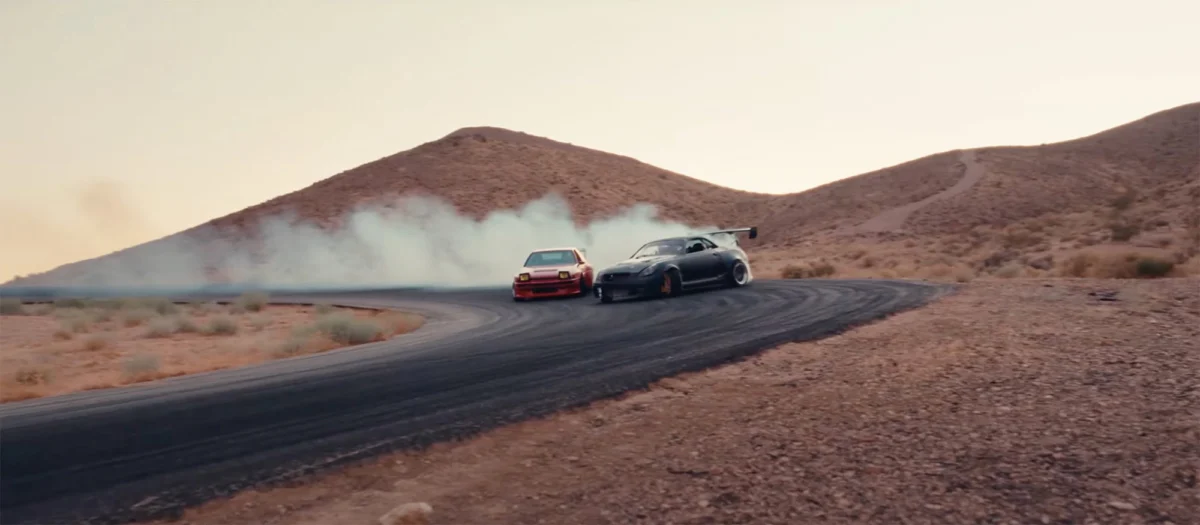
Visually, the trailer maintains a sleek, polished aesthetic, showcasing dynamic camera work that puts viewers directly in the driver’s seat, experiencing the intense G-forces and precision maneuvers of competitive drifting. Shots of cars sliding with plumes of tire smoke, engines roaring, and headlights cutting through the night are interspersed with more intimate, character-focused moments. The dialogue, particularly the poignant line, "It’s not about skill… it’s about trust," is prominently featured, underscoring the film’s thematic depth beyond mere automotive spectacle. We see glimpses of Tree’s internal struggle, moments of quiet reflection contrasting sharply with the adrenaline of the track. The trailer hints at the mentorship dynamic, the formation of Tree’s racing crew, and the challenges they face together, both on and off the asphalt. The editing rhythmically cuts between intense racing sequences and more dramatic, character-driven scenes, suggesting a careful balance between action and emotion. The visual palette seems to oscillate between the stark, sun-drenched desert landscapes and the neon-lit, energetic world of night racing, creating a compelling backdrop for Tree’s transformation. The new trailer effectively builds anticipation by promising not just a thrill ride, but a resonant story of self-discovery and community within a unique cultural setting.
Assembling the Team: Cast and Production Insights
Beyond Sung Kang’s dual role, Drifter features a supporting cast that includes Tamara Braun, Gregory Cruz, Emelia Hartford, Shane Johnson, James Pumphrey, and Michael Nehring. While specific character details for each remain under wraps, their involvement suggests a diverse ensemble designed to populate Tree’s world and contribute to the film’s ensemble dynamics. Emelia Hartford, a notable figure in the automotive influencer space and a competitive racer herself, brings an additional layer of authenticity and fan appeal to the project, bridging the gap between mainstream entertainment and genuine car culture.
Behind the scenes, the screenplay for Drifter is credited to Ted Chung, Sung Kang, and Aaron Strongoni, indicating a collaborative writing process that likely infused personal experiences and deep knowledge of the subject matter into the script. The film is produced by Ted Chung, Brian Yang, and Sung Kang, signaling a hands-on approach from its creative leads. As an independent production, Drifter likely navigated the typical challenges associated with indie filmmaking—resourcefulness, meticulous planning, and leveraging personal connections within the industry and the automotive community. The absence of a premiere at major film festivals or other public showcases thus far is not uncommon for independent features, especially those targeting a niche audience that overlaps with broader appeal. The production’s commitment to capturing the essence of drifting, both technically and culturally, suggests a meticulous approach to cinematography, sound design, and stunt coordination, aiming for a high level of fidelity to the sport.
Release Outlook and Industry Reception: Paving the Road Ahead
The anticipated release of Drifter by the end of 2026 places it in a competitive cinematic landscape, yet its unique premise and Sung Kang’s involvement give it a distinct edge. As an independent film, its distribution strategy will be crucial. While blockbuster tentpoles dominate multiplexes, there is a growing appetite for authentic, character-driven stories, especially those that tap into passionate subcultures. The film could potentially see a limited theatrical release followed by a strong push on streaming platforms, a common model for indie features looking to maximize reach. Given Kang’s global fanbase from the Fast & Furious franchise, Drifter is likely to generate significant interest, particularly among those who appreciate genuine automotive storytelling.

Industry observers will be keen to see how Drifter performs, not just commercially, but also critically, especially concerning its stated goal of respecting the car community. A successful outing could pave the way for more nuanced portrayals of niche sports and subcultures in cinema. For Sung Kang, Drifter represents a pivotal moment in his career, solidifying his transition into a multifaceted filmmaker capable of both acting and directing. Its reception will undoubtedly influence his future directorial endeavors and his standing as a creative force in Hollywood. The film’s themes of community, trust, and overcoming past traumas also resonate broadly, suggesting that while it is a love letter to car culture, its emotional core has the potential to connect with a wider audience beyond dedicated racing enthusiasts. The question "Who’s ready?" posed by the original article encapsulates the palpable anticipation surrounding this unique project.
In conclusion, Drifter emerges as more than just another racing movie; it is positioned as a deeply personal and authentic exploration of a vibrant subculture, helmed by an actor uniquely positioned to bring its nuances to life. With its compelling narrative, promise of exhilarating action, and sincere commitment to respecting the car community, Sung Kang’s latest endeavor is poised to leave a significant mark on both cinematic storytelling and the world of automotive cinema. As the 2026 release window approaches, all eyes will be on this passionate tribute to the art of the drift.