

The Digital Landscape of June 25, 2009
To understand the scope of Batto’s project, one must recall the state of the internet in mid-2009. It was a period of transition; the "Web 2.0" era was in full bloom, but the algorithmic silos that define the current digital experience had not yet fully formed. When news broke that Michael Jackson had been rushed to the UCLA Medical Center, the surge in global traffic was unprecedented.
Google reported that the volume of searches for "Michael Jackson" was so immense that its automated systems initially flagged the activity as a distributed denial-of-service (DDoS) attack, assuming that a botnet was attempting to crash the engine. Twitter, then a nascent platform, saw its service struggle to stay online as users posted 5,000 tweets per minute—a record at the time. Meanwhile, Wikipedia editors engaged in a "frenzied" update cycle, with the entry for Jackson receiving over one million visitors in a single hour.
Batto’s film ignores the corporate data points in favor of the human ones. He focuses on the thousands of individual vlogs and amateur videos uploaded by people who felt compelled to document their immediate, unfiltered reactions. At the time, the front-facing camera was a relatively new novelty on consumer electronics, and the "vlog" was a raw, experimental genre. Batto’s film captures this "naïveté," showcasing individuals who were experimenting with digital self-expression without the polished self-consciousness of the modern influencer era.
Marcus Batto and the Ethnography of YouTube
Batto describes himself as something of a "YouTube ethnographer." His career began not in traditional film school, but in the world of editing and digital curation. Growing up alongside the platform—he was twelve when the viral video "Charlie Bit My Finger" was uploaded—Batto developed an affinity for the first decade of YouTube’s history.
Before embarking on his first feature, Batto produced the Certain Moments To Remember series (2020–present). These shorter works focused on specific subcultures and social phenomena. For instance, his 2023 piece RANDOM WEBCAM DANCE @ DA IMAC STORE compiled footage of teenagers dancing in front of Mac computers in Apple Stores circa 2011. This work established Batto’s interest in the intersection of technology and human behavior, highlighting how hardware—like the iPad 2 or the iMac—dictates the ways in which people perform for an audience.
In 2024, Batto released Honeycomb, a short documentary that used found footage from vlogs, security cameras, and news broadcasts to track the epidemic of catalytic converter thefts in the United States between 2020 and 2022. The film drew a parallel between the looters who "archived" precious metals from the undercarriages of cars and the digital archivist who "strips" value from the bottom-to-top results of a YouTube search. This philosophy of finding "untapped value" in neglected spaces is the driving force behind There’ll Likely Be Michael Jackson Vigils Throughout the Night.
Visual Structure and Narrative Overwhelm
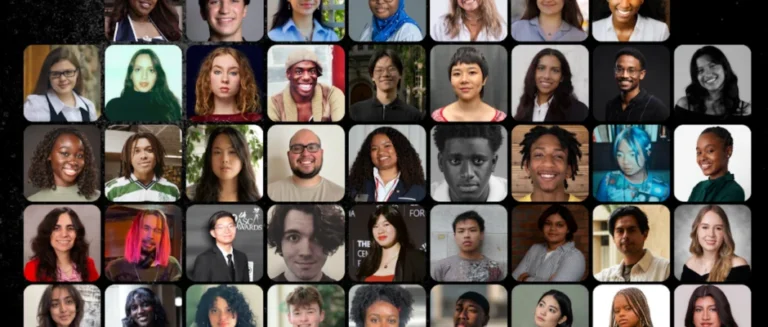
The film utilizes a specific visual device to convey the overwhelming scale of the day’s events. Batto employs a rotating prism where each side is a five-by-four grid of rectangular videos. This allows twenty videos to play simultaneously, creating a cacophony of sights and sounds that mirror the chaotic "scroll" of the internet.
The narrative does not follow a traditional linear path but rather a geographic and emotional one. The film cuts between:
- High-definition television broadcasts and grainy webcam footage.
- The Botafumeiro swinging incense in a Spanish cathedral.
- Emo teenagers reacting with hyperbolic grief or sarcasm.
- Individuals making threats against celebrity blogger Perez Hilton, who had erroneously claimed Jackson’s death was a publicity stunt.
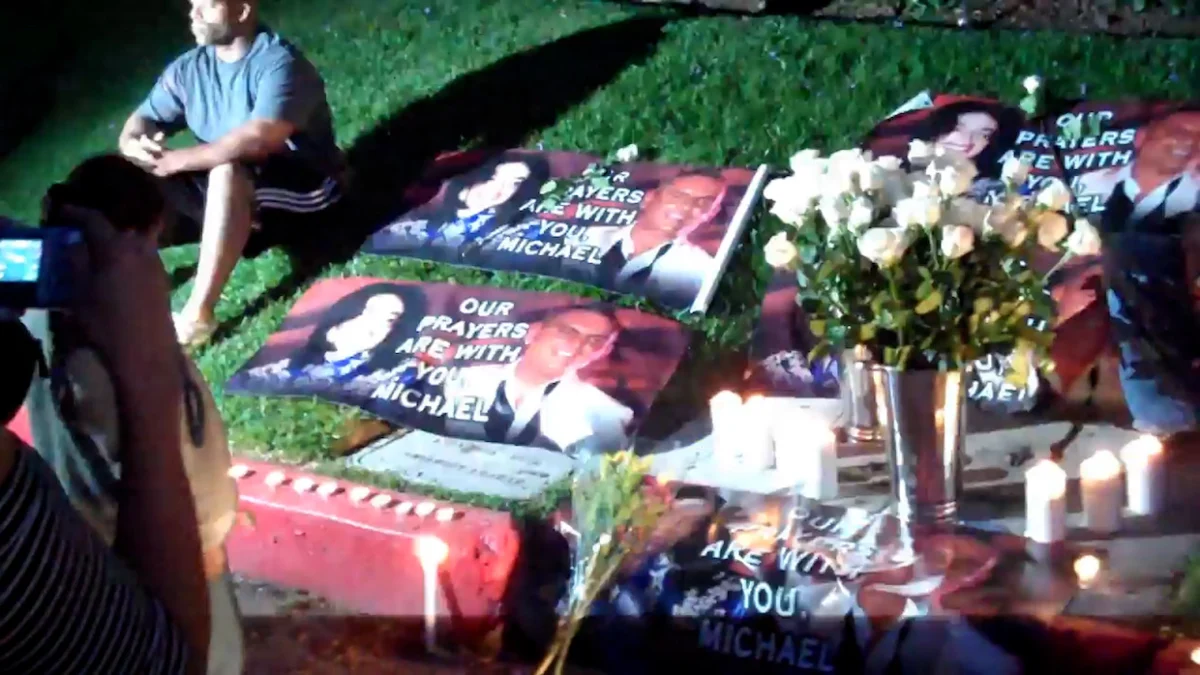
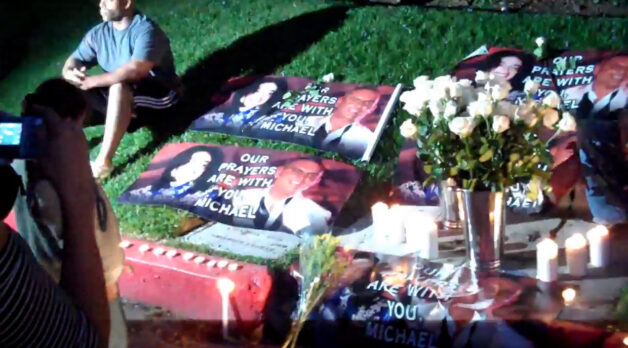
- Mourners gathering at the Hollywood Walk of Fame, ironically surrounding the star of a British radio DJ also named Michael Jackson because the "King of Pop’s" star was inaccessible due to a movie premiere.
Batto’s editing process was exhaustive. He began with a playlist of over 800 videos, and even after a work-in-progress screening in June 2023, he continued to find new footage. The final cut functions as a "double memorial"—it mourns the loss of a global cultural icon while simultaneously mourning a period in internet history when a single event could still command the attention of the entire world.
The Convergence of Celebrity and Technology
The year 2009 was also marked by the death of Farrah Fawcett, which occurred on the same day as Jackson’s. Batto’s film captures the secondary nature of this news in the digital sphere, showing amateur film reviewers and mourners struggling to process two major celebrity deaths at once. One video featured in the film shows a reviewer in front of a Halloween H20 poster remarking that "one of Charlie’s Angels just became an angel herself."
This era of the internet, Batto argues, was defined by a lack of artifice. "People didn’t care about how they looked on their webcam, or how they came off, in the same way they do today," Batto noted in an interview. This "through-line of innocence" is what separates the 2009 archive from the curated, filtered, and monetized content of 2026.
Batto compares this early digital footage to the work of Mitchell and Kenyon, the late 19th-century filmmakers who captured "local films for local people." Just as those early films showed children encountering a movie camera for the first time with a sense of wonder and confusion, Batto’s subjects encounter the webcam with a similar raw curiosity. The century between 1897 and 2009 is compressed by this shared technological innocence, a quality that Batto suggests has been lost in the current decade.
The Obsolescence of Digital Memory
A significant portion of Batto’s motivation stems from the increasing difficulty of accessing the digital past. As search algorithms prioritize recent, high-engagement content, older videos with low view counts—the very "raw material" of Batto’s work—are effectively buried. The transition of search engines into AI-driven answer engines further complicates this, as the original sources of information are often obscured or omitted.
Batto’s work is a response to this "blurring" of history. By downloading and re-contextualizing these videos, he prevents them from being lost to server deletions or the "rot" of dead links. His use of a YouTube-to-mp4 converter is presented not just as a tool, but as a preservationist’s instrument, similar to how a historian might handle a fragile manuscript.
The film’s premiere reflected this preoccupation with obsolete hardware. Attendees were given refurbished third-generation iPod Touches—the state-of-the-art mobile device of 2009—preloaded with the film and a curated playlist. This gesture served to ground the viewer in the physical and digital reality of the time.
Broader Implications and Cultural Impact
When asked about the possibility of creating a similar film for a contemporary event, Batto expressed skepticism. He argues that the modern internet is too fragmented and "fleeting" to produce a discernible, unified moment like June 25, 2009. In the current media landscape, an event might trend for a few hours before being replaced by a new cycle of content, making it impossible to "hold" or capture in the same way.
There’ll Likely Be Michael Jackson Vigils Throughout the Night stands as a testament to a specific moment in human history when technology and monoculture intersected for the last time. It highlights a period where the "internet’s cacophony could still sound something like a single chorus."
Batto’s film suggests that while the archive is growing, it is also becoming increasingly unstable. As we move further into the 2020s, the "innocence" of the early social web is being replaced by a more cynical, algorithmically determined reality. By bridging the gap between 2009 and 2026, Batto provides a factual, albeit mournful, analysis of what it means to remember in the digital age. The film serves as a reminder that while the "King of Pop" may be gone, the digital footprints of those who mourned him remain—at least for those willing to look where the search engines no longer point.