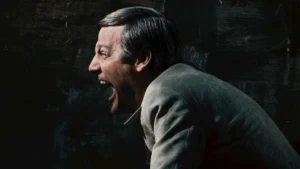
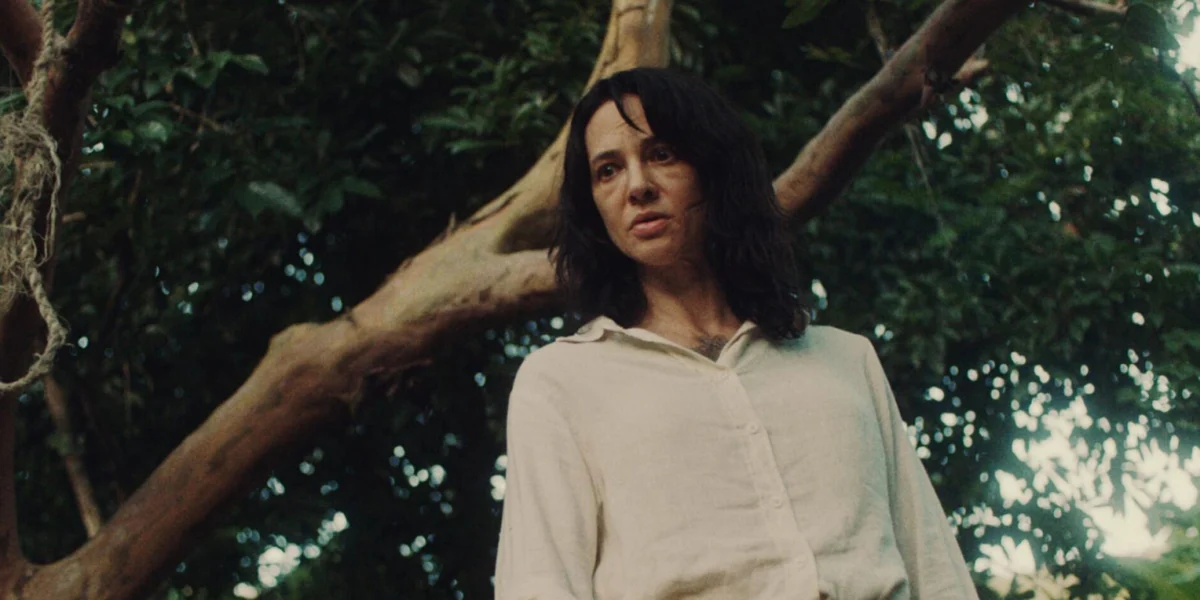
The Venezuelan drama "Death Has No Master," a compelling, albeit at times frustrating, exploration of inherited trauma and simmering social conflict, made its mark on the international cinematic landscape with its premiere in the prestigious Director’s Fortnight sidebar at the 79th Cannes Film Festival. This marks the third feature film from writer-director Jorge Thielen Armand, building upon his previous works, "Le Soledad" (2016) and "La Fortaleza" (2020). Clocking in at 106 minutes, the film delves into the psychological and social complexities that arise when a Venezuelan expatriate returns to her homeland to confront the ghosts of her past, both literal and metaphorical, embodied in her ancestral home.
The Premise: An Unwelcome Inheritance
The narrative centers on Caro, portrayed by veteran actress Asia Argento, a woman in her forties who has spent a significant portion of her life abroad. Her return to Venezuela is precipitated by the death of her father, a former cacao plantation owner, with the primary objective being the sale of her childhood home. However, upon arriving at the dilapidated mansion, Caro is met with an unexpected and unwelcome reality: the property is now occupied by Sonia (Dogreika Tovar), a former employee of her father, who has taken up residence with her young son, Maiko (Yermain Sequera). Sonia, refusing to vacate the premises, has further complicated the situation by renting out a room to another tenant, Jose Aponte, with whom she appears to have a casual relationship. Adding to the domestic tableau is Yoni (Arturo Rodriguez), the elderly former retainer of Caro’s father, who remains a steadfast presence on the estate. The escalating conflict over the property’s ownership and occupancy eventually leads Caro to seek legal counsel from Roque, played by Jorge Thielen Hedderich, the director’s father and a returning actor from "La Fortaleza." This legal entanglement ultimately sets the stage for a violent and stark conclusion.
Atmospheric Tension and Thematic Ambiguity
From its opening moments, "Death Has No Master" immerses the audience in a palpable atmosphere of unease and psychological disturbance. Director Jorge Thielen Armand employs a deliberately hallucinatory quality, amplified by a disquieting prologue that, while unexplained within the narrative’s immediate context, hints at a pervasive history of bloodshed and violence that has seemingly left an indelible mark on the region and its inhabitants. The mansion itself becomes a character, imbued with spectral echoes of the past. Whispers seem to emanate from its corridors, and fleeting apparitions flicker at the edges of perception, blurring the lines between supernatural phenomena and Caro’s own fractured mental state, a state likely exacerbated by her return to a place steeped in personal and familial history.
Thematically, the film attempts to weave together the threads of Caro’s personal trauma, which appears to be a significant impetus for her return – a desire to confront and perhaps exorcise her own demons – with the broader socio-political landscape of contemporary Venezuela. The script grapples with the deep-seated animosity and historical tensions between the landed gentry, represented by Caro’s deceased father and the contested inheritance, and the impoverished segments of society, exemplified by Sonia and her precarious living situation. However, the film’s commitment to ambiguity, while effective in building suspense, often results in a frustrating lack of clarity. The subtle allusions and unspoken resentments, while artistically rendered, leave the audience questioning the precise nature of the social commentary and the depth of the characters’ motivations. This deliberate withholding of explicit exposition, while perhaps intended to enhance the film’s enigmatic quality, can leave viewers feeling detached from the narrative’s core messages.
Crafting Dread: Sound, Score, and Foreshadowing
Armand demonstrates a keen understanding of how to cultivate dread, a skill that is perhaps the film’s strongest asset. The Venezuelan landscape and the decaying grandeur of the mansion are rendered with a palpable sense of foreboding. The audience is kept in a state of perpetual anticipation, aware that an unpleasant confrontation is inevitable, even if its exact form remains elusive. This sense of impending doom is further amplified by Armand’s strategic use of foreshadowing. Prominent, almost insistent, visual cues such as a whip and a rifle, both objects steeped in connotations of power, control, and violence, are presented early in the film, serving as clear indicators of their eventual significance in the unfolding events.
The film’s atmospheric potency is significantly enhanced by its exceptional sound design. The aural landscape of the mansion is meticulously crafted, creating an increasingly oppressive environment that feels saturated with the lingering presence of past traumas, both literal specters and the metaphorical weight of unresolved conflicts. The score, composed by Sylvain Bellemare, plays a crucial role in accentuating this pervasive sense of dread. It masterfully builds tension, guiding the audience through the escalating unease as the narrative pieces gradually coalesce towards its climactic resolution. This masterful interplay of visual and auditory elements effectively immerses the viewer in the film’s disquieting world.
Narrative Disconnection and Character Development
Despite its atmospheric strengths, "Death Has No Master" grapples with a fundamental challenge: a perceived lack of narrative focus. The script often feels adrift, uncertain of which thematic avenues to fully explore or which plot points to prioritize. This indecisiveness results in a pervasive sense of vagueness that can undermine the film’s overall impact. For instance, the initial establishment of a potential connection between Caro and Sonia, rooted in Sonia’s recollections of Caro’s childhood, holds promise for exploring intergenerational relationships and the lingering effects of class dynamics. However, this narrative thread ultimately lacks a significant payoff, feeling underdeveloped within the broader scope of the story.
The characters, by and large, tend to function more as archetypes or plot devices than fully realized individuals. This underdevelopment makes it difficult for the audience to forge a genuine connection with them. One interpretation of this approach could be that the film intentionally portrays Caro’s inability to connect with the current inhabitants of her ancestral home, mirroring her own sense of alienation despite her shared national origin. This deliberate distance, while potentially a thematic choice, contributes to a viewing experience that can feel challenging and emotionally remote. The characters remain largely unknowable, both to Caro and to the audience, a reflection of the fractured social fabric and personal isolation that the film seeks to portray.
Performances and a Gripping Conclusion
Asia Argento delivers a solid performance as Caro, a role for which she reportedly learned Spanish. Her portrayal effectively conveys a sense of deep-seated past trauma through a frequently dazed and melancholic demeanor. While her character is largely tasked with navigating the oppressive environment and grappling with her internal turmoil, Argento’s presence anchors the film. Among the supporting cast, Dogreika Tovar, a non-professional actor making her screen debut, emerges as a standout. Tovar possesses a commanding screen presence that effectively underscores her authority and established position within the household, making her a compelling counterpoint to Caro’s returning presence.
Jorge Thielen Hedderich, as the lawyer Roque, also provides a strong performance, particularly in the film’s denouement. His character’s role becomes pivotal as the legal avenues for resolving the property dispute prove futile, propelling the narrative toward its violent conclusion. The film’s finale is undeniably brutal, serving as a grim and fitting culmination of the simmering tensions that have been building throughout the preceding narrative. It is a stark and unflinching depiction of the consequences of unresolved conflict and the eruption of pent-up aggression.
A Missed Opportunity?
While the film successfully crafts a potent atmosphere of dread and culminates in a suitably grim and impactful finale, the journey to that conclusion feels protracted. The repetitive nature of Caro’s melancholic wanderings through the mansion’s corridors, while contributing to the film’s pervasive sense of unease, can at times feel like narrative inertia. "Death Has No Master" ultimately leaves the impression of a missed opportunity. The film teases at the potential for a more overtly political statement regarding Venezuela’s socio-economic disparities and hints at the possibility of more conventional genre thrills. Instead, the script’s unfocused nature, its tendency to allude to various thematic and plot directions without fully committing to or resolving them, leaves the audience with a sense of what might have been. There appears to be a compelling and perhaps more impactful film buried within "Death Has No Master," but it struggles to break free from the haze of its own deliberate ambiguity and narrative diffusion. The film’s runtime of 106 minutes, while standard, feels stretched by the lack of forward momentum in its central narrative, leaving a lingering feeling of dissatisfaction despite its undeniable technical merits and atmospheric power.