

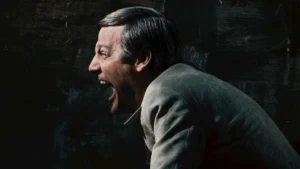


Ryu Murakami’s semi-autobiographical novel, "Sixty Nine," transports readers to the vibrant and tumultuous year of 1969 in Sasebo, Nagasaki, offering a nostalgic yet critical look at adolescence against the backdrop of significant societal upheaval. This sixth novel from the acclaimed author delves into his personal experiences, weaving a narrative rich with musical and cinematic references of the era, a period Murakami himself considers one of his most enjoyable works to craft. The literary success of "Sixty Nine" was further amplified by its cinematic adaptation in 2004, a collaboration that brought together the talents of actor Satoshi Tsumabuki, screenwriter Kankuro Kudo, and director Lee Sang-il.
Echoes of a Tumultuous Year: Sasebo in 1969
The year 1969 was a period of profound global change, marked by the ongoing Vietnam War and burgeoning student movements that swept across continents. In Japan, these influences resonated strongly, particularly within university campuses and high schools, where youth activism and anti-establishment sentiments were gaining momentum. Against this charged atmosphere, "Sixty Nine" centers on Kensuke Yazaki, known affectionately as Ken, a third-year high school student navigating the complexities of adolescence in the port city of Sasebo. Sasebo, with its significant U.S. naval base, was a unique environment, exposed to both American culture and the undercurrents of Japanese social and political discourse.
Ken’s adolescent world is dominated by the pursuit of affection, specifically that of his classmate Kazuko Matsui, a figure he romanticizes as "Lady Jane." Driven by this desire, and alongside his close friend Tadashi Yamada, nicknamed "Adama," Ken devises a plan that taps into the prevailing student activism. He persuades members of the school’s Zenkyoto (All-Campus Joint Struggle Council) student movement to participate in barricading the school. This act of defiance, while seemingly rooted in a desire for romantic attention, inadvertently aligns with the broader spirit of protest and challenge to authority that characterized the era.
The Barricade and Its Aftermath: A Catalyst for Change
The school barricade, a dramatic act of youthful rebellion, achieves its immediate objective: it generates attention and a sense of accomplishment among Ken and his cohort. However, the repercussions are swift and significant. Authorities quickly identify the perpetrators, leading to their suspension from school. This disciplinary action, however, paradoxically serves Ken’s initial romantic goal. The notoriety and the ensuing events bring him closer to Kazuko Matsui and her circle, suggesting that even in their mischief, the protagonists are inadvertently navigating the social dynamics of their peer group.
Upon their return to school following the suspension, Ken and his friends embark on a new project: organizing a festival. This endeavor, however, introduces a new set of challenges and potential conflicts. Their decision to invite Mie Nagayama, a local belle, to participate inadvertently sparks the ire of the boss of an industrial high school, hinting at territorial rivalries and the complex social hierarchies that existed within the youth communities of Sasebo. These interwoven threads of romance, rebellion, and social maneuvering form the core of the narrative, illustrating the often chaotic yet exhilarating nature of teenage life during a period of intense social flux.
Nostalgia and Critique: Murakami’s Reflective Lens
"Sixty Nine" emanates a palpable sense of nostalgia, a testament to Murakami’s ability to recall his own formative years in Sasebo with a blend of fondness and a discerning critical eye. This dual perspective lends the novel a grounding realism, preventing it from becoming a purely sentimental recollection. The author’s self-awareness regarding his past actions and motivations adds depth to the portrayal of Ken’s character, allowing readers to connect with his youthful idealism while also recognizing its inherent flaws.
A particularly compelling element of the narrative is the dynamic between Ken and Adama. Adama serves as Ken’s moral compass, the voice of reason who can pull him back from the brink of his more outlandish schemes and expose his often self-serving justifications. Their friendship, characterized by Ken’s constant reliance on Adama’s support and counsel, emerges as one of the novel’s most compelling aspects. This relationship is reciprocal; Adama remains loyal to Ken, even when confronted with Ken’s sometimes questionable actions and thought processes, highlighting the enduring bonds of friendship that can withstand personal foibles.
Portrayal of Authority and Family: A Balanced Perspective
A significant thematic thread running through "Sixty Nine" is the adolescent perception of authority figures, particularly teachers. Murakami often depicts them in stark, unflattering terms, portraying them as embittered and misguided individuals. This perspective is a common trope in coming-of-age narratives, reflecting the often adversarial relationship between students and educators. However, Murakami introduces a few exceptions to this generalization, preventing the narrative from becoming entirely one-sided.

Crucially, the portrayal of Ken’s parents, and especially his father, offers a counterpoint to the prevalent anti-authority sentiment. They are depicted as relatively fair and understanding individuals, a depiction that anchors the story in a more balanced reality. This nuanced portrayal prevents the novel from devolving into a wholesale indictment of the adult world, instead offering a more complex understanding of intergenerational dynamics. This approach allows the reader to appreciate the specific context of adolescent rebellion without sacrificing a broader appreciation for parental influence and guidance.
Humor and Teenage Musings: The Lighter Side of Rebellion
Humor is an integral component of "Sixty Nine," often arising from Ken’s superficial grasp of various concepts and his penchant for exaggerating his knowledge to impress others. His often-unreliable narration, punctuated by extreme pronouncements that are subsequently revealed to be jests, can be a source of amusement, though this particular stylistic choice may, at times, reveal the novel’s age. Nevertheless, Adama’s steady pragmatism and his gentle rebukes of Ken’s flights of fancy invariably elicit smiles from the reader.
The novel also offers a wry, almost cynical commentary on the lengths to which individuals, particularly young men, will go to gain the attention of a romantic interest. This observation, while tinged with humor, resonates with a certain realism, capturing the often-absurd lengths of youthful infatuation. The interplay between the characters’ earnest endeavors and their often-misguided motivations creates a comedic effect that is both relatable and entertaining.
Narrative Arc and Thematic Resolution
While the initial chapters of the book may exhibit a slight dip in pacing, the narrative gains considerable momentum as the story progresses beyond the school barricade and into the preparations for the festival. This latter part of the novel is widely considered its strongest, culminating in a satisfying conclusion. The romantic subplot, which is largely reserved for the book’s final chapter, provides a sweet and fitting resolution to the narrative threads concerning Ken’s pursuit of "Lady Jane."
Adding another layer of nostalgic resonance, Murakami concludes the story by revisiting the later lives of the protagonists, offering glimpses into their subsequent paths. His own evolving relationship with "Lady Jane" serves as a particularly poignant element of this retrospective, representing one of the novel’s most compelling and enduring aspects. This approach allows for a comprehensive exploration of the long-term impact of youthful experiences and the enduring significance of formative relationships.
Stylistic Choices and Enduring Appeal
The writing style of "Sixty Nine" is characterized by its brisk pace. The rapid transitions between scenes, shifts in thought, and the dynamic exchange of dialogue contribute to a fluid and accessible reading experience. While certain stylistic choices, such as the use of extremely large font for emphasis, might not always land effectively, the overall flow of the narrative remains engaging. The seamless integration of dialogue and narration further enhances the readability and immersive quality of the novel.
Despite not reaching the literary heights of Murakami’s more celebrated works, such as "Coin Locker Babies" or "Audition," "Sixty Nine" stands as a testament to his versatility as a storyteller. Its enduring appeal lies in its ability to evoke a powerful sense of nostalgia, capturing the spirit of a bygone era with both humor and insight. The novel offers a compelling exploration of adolescence, friendship, and societal change, solidifying its place as a significant work within Ryu Murakami’s diverse literary output. The adaptation into film further cemented its cultural impact, allowing a wider audience to experience the unique world of Ken and his friends in 1969 Sasebo. The film, with its star-studded cast and acclaimed creative team, brought to life the energy and spirit of the novel, further contributing to its legacy. The continued availability of the novel through platforms like Amazon underscores its ongoing relevance and appeal to new generations of readers interested in Japanese literature and the cultural zeitgeist of the late 20th century.