

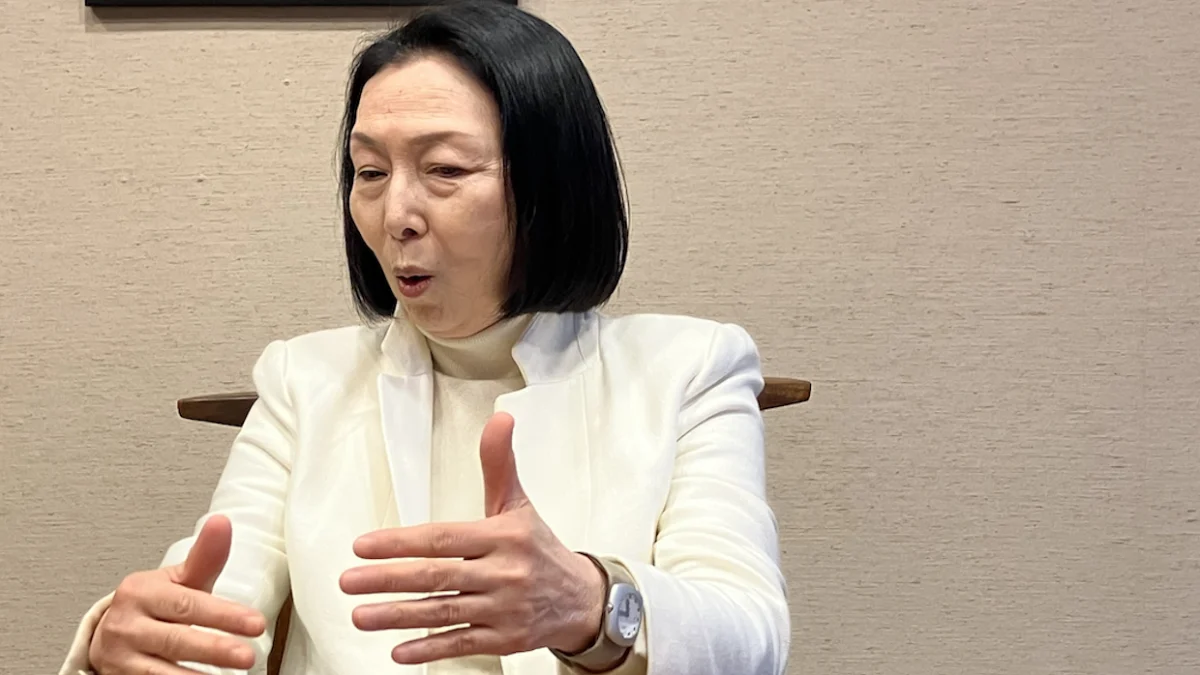
The cinematic landscape of 1970s Japan was defined by a shift toward gritty, transgressive storytelling, and at the center of this cultural explosion stood Meiko Kaji. Known for her piercing gaze and a screen presence that commanded absolute authority, Kaji redefined the role of the female protagonist in action cinema. Recently, the actress visited New York City for the first time in decades to attend a sold-out retrospective of her work at the Japan Society. The event, which showcased the breadth of her sixty-year career, provided a rare opportunity to examine the trajectory of a performer who became a symbol of resistance against patriarchal structures, both on and off the silver screen.
The Resurrection of a Cult Icon in New York
The retrospective at the Japan Society featured a curated selection of Kaji’s most influential works, including Blind Woman’s Curse (1970), the seminal Female Prisoner Scorpion series, and Lady Snowblood (1973). The latter famously served as a primary aesthetic and narrative inspiration for Quentin Tarantino’s Kill Bill duology. Despite the decades that have passed since these films first electrified audiences in Tokyo’s Shinjuku district, the New York screenings were met with overwhelming demand, signaling the enduring international appeal of Kaji’s "outlaw" persona.
During her appearances, Kaji presented a persona that was simultaneously fierce and self-effacing. Now in her late 70s, she remains vocal about the challenges she faced within the Japanese studio system of the 1970s. While she charmed audiences by performing live renditions of her famous theme songs, such as "Urami Bushi" (Gudge Song), she did not shy away from discussing the bitterness of her early professional treatment. Her visit served as a reminder that her characters—delinquents, gang bosses, and vengeful killers—were not merely roles, but reflections of her own battle for autonomy in a male-dominated industry.
A Chronology of Rebellion: From Nikkatsu to Toei
Meiko Kaji’s career began in 1965 at Nikkatsu Studios under her birth name, Masako Ota. Initially cast in more conventional "youth" films, her transformation into an action icon began with the Stray Cat Rock series (1970–1971), where she played the leader of a girl gang. This period marked the beginning of her association with the "Pinky Violence" genre—a subcategory of Japanese cinema that combined exploitation elements with high-stylized action and feminist undertones.
The early 1970s represented a pivotal turning point. Frustrated by the creative limitations at Nikkatsu, Kaji moved to Toei Company, a studio known for its yakuza films and "tough guy" aesthetic. It was here that she achieved legendary status through the Female Prisoner Scorpion series (1972–1973), directed by Shunya Ito. Based on the manga by Toru Shinohara, the character of Matsu (the Scorpion) became Kaji’s most enduring legacy.
By the mid-1970s, Kaji sought to expand her range, leading to her favorite role in The Love Suicides at Sonezaki (1978), directed by Yasuzo Masumura. However, her refusal to be pigeonholed led to significant professional friction. As the studio system began to decline, Kaji transitioned into television and music, demonstrating a versatility that allowed her to remain active in the industry for over six decades without a single year of unemployment—a feat rarely matched by her contemporaries.
The Art of Silence: Creative Control in the Scorpion Series
One of the most significant revelations from Kaji’s recent retrospective was the level of agency she exercised over her most famous roles. In the Female Prisoner Scorpion films, Kaji made the radical decision to remove almost all of her character’s dialogue. This choice transformed Matsu from a standard exploitation lead into an elemental force of nature.
"I had this idea of having the heroine be someone who doesn’t speak any dialogue," Kaji remarked during her New York visit. "I realized this might end up becoming a very unpleasant film to watch, but I thought whether it’s a success or a failure, it was an idea that was worth a try."
This silence became the character’s greatest weapon. By refusing to speak, the Scorpion rejected the world of the corrupt men who imprisoned her, signaling her pride through total psychological withdrawal. This creative gamble paid off, creating a cinematic language where Kaji’s eyes—often described by critics as "burning" or "laser-like"—conveyed more emotion and narrative intent than pages of script could have achieved. The success of this approach is evidenced by the series’ continued popularity in international markets, where the visual storytelling transcends linguistic barriers.

Industry Context: Navigating the Male-Oriented Studio System
To understand Kaji’s impact, one must consider the rigid structure of the Japanese film industry during her prime. In the 1960s and 70s, studios like Nikkatsu and Toei operated under a factory-like model where actors were treated as contract labor rather than creative partners. Formal training was non-existent; Kaji recalls being "thrust in front of a camera" immediately after being scouted, with directors demanding professional results without providing mentorship.
The "Pinky Violence" and yakuza genres were designed primarily for a male audience. Within this framework, women were typically cast as victims or secondary characters. Kaji’s refusal to play the "doting wife" or the "subservient woman" was a direct challenge to societal norms. In 1970s Japan, women were culturally expected to remain "one or two steps behind men." Kaji’s characters, conversely, stood front and center, often wielding katanas or firearms to dismantle the very establishments that sought to suppress them.
However, this defiance came at a cost. Kaji describes the years following her departure from the Scorpion series as "absolute hell." The industry attempted to blacklist or pigeonhole her, with television executives claiming her image was "too dark" or not "lively" enough for domestic living rooms. It was only through her persistence and her ability to pivot into different mediums, including a successful singing career, that she maintained her status.
Supporting Data: The Global Influence of Lady Snowblood
The statistical and cultural footprint of Meiko Kaji is perhaps most visible through the lens of Lady Snowblood. Released in 1973, the film was a stylistic masterpiece that blended traditional chanbara (sword fighting) with modern pop-art sensibilities. Its influence on Western cinema is well-documented:
- Narrative Structure: Quentin Tarantino’s Kill Bill adopted the chapter-based storytelling and the non-linear revenge plot of Lady Snowblood.
- Visual Homage: The iconic final duel in the snow between O-Ren Ishii and The Bride is a direct visual recreation of Kaji’s battles in the 1973 original.
- Musical Integration: The song "The Flower of Carnage" (Shura no Hana), sung by Kaji for the Lady Snowblood soundtrack, was used prominently in Kill Bill Vol. 1, introducing her voice to a new generation of global viewers.
Beyond Tarantino, Kaji’s influence extends to the "vengeance" subgenre of South Korean cinema and modern feminist action films. Her portrayal of the "cool, silent killer" has become a blueprint for characters who operate outside the law to achieve a personal sense of justice.
Broader Implications: A Feminist Icon of the Showa Era
The retrospective of Meiko Kaji’s work arrives at a time of renewed interest in the "Showa Noir" aesthetic and the role of women in Japanese history. Kaji’s career serves as a case study in how an individual artist can subvert an exploitative system from within. By leaning into the "darkness" that executives feared, she created a brand of female empowerment that was unapologetic and visceral.
Her transition to domestic dramas, such as Terauchi Kantaro Ikka (1974), where she played a disabled daughter, further demonstrated her ability to find depth in characters marginalized by society. Her insistence on playing the role "as brightly as possible" despite the director’s desire for gloom showcased her constant negotiation for character agency.
Today, Kaji is viewed not just as a cult movie star, but as a pioneer who bridged the gap between traditional Japanese aesthetics and the modern, globalized world of action cinema. Her story is one of endurance—of an actress who survived the collapse of the studio system, the fickleness of fame, and the prejudices of her time to emerge as an elder stateswoman of the arts.
Conclusion: The Unyielding Gaze
As Meiko Kaji concluded her visit to the Japan Society, the resonance of her work was clear. The "Scorpion" may have been a character born of 1970s manga and exploitation cinema, but the spirit Kaji infused into the role—a spirit of unyielding pride and quiet defiance—remains relevant. In an industry that often seeks to "brighten" or soften female leads, Kaji’s commitment to her "dark" and "silent" persona stands as a testament to the power of artistic integrity.
For film historians and fans alike, the retrospective was more than a nostalgic look back; it was an affirmation of a career built on the refusal to be silent, even when the character had no words. Meiko Kaji remains a singular force in cinema, a reminder that the most powerful voice on screen is often the one that refuses to speak on anyone else’s terms.