During the second week of May 2026, the traditional corridors of New York City’s Lincoln Center and various high-profile venues across Manhattan played host to a seismic shift in the media buying industry. For decades, the "upfronts"—the annual period where major television networks pitch their upcoming programming to advertisers—were the exclusive domain of Hollywood royalty, high-budget sitcoms, and primetime dramas. However, the 2026 presentations revealed a new reality: the creator economy has not only arrived but has become a central pillar of the multi-billion dollar advertising ecosystem.
As media conglomerates like Warner Bros. Discovery, Fox Corporation, and Disney vied for a share of the annual advertising spend, they found themselves sharing the spotlight with digital-first personalities. From YouTube stars to podcast titans, the "creator" category is no longer viewed as a secondary digital add-on but as a primary driver of engagement, particularly for the elusive Gen Z and Alpha demographics.
The Financial Explosion of the Creator Economy
The shift in content strategy is backed by staggering financial data. According to a comprehensive report by the Interactive Advertising Bureau (IAB), advertiser spending on creator-led content reached $37 billion in 2025. This figure is projected to climb to $44 billion by the end of 2026, representing one of the fastest-growing segments in the entire media landscape.
This growth comes at a time when traditional linear television continues to face headwinds. As cord-cutting accelerates, the "upfront" model has evolved into a "cross-platform" negotiation. Advertisers are no longer just buying 30-second spots on broadcast TV; they are purchasing integrated packages that span streaming services, social media feeds, and long-form creator videos.
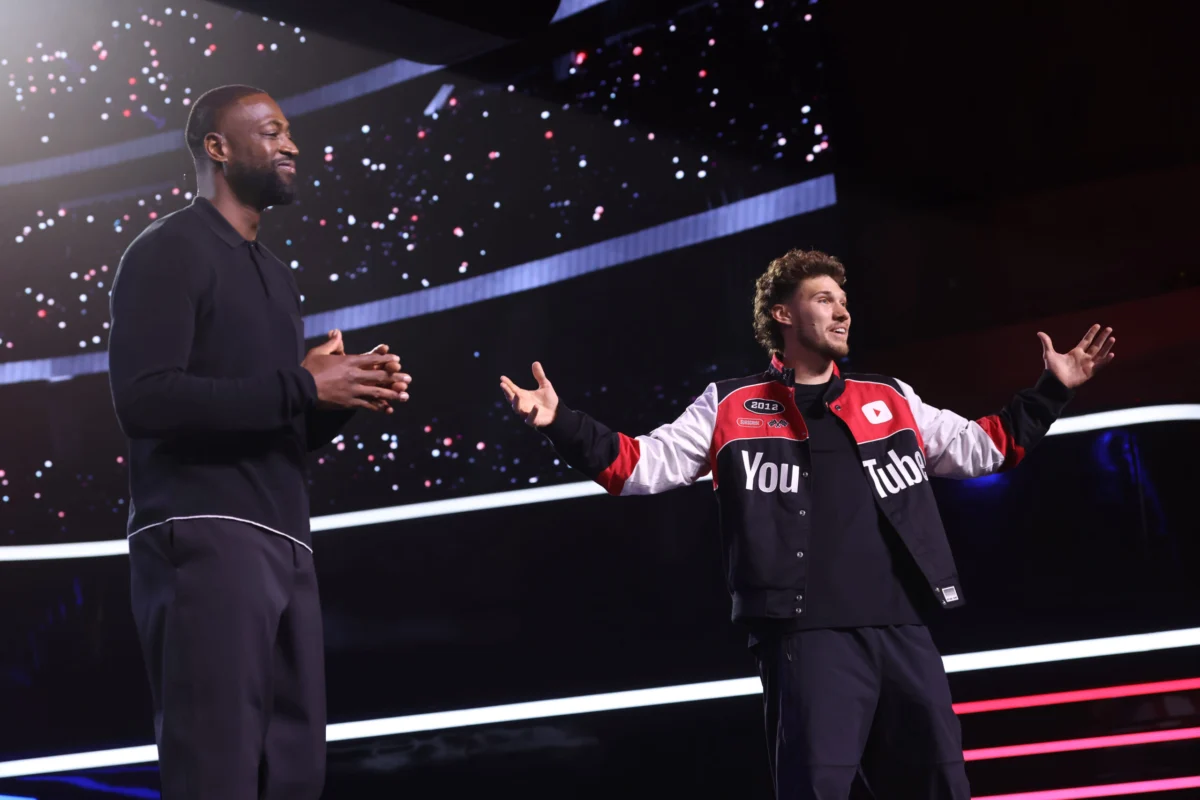
Brian Albert, Managing Director of YouTube Solutions, emphasized this transition during the YouTube Brandcast event. "Creators are this generation’s storytellers, tastemakers, and stars," Albert stated. "Advertisers have recognized that they don’t just have large audiences; they have communities that trust them. It’s why they want to partner with them now, more so than ever."
YouTube’s Dominance and the "Brandcast" Effect
YouTube remains the undisputed leader in the creator space, a fact underscored by Nielsen’s "The Gauge" report. As of February 2026, YouTube accounted for 12.7% of all streaming viewership in the United States, comfortably outpacing Netflix, which held an 8.4% share. This dominance has forced traditional media buyers to treat YouTube with the same—if not more—reverence as a major broadcast network.
At its 2026 Brandcast presentation, YouTube showcased a roster of talent that rivaled any Hollywood studio. Personalities such as Jesse "Jesser" Riedel, a sports-focused creator with millions of subscribers, stood alongside established mainstream figures like Trevor Noah and Alex Cooper. The message to advertisers was clear: the line between a "YouTuber" and a "Celebrity" has effectively vanished.
The integration of sports has been a key driver for YouTube’s growth. By securing rights such as the NFL Sunday Ticket and partnering with creators like Riedel for soccer-focused original programming, the platform has successfully captured the high-stakes world of live sports—traditionally the last stronghold of linear television.
Legacy Media’s Strategic Pivot: Fox and Warner Bros. Discovery
Rather than competing directly against the creator wave, legacy media companies are moving to absorb it. Fox Corporation and Warner Bros. Discovery (WBD) have both launched initiatives designed to bridge the gap between studio-produced content and digital-first creators.
Fox Creator Studios and Tubi
Fox has leveraged its free, ad-supported streaming service (FAST), Tubi, as a laboratory for creator integration. Earlier in 2026, the company launched "Fox Creator Studios," a division specifically focused on developing digital-first formats with next-generation talent. A primary focus of this initiative is the culinary space, led by global icon Gordon Ramsay. Ramsay appeared at Fox’s upfront pitch alongside NFL legend Tom Brady, illustrating the company’s strategy of mixing traditional star power with creator-led digital engagement.

Tubi has become a critical asset for Fox, particularly in reaching younger audiences who eschew cable. By inking deals with YouTube personalities to create exclusive content for Tubi, Fox is successfully migrating massive social media followings to its own proprietary platform.
Warner Bros. Discovery’s "Personal" Connection
Warner Bros. Discovery has adopted a similar approach, particularly within its lifestyle brands like The Food Network and HGTV. Karen Bronzo, Chief Global Marketing Officer for WBD’s U.S. networks and news, noted that the company has been quietly integrating influencers for years, but the scale has reached a new inflection point.
"When you’re experiencing content from a creator, you feel it is personal. It is a much more one-to-one relationship," Bronzo explained. During WBD’s presentation, the company announced that The Food Network would expand its YouTube original lineup, including a new series featuring chef Esther Choi. This strategy allows WBD to maintain its prestige as a content creator while tapping into the high-engagement, "trust-based" relationship that digital creators enjoy with their fans.
Amazon’s 360-Degree Content Strategy
Amazon’s Prime Video and its podcast division, Wondery, have also become major players in the creator-traditional media merger. Amazon’s head of creator advertising partnerships, Angie More, described the current landscape as "360-degree content consumption."
The highlight of Amazon’s upfront presentation was the appearance of Oprah Winfrey, who promoted her multiyear deal with Wondery to distribute "The Oprah Podcast." The deal includes both audio and video distribution, as well as the rights to her extensive library of past content. This move signals that even the most established icons of traditional media are embracing the "creator" distribution model—using video podcasts and social clips to maintain relevance in a fragmented market.
The Economic Logic: Bang for the Buck
The shift toward creator content is not merely a trend driven by cultural relevance; it is rooted in harsh economic realities. Producing a high-end scripted drama can cost upwards of $10 million per episode. In contrast, high-quality creator content can be produced at a fraction of that cost while often generating comparable, if not superior, engagement metrics among key demographics.
Industry executives have noted that streaming and creator content offer advertisers more "bang for their buck." Whether it is a niche tutorial or a viral video podcast, the ability to target specific "communities" rather than broad "audiences" allows for more efficient ad spending. This is particularly true for "Ms. Rachel" (Rachel Griffin-Accurso), whose educational content for children has become a powerhouse for advertisers looking to reach young parents—a demographic that is increasingly difficult to find on linear TV.
Implications for the Future of Media
The blurring of lines between studio-led and creator-led content suggests a permanent change in how media is valued. Julie Clark, Senior Vice President of Media and Entertainment at TransUnion, observed that the industry is moving toward a "singular view" of the content landscape.
"There is an understanding that the landscape has shifted dramatically," Clark said. "This is absolutely changing how upfronts are contemplated and activated."
As we look toward 2027 and beyond, several implications emerge:
- The Decline of the "Middle": Mid-tier cable networks that lack either massive live sports or a strong creator/influencer strategy may find it increasingly difficult to secure advertiser commitments.
- The Talent Pipeline: Platforms like Tubi are positioning themselves as the new "pathway to Hollywood," allowing creators to graduate from 60-second vertical videos to long-form streaming series.
- Ad Tech Integration: The rise of creator content is driving innovations in ad tech, as platforms work to provide better attribution and measurement for "influencer" campaigns that were previously seen as difficult to quantify.
- The Democratization of Production: As high-quality production tools become more accessible, the gap in visual quality between a "YouTube video" and a "TV show" continues to shrink, making the distinction irrelevant to the end consumer.
Conclusion
The 2026 upfronts marked the end of the era where digital content was the "alternative" to television. In the current market, creator content is the engine driving growth, engagement, and innovation. As advertisers move their billions toward these digital stars, the traditional media giants that thrive will be those that successfully integrate the authenticity of the creator economy with the scale and infrastructure of the old guard. The stage at Lincoln Center now belongs as much to the vlogger and the podcaster as it does to the network anchor and the sitcom star.